
Nucleic Acid Therapeutics: Existing and Emerging Approaches for Managing and Treating Diseases
- HMX
Learn how nucleic acid therapeutics can be used to treat, prevent, and cure diseases.
- Online; Instructor-Paced
Lessons are released weekly and remain available until the course ends.
Available Start Dates
$1,025
Save and learn more with discounted multi‑course bundles or our all‑access HMX and HealthXcelerate Learning Pass.
Certificate
Earn a Certificate of Completion upon successfully completing all coursework.
10 Weeks, 1-2 Hours/Week
Most people can expect to spend around 15–20 hours total, but this depends on your baseline knowledge and how carefully you take notes.
- Online; Instructor-Paced
Lessons are released weekly and remain available until the course ends.
Available Start Dates
$1,025
Save and learn more with discounted multi‑course bundles or our all‑access HMX and HealthXcelerate Learning Pass.
Certificate
Earn a Certificate of Completion upon successfully completing all coursework.
10 Weeks, 1-2 Hours/Week
Most people can expect to spend around 15–20 hours total, but this depends on your baseline knowledge and how carefully you take notes.
On This Page
Overview
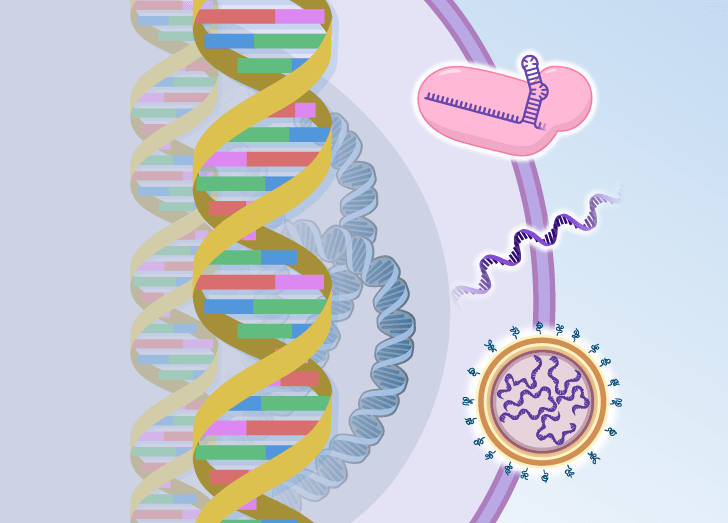
Even with the thousands of approved small molecule drugs at our disposal, there remains a lack of effective prevention and treatment for many diseases. Fortunately, a new drug modality has emerged called nucleic acid therapeutics that has the potential to address current unmet needs. This class of drugs uses nucleic acids and closely related compounds for a variety of applications, including regulating gene expression, stimulating the immune system, editing the genome, or supplying new genetic information, with the goal of treating or preventing disease.
During this advanced HMX course, you will examine therapeutics that act to remove or modify a patient’s genetic information or supply new genetic information to patient cells. Discover insights into the mechanisms of action of recently approved therapies like mRNA vaccines and antisense oligonucleotides (ASOs), as well as how theory can be put into practice through real-world cases involving conditions such as sickle cell disease, Duchenne muscular dystrophy, and melanoma.
Learning Objectives
- Learn about the various types of nucleic acid therapeutics and their mechanisms of action
- See examples of novel nucleic acid therapeutics that are being used to treat genetic conditions
- Understand the importance of cross-disciplinary collaboration to generate safe and effective nucleic acid therapeutics that can overcome challenges of delivery and toxicity

Who Should Participate
Clinicians and other medical professionals; biomedical researchers, professors, and academics within or adjacent to the field of genetics; professionals in the biopharmaceutical and related industries
Overview
Even with the thousands of approved small molecule drugs at our disposal, there remains a lack of effective prevention and treatment for many diseases. Fortunately, a new drug modality has emerged called nucleic acid therapeutics that has the potential to address current unmet needs. This class of drugs uses nucleic acids and closely related compounds for a variety of applications, including regulating gene expression, stimulating the immune system, editing the genome, or supplying new genetic information, with the goal of treating or preventing disease.
During this advanced HMX course, you will examine therapeutics that act to remove or modify a patient’s genetic information or supply new genetic information to patient cells. Discover insights into the mechanisms of action of recently approved therapies like mRNA vaccines and antisense oligonucleotides (ASOs), as well as how theory can be put into practice through real-world cases involving conditions such as sickle cell disease, Duchenne muscular dystrophy, and melanoma.
Learning Objectives
- Learn about the various types of nucleic acid therapeutics and their mechanisms of action
- See examples of novel nucleic acid therapeutics that are being used to treat genetic conditions
- Understand the importance of cross-disciplinary collaboration to generate safe and effective nucleic acid therapeutics that can overcome challenges of delivery and toxicity
Who Should Participate
Clinicians and other medical professionals; biomedical researchers, professors, and academics within or adjacent to the field of genetics; professionals in the biopharmaceutical and related industries
Questions?
Have questions about HMX courses, enrollment, or learning options? Contact our team by email—we’re happy to assist.
About the Course
HMX online courses bring complex material to life through engaging biomedical visualizations, clinical applications, and true-to-life scenarios paired with lectures from Harvard Medical School faculty and leading experts.
Who Should Participate
This advanced course is appropriate for clinicians and other medical professionals who are eager to learn about recent advances in nucleic acid therapeutics and how they are being used to treat diseases previously considered untreatable; biomedical researchers, professors, and academics within or adjacent to the field of genetics; professionals in the biopharmaceutical and related industries who would like to learn about the unique characteristics of nucleic acid therapeutics compared to small molecule drugs and other therapeutics.
Course Format
Most people can expect to spend around 15–20 hours total, but this depends on your baseline knowledge, how carefully you take notes, and how seriously you take the assessments. Lessons from the courses are released toward the beginning of the course session and remain available until the courses end, so you can work at your own pace. There is a final exam at the end of each course that can be taken at any time during the multi-week final exam period. The flexible course format makes this an ideal choice for working professionals.
Extend Your Learning and Save More
Whether you are building your medical science knowledge, preparing for advanced study, or expanding your understanding of the health care ecosystem, combining courses helps you connect concepts across disciplines while saving on enrollment.

You can bundle up to five HMX or HealthXcelerate courses. Bundle discounts apply to all courses selected. A bundle can consist of courses in the same upcoming enrollment period or the following enrollment period.
Two-course bundle: 25% discount
Three-course bundle: 30% discount
Four-course bundle: 35% discount
Five-course bundle: 40% discount
View all bundle-eligible programs
Multi-course discounts will be changing on October 1, 2026. Register now and lock in these savings by bundling multiple courses.

With the HMX and HealthXcelerate Learning Pass, a $4,950 investment unlocks one year of unlimited enrollment to Harvard Medical School's portfolio of HMX and HealthXcelerate online courses, empowering you to advance your knowledge of health care and medical science in the areas that matter most to your goals. Start Learning

HMX and HealthXcelerate courses are ideal for organizations looking to train teams or larger groups. Group pricing is available, making it a cost-effective investment in team development.
Group Enrollments
HMX courses are ideal for organizations looking to train teams or larger groups. Group pricing is available, making it a cost-effective investment in team development.
Faculty

Caity Anderson
PhD
- Lecturer in Genetics, Harvard Medical School
- Associate Director of HMX Curriculum

Ben Kleinstiver
PhD
- Assistant Professor, Harvard Medical School
- Assistant Investigator, Massachusetts General Hospital
- Kayden-Lambert Research Scholar, Massachusetts General Hospital

Art Krieg
MD
- Professor, RNA Therapeutics Institute, UMass Chan Medical School
- Founder and former CSO, Checkmate Pharmaceuticals, Inc.

Melissa Moore
PhD
- Professor, RNA Therapeutics Institute, UMass Chan Medical School
- Former CSO, Moderna, Inc.
Daniel Bauer, MD, PhD, Donald S. Fredrickson, MD Associate Professor of Pediatrics, Harvard Medical School / Attending Physician, Dana–Farber/Boston Children’s Cancer and Blood Disorders Center / Dagres Family Chair, Director of the Gene Therapy Program, Boston Children’s Hospital
Elizabeth Buchbinder, MD, Assistant Professor of Medicine, Harvard Medical School / Oncologist, Dana–Farber Cancer Institute within the Melanoma Disease Center
Partha Ghosh, MD, Associate Professor of Neurology, Harvard Medical School / Pediatric Neurologist, Boston Children’s Hospital
Muthiah (Mano) Manoharan, PhD, Senior Vice President of Drug Innovation, Head of Innovation Chemistry, and Distinguished Research Scientist, Alnylam Pharmaceuticals
Laura Sepp-Lorenzino, PhD, Chief Scientific Officer, Intellia Therapeutics
Catherine Wu, MD, Professor of Medicine, Harvard Medical School / Oncologist, Chief of the Division of Stem Cell Transplantation and Cellular Therapies, and Lavine Family Chair for Preventative Cancer Therapies, Dana–Farber Cancer Institute
Course Quiz
Are you ready for an advanced course? We recommend knowledge of basic chemistry, biology, and physics, as well as knowledge of key genetics concepts. Gauge your knowledge of genetics by taking this short quiz.
Not Sure Which Course Is Right for You?
Compare HMX genetics-related offerings side by side and find the best fit for your goals.
From Our Learners
Hear from HMX students as they share their experiences learning online with Harvard Medical School.

"I’ve found all [HMX] courses to be tremendously helpful. The topics are so well organized, and the lectures cover those fundamental ideas very well…they are challenging in a positive way."
Request Information
Interested in learning more about this program? Sign up for details.