Global Clinical Scholars Research Training
- Certificate Program
Develop advanced clinical research skills through this rigorous, blended learning experience that prepares clinicians and clinician-scientists worldwide to design, conduct, and communicate impactful health care research.
- Blended
This program requires attendance at three intensive workshops, two live virtual and one in-person at Harvard Medical School, Boston, MA.
$18,500
Please see more program fee information below.
Certificate
This program offers Harvard Associate Member status.
11 Months, 3 Required Workshops; 7-10 Hours/Week
In between workshops, you will spend time viewing pre-recorded materials, attending live online lectures with faculty, taking quizzes and exams, and working on team assignments and your capstone.
On This Page
Overview
The Global Clinical Scholars Research Training certificate program is tailored for clinicians and scientists from around the world, offering advanced education in clinical research and methodologies. Through a blended learning approach—combining online resources, live virtual seminars, and interactive workshops—the program is designed to strengthen your skills at every stage of the research process, from drafting grant proposals and initiating projects to analyzing data and presenting findings. Most applicants have an intermediate background in clinical research and have authored at least one peer-reviewed article.
Workshop 1
- November 2–5, 2026
- Live Online
Workshop 2
- April 12–15, 2027
- Live Online
Workshop 3 and Completion Ceremony
- October 4–8, 2027
- Boston, MA
Learning Objectives
- Design and conduct both observational and experimental clinical research
- Analyze, interpret, and present clinical research data effectively
- Write and refine successful grant proposals
- Lead and collaborate with interdisciplinary clinical research teams

Who Should Participate
Designed for faculty-level clinicians or scientists with advanced degrees such as an MD, PhD, MBBS, DMD, DDS, PharmD, DNP, or equivalent. Successful candidates typically have several peer-reviewed articles.
About the Program
Over the course of the program, you will explore the latest advancements and best practices in clinical research—improving your ability to drive health care innovation and achieve better outcomes. You will learn alongside a talented group of peers from around the world, collaborating to create a deeper and more enduring understanding of advanced clinical research topics.
Program Format
This blended program is designed for working professionals, and features three intensive workshops, with virtual seminars in between. Participants can expect to dedicate an average of 7-10 hours per week to coursework, which includes viewing pre-recorded materials, attending live online lectures, participating in faculty review sessions, collaborating on team projects, and working on an individual capstone assignment. Attendance at the workshops is required for successful completion of the program.
Who Should Apply
This program is designed for clinicians and scientists working in clinical research at the faculty level (or equivalent). Candidates holding an MD, PhD, MBBS, DMD, DDS, PharmD, DNP, or an equivalent degree are eligible to apply. The review committee will consider candidates with a master’s degree for admission on a case-by-case basis. Most successful typically have authored several peer-reviewed articles.
Global Clinical Scholars Research Training is truly a global program. The latest cohort of students represented 30 countries, including the United States, Saudi Arabia, India, Nigeria, Brazil, Italy, Australia, and many more. Past student participants have included chief physicians, directors, fellows, scientists, and specialists. Clinicians, scientists, and lecturers who demonstrated strong career interest in clinical research on their application materials also were admitted to the program.
What You Earn
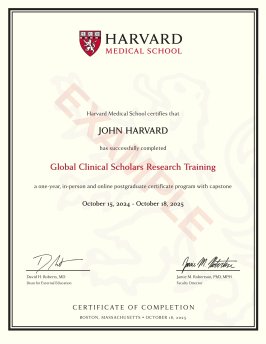
Learners who complete the program requirements will earn a Certificate of Completion. After completing the Global Clinical Scholars Research Training program, you will be part of a global cohort of health care leaders and earn a certificate of completion from Harvard Medical School. You will become an integral part of a worldwide network of past participants of Harvard Medical School’s professional, corporate, and continuing education programs and courses. You will also be able to join the Harvard Alumni Association (HAA) as an associate member and become a part of an active global network connecting with and supporting each other, facilitating lifelong learning, growth, and success.
Program Faculty and Teaching Team
Jamie M. Robertson
PhD, MPH
- Faculty Director, Global Clinical Scholars Research Training and Foundations of Clinical Research
- Senior Research Scientist, Brigham and Women’s Hospital
- Assistant Professor of Emergency Medicine, Harvard Medical School
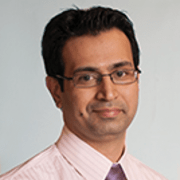
Sagar Nigwekar
MD, MMSc
- Assistant Professor of Medicine, Harvard Medical School
- Assistant Physician, Massachusetts General Hospital
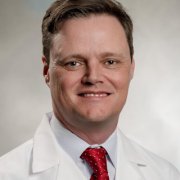
Gearoid McMahon
MB, BCH, FASN
- Assistant Professor of Medicine, Harvard Medical School
- Director, ICU Nephrology
- Assistant Clinical Director
- Associate Physician, Renal Division, Brigham and Women's Hospital
Saif Alenizi, MBCHB, MPH
Nephrologist, Brigham and Women's Hospital
Paul Bain, PhD, MS
Manager of Research and Instruction, Francis A. Countway Library of Medicine, Harvard Medical School
Julie E. Buring, ScD
Professor of Medicine, Emerita, Harvard Medical School and Brigham and Women's Hospital
Professor of Epidemiology, Emerita, Harvard T.H. Chan School of Public Health
Niteesh K. Choudhry, MD, PhD
Professor of Medicine, Harvard Medical School
Professor, Department of Health Policy and Management, Harvard T.H. Chan School of Public Health
Executive Director, Center for Healthcare Delivery Sciences, Brigham and Women's Hospital
Su H. Chu, PhD, MS
Assistant Professor in Medicine, Harvard Medical School
Associate Statistician, Brigham and Women's Hospital
Brian Claggett, PhD
Associate Professor, Harvard Medical School
Terry Gipson, MFA
Faculty Member in the Harvard College Writing Program
Rachel S. Kelly, PhD, MPH
Assistant Professor of Medicine, Channing Division of Network Medicine, Brigham and Women's Hospital
Associate Epidemiologist, Harvard Medical School
Susan Z. Kornetsky, MPH
Director of Clinical Research Compliance, Boston Children's Hospital
Jessica Lasky-Su, DSc, MS
Associate Professor in Medicine, Harvard Medical School and Brigham and Women’s Hospital
Associate Statistician, Harvard Medical School and Brigham and Women’s Hospital
Sayeed K. Malek, MD, FACS
Chief of Transplant, Boston Medical Center
Associate Professor of Surgery, Chobanian and Avedisian School of Medicine, Boston University
Program Director, Harvard Medical School Surgical Leadership Program
Finnian R. Mc Causland, MBBCh, MMSc, FRCPI, PG CertMedEd
Assistant Professor of Medicine, Harvard Medical School
Faculty Director in Postgraduate Medical Education, Harvard Medical School
Director of the Master of Medical Sciences in Clinical Investigation program, Harvard Medical School
Martina McGrath, MB, BCH, FASN, FRCPI
Transplant Nephrologist and Medical Director of Live Kidney Donation at Brigham and Women’s Hospital
Elizabeth Mostofsky, ScD, MPH
Instructor in Epidemiology
Harvard T.H. Chan School of Public Health
Pamela Rist, ScD
Associate Professor, Harvard Medical School and Harvard T.H. Chan School of Public Health
Jeffrey A. Sparks, MD, MMSC
Rheumatologist, Brigham and Women’s Hospital
Associate Professor of Medicine, Harvard Medical School
Suman Srinivasa, MD, MS
Assistant Professor of Medicine, Harvard Medical School
Clinician, Neuroendocrine and Pituitary Tumor Clinical Center
Physician Investigator, Metabolism Unit, Division of Endocrinology, Massachusetts General Hospital
Winfred W. Williams, MD
Deputy Editor, The New England Journal of Medicine
Associate Chief, Division of Nephrology, Massachusetts General Hospital
Associate Professor of Medicine, Harvard Medical School
Heather Baer, ScD
Associate Professor of Medicine, Harvard Medical School
Associate Professor of Epidemiology, Harvard T.H. Chan School of Public Health
Senior Epidemiologist, Brigham and Women's Hospital
Ethan Balk, MD, MPH
Associate Professor of Medicine, Tufts University School of Medicine
Clinical Investigator, Institute for Clinical Research and Health Policy, Tufts Medical Center
Associate Director, Center for Clinical Evidence Synthesis, Tufts Medical Center
Michael J. Cima, PhD
Professor of Materials Science and Engineering at the Massachusetts Institute of Technology
David H. Koch Professor of Engineering
Faculty Director of the Lemelson-MIT Program
Rachel Clark, MD, PhD
Martin C. Mihm, Jr., MD and Shing-Yiu Yip Professor of Dermatology, Harvard Medical School
Vice Chair for Research, Department of Dermatology, Brigham and Women’s Hospital
Roger Daglius Dias, MD, PhD, MBA
Associate Professor of Emergency Medicine, Harvard Medical School
Director of Research and Innovation, STRATUS Center for Medical Simulation
Director and Lead Investigator, Medical AI & Cognitive Engineering (MAICE) Lab
Program Co-Director, Leading AI Innovation in Health Care
Garrett Fitzmaurice, SD
Professor of Psychiatry, McLean Hospital
Professor in the Department of Biostatistics, Harvard T.H. Chan School of Public Health
Stephanie Eckman, PhD
Fellow in Survey Methodology, RTI International
Rachel S. Kelly, PhD, MPH
Assistant Professor of Medicine, Channing Division of Network Medicine, Brigham and Women's Hospital
Associate Epidemiologist, Harvard Medical School
Karen S. Lyons, PhD, FGSA
Professor, William F. Connell School of Nursing, Boston College
Heather Mattie, PhD, SM, MS
Lecturer on Biostatistics, Harvard T.H. Chan School of Public Health
Co-Director, Master's Program in Health Data Science, Biostatistics, Harvard T.H. Chan School of Public Health
Gareth Parry, PhD
Assistant Professor, Harvard Medical School
Adrienne L. Tierney, EdD
Lecturer at the MIT Writing and Communication Center
Katrin Uhlig, MD, MS
Assistant Professor of Medicine, Tufts University
Sackler School of Graduate Biomedical Sciences
David Wypij, PhD
Associate Professor of Pediatrics, Boston Children's Hospital
Associate Professor in the Department of Biostatistics, Harvard T.H. Chan School of Public Health
Program Fee
Applicants who submit a complete application by the early deadline and are admitted into the program will receive $1,000 off the program fee. This discount cannot be combined with any program fee assistance awarded. Program fees do not include educational materials. For more information, visit Learner Policies.
All program fee assistance requests must be received by the early application deadline, July 29, 2026.
| Program Fee | |
|---|---|
| Early Application Deadline: July 29, 2026 | $17,500 |
| Final Application Deadline: September 30, 2026 | $18,500 |
How Do I Apply?
In this video, preview the steps you need to take before, during, and after submitting your application—so you know exactly what to expect at each stage of the process.
We’ll show you how to access the application portal, create or log in to your account, complete each section of the form, upload any required documents, and submit your application for review.
Payment Installments
The full program fee should be paid two weeks prior to the start of the program. However, a payment installment option is available for this program and is outlined in the payment schedule. There are no fees or interest charges associated with the payment plan. However, payments must be made on time to remain eligible to participate in the course and maintain access to course materials.
Full terms for payment plan enrollment can be reviewed here.
| Payment Schedule | Prices |
|---|---|
| Deposit Immediately | $4,625 |
| Payment Installment 1 - November 9, 2026 | $1,388 |
| Payment Installment 2 - December 9, 2026 | $1,388 |
| Payment Installment 3 - January 9, 2027 | $1,388 |
| Payment Installment 4 - February 8, 2027 | $1,388 |
| Payment Installment 5 - March 10, 2027 | $1,388 |
| Payment Installment 6 - April 10, 2027 | $1,388 |
| Payment Installment 7 - May 10, 2027 | $1,388 |
| Payment Installment 8 - June 9, 2027 | $1,388 |
| Payment Installment 9 - July 10, 2027 | $1,388 |
| Payment Installment 10 - August 9, 2027 | $1,388 |
Alumni Ambassador Spotlight

Ramkrishna Kumar Singh, MD, MPH
Postdoctural Research Associate, Washington University School of Medicine
What motivated you to enroll in Global Clinical Scholars Research Training, and what were you hoping to gain from the experience?
During my MPH in Epidemiology and Biostatistics, I was trained across a broad range of public health disciplines, including health administration, environmental health, and population-level research. While this provided a strong interdisciplinary understanding of public health, I wanted to develop a more focused and structured foundation in clinical research, specifically, how to apply biostatistical and epidemiologic principles to patient-centered investigations and clinical study design.
I was also seeking a program that could be completed within one year, allowing me to complete both Global Clinical Scholars Research Training and my MPH at the same time. The fact that the Global Clinical Scholars Research Training program is designed for professionals with a clinical background was an important factor in my decision, as it ensured that participants shared similar goals and could engage in advanced, meaningful discussions. The program’s structure and pacing made it feasible to balance rigorous learning with ongoing professional responsibilities, creating an ideal environment to refine analytical thinking and strengthen practical, globally relevant research skills.
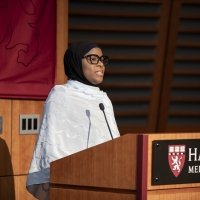
"We owe it to our patients to figure out which changes in the clinical research process can lead to better outcomes, and to make sure we’re doing more of that."
How Dr. Kikelomo Babata Is Shaping the Future of Neonatal Care
Learner Stories and Insights

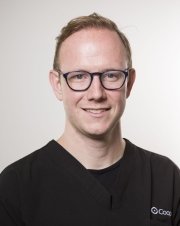
Exploring Clinical Research Through the Eyes of an Intensivist
"The capstone component of the program really helped in giving me feedback from Harvard faculty, refining the idea, and making it feasible to bring into action.”
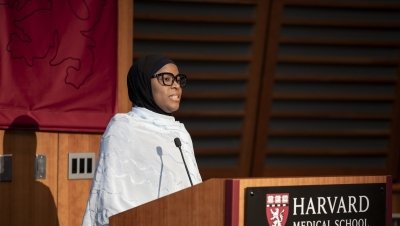
How Dr. Kikelomo Babata Is Shaping the Future of Neonatal Care
"We owe it to our patients to figure out which changes in the clinical research process can lead to better outcomes, and to make sure we’re doing more of that."
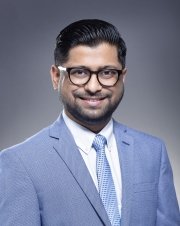
Becoming a Well-Rounded Researcher in Global Clinical Scholars Research Training
"There was research experience as well as personal development, and I did not find that with any other programs."
Explore Additional Clinical Research Options
Harvard Medical School offers two clinical research certificate programs designed for health care professionals at various career stages: Foundations of Clinical Research and Global Clinical Scholars Research Training. Not sure which to apply to? Submit your application for your certificate of choice, and our team will recommend the best fit based on your experience.
Request Information & Download the Program Brochure
Complete the form to receive the brochure, featuring curriculum details, a sample schedule, and program highlights.