
AI in Emergency Medicine
- Continuing Education
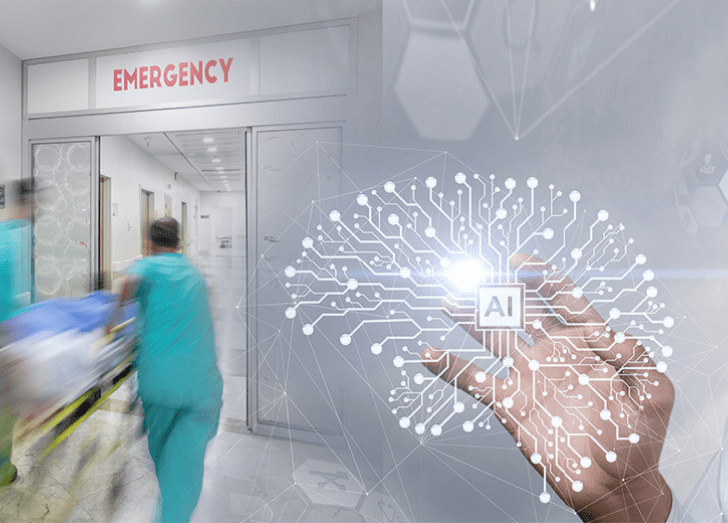
Equip frontline clinicians and health-system leaders with the knowledge and hands-on skills they need to critically evaluate, safely integrate, and supervise AI technologies in the emergency and acute care settings. Build practical competence in clinical AI fundamentals, governance, and real-world applications that improve workflow, safety, quality, and operational performance.
- Live Online
This course is taught online in real time.
Additionally, all sessions will be recorded and made available to participants for online viewing for 60 days after the end of the course.
$700 Save with early registration
For a full list of profession pricing see below.
View All
Fee increases to $800 after
Continuing Education
Earn up to:
11.75 AMA PRA Category 1 Credit(s) ™
View All
Two Days
Please view the Schedule for a full description of the program.
On This Page
Overview
AI in Emergency Medicine is a two-day, 15-hour continuing medical education course designed to equip frontline clinicians, educators, and health-system leaders with a foundational understanding and practical skills for applying artificial intelligence safely and effectively in the emergency care environment.
Day One focuses on core concepts, architecture, and governance of clinical AI—preparing participants to understand how modern models work, how to evaluate them, and how to manage the organizational, legal, and ethical implications of deploying AI-enabled tools.
Day Two is a hands-on practicum, emphasizing real-world use cases, clinical prompting, workflow integration, triage and safety applications, documentation and revenue cycle tools, and operational considerations for bringing AI solutions into emergency departments and acute-care settings.
The goal of this course is to prepare clinicians to critically evaluate, safely integrate, and thoughtfully supervise AI technologies in emergency care, including:
- Understanding the architecture and capabilities of contemporary AI models
- Identifying opportunities and risks in clinical workflows
- Applying best practices for prompting, oversight, documentation, and patient communication
- Recognizing governance, regulatory, and ethical frameworks needed for safe implementation
- Evaluating clinical quality implications and using AI for diagnostic accuracy, triage quality, and operational performance
This course is relevant for clinicians working in emergency medicine, critical care, hospital medicine, urgent care, internal medicine, and family medicine, as well as operational leaders, quality officers, and educators who supervise or evaluate AI-enabled clinical tools.
Learning Objectives
- Describe the core architecture and evolution of modern AI models, including large language models and agentic systems.
- Identify clinical use cases in emergency medicine where AI can improve diagnostic accuracy, triage quality, documentation, and operational performance.
- Apply evidence-based prompting strategies to interact effectively with clinical AI tools and evaluate the reliability of their outputs.
- Assess risks, limitations, and failure modes of AI tools in acute and time-sensitive clinical environments.
- Discuss governance, regulatory, ethical, and medicolegal considerations involved in deploying AI for patient care.
- Implement strategies for safe integration of AI into local workflows, including oversight, documentation standards, and quality review.
- Recognize best practices for evaluating and monitoring AI tools after deployment, including methods for measuring impact on diagnostic quality and equity.
- Collaborate with operational leaders and IT partners to bring new AI-enabled tools into clinical systems responsibly.
Developed and Offered By:

Continuing Education courses are developed by faculty from Harvard Medical School's teaching hospitals and accredited by Harvard Medical School. This course is offered by Beth Israel Deaconess Medical Center.
Co-Provider:


Who Should Participate
Specialty Physicians, Nurses, Nurse Practitioners, Physician Assistants, and Others
Schedule
All agenda sessions are in Eastern Time.
Thursday, December 3, 2026
Welcome
9:00-9:15 am
Keynote Presentation: Architecture of AI
9:15-10:15 am
Waves of AI: Rules to Statistical Models to Generative AI
10:15-11:00 am
Mental Break
11:00-11:15 am
Language Models on the Leading Edge: Agents
11:15 am-12:00 pm
GenAI and Trust: How Do We Know What's Real
12:00-12:45 pm
Lunch
12:45-1:30 pm
Keynote Presentation 2: How are We Going to Work Together with AI
1:30-2:30 pm
Bringing New Tools Into Your System
2:30-3:15 pm
Mental Break
3:15-3:30 pm
Governance, Politics, Ethics
3:30-4:15 pm
Learning Points Review
4:15-4:30 pm
Friday, December 4, 2026
Welcome
9:00-9:15 am
Keynote Presentation: Reducing Errors with Open AI
9:15-10:30 am
Tools in Your Pocket: UpToDate, OpenAI, and DoximityGPT
10:30-11:15 am
Mental Break
11:15-11:30 am
Small Group Workshop: Prompting Like a Pro
11:30 am-12:30 pm
Lunch
12:30-1:15 pm
Ambient Scribes: Evidence, Implementation, and Evaluation for Health Systems
1:15-2:00 pm
AI and Triage Quality
2:00-2:45 pm
Mental Break
2:45-3:00 pm
AI and Revenue Cycle Management
3:00-3:45 pm
Operations Panel Discussion
3:45-4:00 pm
Learning Points Review
4:00-4:15 pm
Faculty
Harvard Medical School Continuing Education attracts the best and brightest faculty from all around the world. As a student in this course, you’ll have access to outstanding course directors and faculty.
Keynotes and Course Directors

Eric Horvitz
MD, PhD | Keynote Speaker
- Chief Scientific Officer, Microsoft

Robert Korom
MD | Keynote Speaker
- Chief Medical Officer, Penda Health

Adam Rodman
MD | Keynote Speaker
- Director of AI Programs & Director of Foundations in Digital Education Carl J Shapiro Institute for Research and Education, Beth Israel Deaconess Medical Center
- Assistant Professor of Medicine, Harvard Medical School

Andrew Taylor
MD | Course Director
- Professor, Emergency Medicine, University of Virginia (UVA) School of Medicine
- Vice-Chair, Research and Innovation, Department of Emergency Medicine, UVA

Adrian Haimovich
MD, PhD | Course Director
- Director, Division of Artificial Intelligence, Department of Emergency Medicine, Beth Israel Deaconess Medical Center
- Assistant Professor, Emergency Medicine, Harvard Medical School
Jason Adler, MD, CEDC, FACEP, FAAEM
Clinical Associate Professor, Department of Emergency Medicine, University of Maryland School of Medicine Director of Compliance and Reimbursement, Department of Emergency Medicine
Majid Afsar, MD, MS
Associate Professor and Director of Learning Health System, Co-Director ICU Data Science Lab, Department of Medicine & Department of Biostatistics and Medical Informatics, University of Wisconsin
Gabriel Erion Barner, MD
Attending Emergency Physician, Beth Israel Deaconess Medical Center
Instructor in Emergency Medicine, Harvard Medical School
Tom Hartvigsen, PhD
Assistant Professor of Data Science & Assistant Professor of Computer Science (by courtesy), University of Virginia
Alex Janke, MD
Attending Emergency Physician, University of Michigan
Health Services Researcher, University of Michigan
Brian Patterson, MD
Physician Administrative Director for Clinical AI, UW Health
Medical Informatics Director, Predictive Analytics and Clinical Decision Support, UW Health
Associate Professor, Emergency Medicine, University of Wisconsin
Director, Emergency Care Systems Lab, UW Health
Jesse Pines, MD, MBA, MSCE
Chief of Clinical Innovation, US Acute Care Solutions
Clinical Professor of Emergency Medicine, The George Washington University
Professor of Emergency Medicine, Drexel College of Medicine
Member, Board of Directors, MedStar Health Research Institute
Tehreem Rehman, MD, MPH, MBA, ABPM-CI
Associate Medical Director and Director of Geriatric Service, Department of Emergency Medicine, The Mount Sinai Hospital
Assistant Professor, Division of Clinical Informatics, Department of Emergency Medicine, Icahn School of Medicine at Mount Sinai
Physician Advisor, Utilization Review, Mount Sinai Health System
Rohit Sangal, MD, MBA
AI Committee Chair, American College of Emergency Physicians
Director, Healthcare Administration Fellowship, Department of Emergency Medicine &
Associate Medical Director, Emergency Department, Yale New Haven Hospital
Assistant Professor, Emergency Medicine, Yale University School of Medicine
Mona Sloane, PhD
Assistant Professor of Data Science and Media Studies, University of Virginia (UVA)
Director, Sloane Lab
Founding Editor, “Co-Opting AI” Book Series"
Graham Walker, MD
Assistant Physician in Chief, Technology and Innovation & Co-Director, Advanced Tech Development & Emergency Physician, The Permanente Medical Group
Maame Yaa Yiadom, MD, MPH, MSCI
Director of Precision Analytics and Data Integration, Emergency Medicine & Vice Chair for Research, Department of Emergency Medicine, Stanford University School of Medicine
Biodesign Faculty Fellow, Stanford Byers Center for Biodesign
Associate Professor, Emergency Medicine, Stanford University
Complete Your Registration
Started a registration? Log in to enroll today.
Request Information
Interested in learning more about this program? Sign up for details.
Course Fees
Registration Details
You may register through our secure online environment and will receive an email confirmation upon receipt of your payment. Prices include CME credit, electronic syllabus, and most of the recordings are available for up to 60 days after the course ends. At the end of the registration process, a $10 non-refundable processing fee will be added to your registration.
| Role | Course Fee | Early Registration Course Fee |
|---|---|---|
| Physician (MD/DO) | $800 | $700 |
| Nurse (RN/APRN) | $700 | $600 |
| PA | $700 | $600 |
| Resident/Fellow | $400 | $300 |
| Allied Health Professional / Other | $800 | $700 |
Accreditation

The Harvard Medical School designates this live activity for a maximum of 11.75 AMA PRA Category 1 Credit(s)™. Physicians should claim only the credit commensurate with the extent of their participation in the activity.
For the purpose of recertification, the American Academy of Nurse Practitioners Certification Board and American Nurses Credentialing Center accept AMA PRA Category 1 Credit™ issued by organizations accredited by the ACCME (Accreditation Council for Continuing Medical Education). We would also suggest that learners check with their state licensing board to ensure they accept reciprocity with AMA PRA Category 1 Credit™ for re-licensure.
The National Commission on Certification of Physician Assistants (NCCPA) states that AMA PRA Category 1 Credits™ are acceptable for continuing medical education requirements for recertification. We would also suggest that learners check with their state licensing board to ensure they accept reciprocity with AMA PRA Category 1 Credit™ for re-licensure.
The Royal College of Physicians and Surgeons of Canada recognizes conferences and workshops held outside of Canada that are developed by a university, academy, hospital, specialty society or college as accredited group learning activities.
The American Medical Association (AMA) has an agreement of mutual recognition of continuing medical education (CME) credit with the European Union of Medical Specialists (UEMS). Additional information regarding this agreement may be found on the Union of European Medical Specialists website.