
Turning Ideas into Ethical, Implementable Innovation
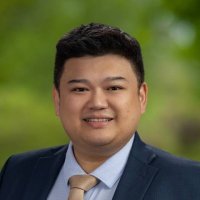
"Education and clinical care are both spaces where the stakes are high, and the margin for error is small."
As an advanced practice pharmacist and educator in Sacramento, California, Dr. Jason Wong, PharmD, APh, straddles multiple worlds every day. Clinically, he practices within Sutter Health, with a background in psychiatric pharmacy and cardiology-focused care. Academically, he serves as an Assistant Professor of Clinical and Administrative Sciences and Director of Clinical Affairs at California Northstate University, College of Pharmacy. In 2025, he added another role to that mix: co-founder and Chief Health Officer of IQgenomyx, a pharmacists-led pharmacogenomics venture that was crystallized during the Harvard Macy Institute Leading Innovation in Health Care and Education course at Harvard Medical School.
For Wong, the decision to apply to the program came at a time when he was wrestling with the realities of leading change in complex, highly constrained environments. “Education and clinical care are both spaces where the stakes are high, and the margin for error is small,” he reflects. He was not looking for inspiration alone; he wanted a disciplined, ethical framework for innovation—one that would help him turn ideas into sustainable practice in the midst of resistance, limited time, and competing priorities.
He was particularly attuned to the rapid evolution of AI in both health care and education. Having spent countless years exploring what emerging technologies could do, he was now searching for a way to guide their adoption responsibly: to ensure that change was not only possible, but equitable, ethical, and grounded in real-world constraints.
A Leadership Lab for Real-World Change
Wong describes the program as “immersive, challenging in the best way, and unexpectedly catalytic.” Rather than a traditional course focused on content delivery, he experienced it as a leadership laboratory: part innovation toolkit, part real-time rehearsal for implementation.
The week helped him think more clearly about how change actually happens through people, culture, incentives, and systems rather than through ideas alone. He points to two core insights that have stayed with him:
- Innovation starts with discipline. For Wong, that means rigorous problem definition, careful stakeholder mapping, and a realistic pathway to implementation before rushing toward solutions.
- Sustainable change requires systems. Governance structures, training, feedback loops, and shared ownership are now central to how he evaluates whether an innovation can last.
These lessons have reshaped not only how he approaches institutional projects but also how he leads in his everyday roles across the clinical, academic, and entrepreneurial domains.
From Whirlwind to Clarity: Learning in Community
One of the most memorable aspects of the program for him was learning alongside an international, interdisciplinary cohort. The diversity of professional and cultural perspectives pushed him to distinguish between what might be universal and what must be adapted to local context—differences in culture, resources, and institutional structures.
This diversity came to life in the small-group innovation exercises and case-based discussions. On the first day, Wong remembers feeling genuinely unsettled: dropped into a new group, everyone posting ideas on whiteboards, seemingly “speaking different languages” despite a clear prompt. The process felt like a whirlwind of confusion.
Yet that initial discomfort became one of the most valuable learning experiences of the week. As days passed, the group began to recognize the underlying structure behind the innovation process. By day four, their thinking had coalesced; by day five, they were ready to present an idea that had evolved into a concrete, testable product. The experience, he says, continues to inform how he approaches messy, multifaceted challenges in his own work.
The group-learning environment also reshaped his understanding of how innovation in health care and education truly works. He came away with a reinforced belief that best practices do not simply transport neatly from one institution to another. What transfers is a disciplined method: defining the problem, mapping stakeholders, prototyping, measuring, iterating, and building the infrastructure to sustain the work.
Faculty as Partners and Challengers
Wong experienced the faculty as both supportive and rigorously demanding. They deliberately encouraged psychological safety, inviting questions and vulnerability, while simultaneously pushing scholars to clarify their thinking and anchor their plans in reality. This balance was crucial, and he felt mentored rather than merely instructed.
He remains connected to many of the faculty who guided him through the week, and those relationships have extended beyond the course into continued mentorship and professional dialogue. In many ways, he notes, the program felt less like a one-week immersion and more like entry into an ongoing community of practice.
Shaping Projects and Launching a Company
Wong arrived at the program with a specific project: a framework for leadership and innovation in an AI-driven future of education. His goal was to design faculty development, guidance, and governance structures to support the responsible use of AI in teaching, research, assessment, and administration. Through the program, this idea was transformed from a broad aspiration into a phased, measurable plan with clearer ownership and sustainability.
At the same time, another major initiative was quietly taking shape: IQgenomyx. During the course in June 2025, discussions about implementation science, stakeholder alignment, and ethical innovation helped refine the concept of a pharmacist-led pharmacogenomics model. Wong and his co-founder, Iqra Ahmad, moved from interest to a clear understanding of who the service was for, how it would fit into existing workflows, what outcomes would matter, and how to pilot responsibly. By August 2025, they had incorporated the company, with Ahmad as CEO and Wong as Chief Health Officer.
The program also changed his personal working style. He now emphasizes small, testable steps and early alignment before scaling. He has become meticulous about mapping stakeholders—often literally, using stacks of sticky notes to visualize the “players in the game” before committing to any major initiative.
Navigating Barriers with Discipline and Empathy
In the months following the program, Wong has applied its methods across his roles. In education, he now structures change through clearer problem framing, stakeholder mapping, and measurable pilot phases rather than sweeping, one-time rollouts. Faculty development initiatives and AI-related changes are introduced iteratively, with space for feedback and adjustment.
In entrepreneurship, he has adopted a pilot-first mindset for IQgenomyx, designing services that fit real clinical workflows and demonstrate value through tangible outcomes rather than abstract promises.
The obstacles, however, are familiar: time constraints, skepticism, ethical concerns, and competing institutional priorities. For AI, concerns often center on privacy, accuracy, and appropriate use. For pharmacogenomics, they include integration into clinical workflows, adoption by clinicians, and proof of value. The program, he says, equipped him with tools to address these barriers through coalition-building, disciplined messaging, and an emphasis on earning credibility through small wins.
One of the clearest shifts in his decision-making has been his insistence on upfront alignment: spending more time at the beginning to define the problem and clarify what success looks like for each stakeholder—administrators, faculty, clinicians, and learners—before building the solution. This early alignment, he has found, prevents downstream friction and supports more sustainable implementation.
Looking Ahead: A Trajectory Shaped by Ethical Innovation
Wong sees the program as a pivotal inflection point in his leadership journey. It strengthened his ability to lead across the boundaries of academics, healthcare, and industry, and clarified how he wants to grow his impact over the next several years. He anticipates it will continue to influence how he designs scalable educational initiatives, how he measures impact, and how his entrepreneurial endeavors evolve, with a sustained focus on ethical implementation and equity.
The Leading Innovation in Health Care and Education program did more than provide tools; it reshaped how he thinks, leads, and builds in the service of patients, learners, and communities through one disciplined, ethically grounded innovation at a time.