
AI in Clinical Medicine
- Continuing Education

Gain practical skills and insights to apply cutting-edge AI technologies in clinical medicine through expert-led sessions, real-world case studies, and interactive discussions during this live online course.
- Live Online
This is a three-day online course taught in real time.
$2,500
Continuing Education
Earn up to:
27.00 AMA PRA Category 1 Credits ™
27.00 ANCC contact hours
View All
Three Days
The first two days will cover the fundamental principles of AI.
The last day will concentrate on practical strategies for integrating AI into clinical organizations and practices.
On This Page
Overview
Over the last few decades, the digitization of medical records has created opportunities for automation and data-driven clinical support for a range of routine clinical applications. Today, artificial intelligence (AI) is accelerating innovation in healthcare. We are on the cusp of revolutionizing how we care for patients in profound ways.
New technologies are available now to help you transform your practice. AI medical scribes, new research tools and diagnostic tests, and personalized treatment options are just a few applications of AI that are beginning to have a direct impact on clinicians and the patients they serve.
Until recently, most health care providers have not received formal training in AI. Now is the time for physicians, nurses, advanced practice providers, and all allied health professionals to prepare for how AI is changing medical care.
This live online course focuses on cutting-edge and exciting new applications of AI, including foundational principles and lessons that you will be able to take directly back to your practice. Over three days, you will hear from medical society leaders, academic leaders, and innovators from academia and industry.
Sessions will delve into the applications of AI in diagnosing diseases, predicting patient outcomes, patient monitoring, and personalizing treatment plans. Through lectures, field-specific breakout sessions, and real-world case studies, you will gain the knowledge to harness AI’s potential to advance patient care, research, and health systems innovation. Faculty experts will explore the ethical implications, challenges, and opportunities inherent in integrating AI into modern health care practice.
This course will cut through the hype around AI to provide realistic, firsthand perspectives on the potential of AI in clinical practice. Health care professionals, including physicians, nurses, nurse practitioners, physician assistants, and other practitioners are highly encouraged to join us for this transformational learning experience.
Learning Objectives
- Define the unique challenges and opportunities for integrating AI across specialized health care fields.
- Discuss the ethical considerations and potential biases in AI algorithms, especially in decision-making processes related to patient care, diagnosis, and treatment planning.
- Review the current status of AI regulation and how it can impact health care.
- Assess the long-term quality and accuracy of AI technologies and their impact on patient care.
- Develop methods for integrating AI into medical education, including content generation, evaluation, and ensuring alignment with educational objectives.

Who Should Participate
Clinicians treating patients in any type of setting including, physicians, nurses, nurse practitioners, and clinical leaders
Schedule
*The Course Schedule is subject to change.
All agenda sessions are in Eastern Time.
Wednesday, December 2, 2026
Welcome
9:00-9:05 am
Keynote: Paging Dr. A.I.: How AI is Changing the Face of Clinical Care
9:05-9:50 am
Q&A
9:50-10:00 am
Learning the AI Lingo: Machine Learning, Deep Learning, and Large Language Models
10:00-10:45 am
A Look Into the Black Box: Technical Background for Clinicians
10:45-11:15 am
Medical Data as the Backbone of AI
11:15-11:45 am
Panel Discussion
11:45 am-12:15 pm
Break
12:15-12:45 pm
Chatbots in Health Care: A Historical Expedition
12:45-1:30 pm
AI Learning Revolution: Transforming Medical Education
1:30-2:15 pm
Ambient Scribes
2:15-2:45 pm
Panel Discussion and Q&A
2:45-3:15 pm
Break
3:15-3:30 pm
An AI designed drug for IPF: from preclinical development to phase II in under 3 years
3:30-4:00 pm
Precision Medicine: AI and Personalized Treatment in Oncology
4:00-4:30 pm
AI Powered Drug Repositioning and Clinical Trial Design
4:30-5:00 pm
Panel Discussion and Q&A
5:00-5:30 pm
Thursday, December 3, 2026
Welcome
9:00-9:05 am
Keynote: Ethics and AI in Healthcare
9:05-9:50 am
Law and Regulation in AI
9:50-10:35 am
Law and Regulation in AI
10:35-11:20 am
Panel Discussion and Q&A
11:20-11:50 am
Break
11:50 am-12:30 pm
Telemetry/Mhealth for early detection of heart failure exacerabation
12:30-1:05 pm
Hidden risks of AI in your practice
1:05-1:40 pm
Can Chat bots improve mental health?
1:40-2:15 pm
Panel Discussion and Q&A
2:15-2:45 pm
Break
2:45-3:00 pm
Bias in Risk Stratification for allocation and policy
3:00-3:35 pm
Robust, Fair and private AI
3:35-4:10 pm
Algorithmic bias in clinical scores and implications for AI
4:10-4:45 pm
Panel Discussion and Q&A
4:45-5:15 pm
Friday, December 4, 2026
Welcome
9:00-9:05 am
Brain computer interfaces and decoding speech
9:05-9:35 am
How Can I Help You? Clinical Decision Support in the EHR
9:35-10:05 am
Implementing AI in your small practice
10:05-10:35 am
But I Want it Now!: Barriers to Clinical AI Implementation
10:35-11:05 am
Panel Discussion and Q & A
11:05-11:35 am
Break
11:35-11:50 am
Money Talks: How AI Can Help You Improve Your Bottom Line
11:50 am-12:20 pm
AI and Reducing Healthcare Provider Burnout
12:20-12:50 pm
Why AI may be good for our health but hurt our wallets
12:50-1:20 pm
Panel Discussion and Q&A
1:20-1:50 pm
Break
1:50-2:20 pm
Study Hall -Clinical Applications: Pathology
2:20-3:20 pm
Study Hall -Clinical Applications: Endocrinology
2:20-3:20 pm
Study Hall -Clinical Applications: Opthalmology
2:20-3:20 pm
Study Hall -Clinical Applications: Nursing
2:20-3:20 pm
Break
3:20-3:25 pm
Study Hall -Clinical Applications: Gastroenterology
3:25-4:25 pm
Study Hall -Clinical Applications: Critical Care
3:25-4:25 pm
Study Hall - Clincal Applications: Cardiology
3:25-4:25 pm
Study Hall - Clinical Applications: Radiology
3:25-4:25 pm
Study Hall - Clinical Applications: Surgery or Anesthesia
3:25-4:25 pm
Break
4:25-4:40 pm
No CME: Study Hall - Virtual demonstrations: Ambient Scribe from Abridge *No CME Credit Available
4:40-5:40 pm
No CME: Study Hall - Virtual demonstrations: Leveraging clinician's expertise with Agentic AI *No CME Credit Available
4:40-5:40 pm
No CME: Study Hall - Virtual demonstrations: Evidence search using OpenEvidence *No CME Credit Available
4:40-5:40 pm
No CME: Study Hall - Virtual demonstrations: Doctronic *No CME Credit Available
4:40-5:40 pm
No CME: Study Hall - Virtual demonstrations: Uptodate Expert AI *No CME Credit Available
4:40-5:40 pm
No CME :Study Hall - Virtual demonstrations: Glasshealth's clinical decision support platform *No CME Credit Available
4:40-5:40 pm
Faculty
Harvard Medical School Continuing Education attracts the best and brightest faculty from all around the world. As a student in this course, you’ll have access to outstanding course directors and faculty.
Course Directors
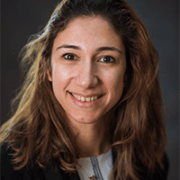
Maha Farhat, MD, MSc
Course Director
- MD at the Massachusetts General Hospital Division of Pulmonary and Critical Care Medicine
- Gilbert S. Omenn Associate Professor of Biomedical Informatics
- Associate Director, Bioinformatics and Integrative Genomics (BIG) PhD Track

Samir Kendale, MD, FASA
Course Director
- Assistant Professor of Anaesthesia, Harvard Medical School
- Medical Director of Anesthesia Informatics, Beth Israel Lahey Health
Monica Agrawal, PhD
Assistant Professor, Duke University
Co-founder, Layer Health
Kenya V Beard EdD AGACNP FNYAM ANEF FAAN FADLN
President at K Beard & Associates, LLC
Tyler Berzin, MD
Associate Professor of Medicine, Harvard Medical School
Sivasubramanium Bhavani, MD
Assistant Professor of Medicine, Emory University
Sheila A. Bond, MD
Director, Clinical Content Strategy, Clinical Effectiveness, Wolters Kluwer Health
David Canes, MD
Uroogst specializing in Robotic Prostatectomy and Kidney Surgery at Lahey Health
Leo Celi, MD
Principal Research Scientist, Massachusetts Institute of Technology
Associate Professor, Harvard Medical School
Instructor, Harvard T.H. Chan School of Public Health
Associate Program Director Department of Medicine, Beth Israel Deaconess
Morgan Cheatham, MD, BS
Partner and Head of Healthcare and Life Science at Breyer Capital
Anand Chowdhury, MD, MMCi
Critical Care Specialist, Pulmonologist at Duke Hospital
I. Glenn Cohen
James A. Attwood and Leslie Williams Professor of Law
Deputy Dean
Faculty Director, Petrie-Flom Center for Health Law Policy, Biotechnology & Bioethics
Byron Crowe, MD
Chief Medical Officer at Doctronic
Roxana Daneshjou, MD, PhD
Assistant Professor of Biomedical Date Science and Dermatology and By, Courtesy, of Radiology
Department of Biomedical Data Science
Practices at Stanford Health Care Stanford Medicine Children's Health
James Diao, MD
Brigham and Women's Hospital
Matthew Engelhard, MD, PhD
Assistant Professor of Biostatistics & Bioinformatics Duke University School of Medicine
Assistant Professor in the Department of Electrical and Computer Engineering
Seth A. Gross, MD, FACG, FASGE, AGAF
Clinical Chief of Gastroenterology and Hepatology
NYU Langone Health
Professor of Medicine
NYU Grossman School of Medicine
Daniel A. Hashimoto, MD, MSTR
Assistant Professor of Surgery at the Hospital of the University of Pennsylvania Active Surgeon, Penn Presbyterian Medical Center, Philadelphia, PA
Active Surgeon, Pennsylvania Hospital, Philadelphia, PA
Attending Surgeon, Hospital of the University of Pennsylvania, Philadelphia, PA
Affiliated faculty, General Robotics Automation Sensing and Perception (GRASP) Laboratory, University of Pennsylvania School of Engineering and Applied Science
Senior Fellow, Institute for Biomedical Informatics, Perelman School of Medicine, University of Pennsylvania
Michael Heinz, MD
Research Psychiatrist at Dartmouth College and Dartmouth Health
Maia Hightower, MD, MPH, MBA
Physician Executive | Healthcare AI & Digital Transformation Advisor | Former CDTO UChicago Medicine
David C. Klonoff, M.D., FACP, FRCP (Edin)
Fellow AIMBE
President, Diabetes Technology Management, Inc.
Allison Koenecke, PhD, MS
Assistant Professor of Information Science at Cornell Tech
Isaac Kohane, MD, PhD
Chair of the Department of Biomedical Informatics, Harvard Medical School
Marion V. Nelson Professor of Biomedical Informatics, Harvard Medical School
Associate Professor of Medicine, Brigham and Women's Hospital
Constance Leman, MD, PhD
Diagnostic Radiologist, Massachusetts General Hospital
Bill Lotter, PhD
Assistant Professor, Dana-Farber Cancer Institute and Harvard Medical School.
Toby Michael Maher, MD, PhD
Pulmonary Critical Care at Keck Medicine of USC
Arjun (Raj) Manrai, PhD
Assistant Professor of Biomedical Informatics, Harvard Medical School
Senior Deputy Editor, NEJM AI
Genevieve Melton-Meaux, MD, PhD
Professor, Division of Colon & Rectal Surgery, Department of Surgery, University of Minnesota
Director, Center for Learning Health System Sciences
Professor and Core Faculty Member, Institute of Health Informatics
Senior Associate Dean for Health Informatics and Data Science
Chief Health Informatics and AI Officer, Fairview Health Services
David Ouyang, MD
Research Scientist, Kaiser Permanente Northern California Division of Research
Non-Invasive cardiologist and Echocardiographer, Kaiser Permanente Santa Clara Medical Center
Natalie Pageler, MD, MEd
Chief Health Informatics Officer, Stanford Children’s Health
Division Chief, Clinical Informatics, Stanford University
Co-founder, Clinical Informatics Fellowship, Stanford University
Associate Dean for Maternal and Child Health (Clinical Informatics), Stanford University
Dereck Paul, MD
Co-Founder & CEO, Glass Health
Emma Pierson, PhD
Assistant Professor of computer science, affiliated with the Berkeley AI Research Lab, Computational Precision Health, and the Center for Human-Compatible AI
Pranav Rajpurkar, PhD
Assistant Professor of Biomedical Informatics, Harvard Medical School
Adam Rodman, MD, MPH, FACP
Director of AI Programs, Shapiro Center for Research and Education
Jean-Claude Saghbini, PhD
President, Lumeris Technology Services
Matthew Sakumoto, MD
Internal Medicine Physician, UCSF
Stanley Y. Shaw, MD, PhD
Associate Vice President, Digital Medicine, Amgen
Teaching Associate for Harvard Medical School Executive Education
Collin M. Stultz, MD, PhD
Nina T. and Robert H. Rubin Professor, Electrical Engineering & Computer Science and Institute for Medical Engineering & Science, Massachusetts Institute of Technology
Director, Harvard-MIT Health Sciences & Technology, Massachusetts Institute of Technology
Associate Director, Institute for Medical Engineering and Science, Massachusetts Institute of Technology
David Tester, PhD, BS
Founder and CEO of Tapestry Bio
Matt Troup, PA-C
Clinical Strategy Principal at Abridge
Rebecca Weintraub Brendel, MD, JD
Director, HMS Center for Bioethics
Associate Professor of Psychiatry
Francis Glessner Lee Associate Professor of Global Health and Social Medicine in the Field of Legal Medicine
Eliezer Van Allen, MD
Chief, Division of Population Sciences
Chandra Nohria Family Chair for AI in Cancer Research
Physician
Professor of Medicine, Harvard Medical School
Ziv Williams, MD
Neurosurgical Oncologist, Neurosurgeon, Associate Professor in Neurosurgery Massachusetts General Brigham
Kun-Hsing "Kun" Yu, MD, PhD
Department of Biomedical Informatics, Harvard Medical School
Travis Zack, MD, PhD
Oncologist, UCSF
Nazlee Zebardast, MD MPH MSc FRCSC
Assistant Professor of Ophthalmology
Medical Director, Glaucoma Imaging
Mass Eye and Ear / Harvard Medical School
About the Program
AI Learning Opportunities
Request Information
Interested in learning more about this program? Sign up for details.
Course Fees
Registration Details
Tuition for AI In Clinical Medicine is listed below. You may register through our secure online environment and will receive an email confirmation upon receipt of your payment.
Prices include CME credit, electronic syllabus and access to recordings for 60 days after the course.
At the end of the registration process, a $10 non-refundable processing fee will be added to your registration.
| Role | Course Fee |
|---|---|
| Physician (MD/DO) | $2,500 |
| Nurse (RN/APRN) | $2,500 |
| PA | $2,500 |
| Psychologist | $2,500 |
| Resident / Fellow | $2,500 |
| Social Worker | $2,500 |
| Allied Health Professional / Other | $2,500 |
Registrants who submit a registration by the early registration deadline will receive $190 off the course fee. Course fees do not include educational materials. For more information, visit Learner Policies.
Accreditation

The Harvard Medical School designates this other/blended for a maximum of 27.00 AMA PRA Category 1 Credit(s)™. Physicians should claim only the credit commensurate with the extent of their participation in the activity.
Harvard Medical School designates this Live Activity for a maximum of 27.00 ANCC contact hours.
Harvard Medical School has been authorized by the American Academy of PAs (AAPA) to award AAPA Category 1 CME credit for activities planned in accordance with AAPA CME Criteria. This activity is designated for 27.00 AMA PRA Category 1 Credits ™. PAs should only claim credit commensurate with the extent of their participation.
Successful completion of this CME activity, which includes participation in the evaluation component, enables the participant to earn up to 27.00 MOC points in the American Board of Internal Medicine’s (ABIM) Maintenance of Certification (MOC) program. It is the CME activity provider’s responsibility to submit participant completion information to ACCME for the purpose of granting ABIM MOC credit.
This activity meets the criteria of the Massachusetts Board of Registration in Medicine for 1.50 credits of Risk Management Study
The Royal College of Physicians and Surgeons of Canada recognizes conferences and workshops held outside of Canada that are developed by a university, academy, hospital, specialty society or college as accredited group learning activities.
The American Medical Association (AMA) has an agreement of mutual recognition of continuing medical education (CME) credit with the European Union of Medical Specialists (UEMS). Additional information regarding this agreement may be found on the Union of European Medical Specialists website.