
Neurological Emergencies and Urgencies for Primary Care Clinicians
- Continuing Education
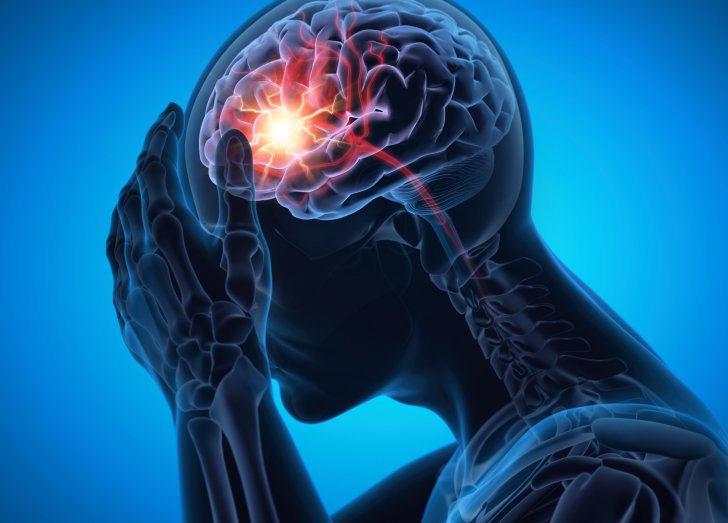
Develop practical skills to rapidly evaluate and manage primary care patients presenting with neurological complaints by using focused exams, risk stratification, and evidence-based algorithms. Learn how to identify high-risk conditions, initiate early treatment, and determine appropriate imaging across common neurological presentations, while deciding on appropriate referral vs. in-office management.
- Live Online
This course is taught online in real time.
Additionally, all sessions will be recorded and made available to participants for on-demand online viewing for 90 days after the end of the course.
All live streaming and recorded sessions and workshops are eligible for AMA PRA Category 1 Credits™ and other relevant credits. (Note: Evaluations must be completed within 60 days of the conclusion of the course to receive CME credit.)
$585 Save with early registration
This is the standard price, for a full list of profession pricing see below.
View All
Fee increases to $685 after
Continuing Education
Earn up to:
15.00 AMA PRA Category 1 Credit(s) ™
View All
All evaluations and credit claims must be completed within 60 days of the course end date.
2 Days
Please view the Schedule for a full description of the program.
On This Page
Overview
Neurological Emergencies and Urgencies for Primary Care Clinicians is a two-day, 16-hour course that provides best practices, methods, and algorithms to evaluate and manage the patient with a neurological complaint. Participants will learn to identify and accurately diagnose neurological conditions – asking the right questions, doing the right exam, and sending them to the right place for the next steps.
The goal of this course is to help clinicians:
- Perform a rapid focused neurologic exam.
- Identify which patients presenting with symptoms such as headache, back pain, numbness, memory loss, and dizziness require urgent intervention, imaging, or referral, and which can be managed in the office.
- Determine which patients with new headaches need urgent referral vs. an outpatient workup.
- Use bedside maneuvers to determine which patients with acute dizziness or vertigo have peripheral vertigo (and treat them!) and which need urgent workup for a central cause.
- Optimize treatment for your patients with new, worsening, or persistent migraines.
Learning Objectives
- Learn a rapid, office-based physical exam to diagnose and treat BPPV in the office, and determine which patients need urgent neuroimaging.
- Understand how to determine which headache patients need an urgent workup, and how to effectively manage those who don’t.
- Know what to do with patients with potential TIA symptoms to rapidly risk stratify them and prevent strokes.
- Apply an evidence-based diagnostic algorithm for patients with acute dizziness using a ‘timing & triggers’ approach.
- Identify which patients with back pain need urgent imaging, and initiate treatment for those who don’t.
- Understand how and when to suspect functional neurological disease, how to diagnose and manage these patients, and how to best communicate with them.
Developed and Offered By:


Continuing Education courses are developed by faculty from Harvard Medical School's teaching hospitals and accredited by Harvard Medical School. This course is offered by Beth Israel Deaconess Medical Center and Mass General Brigham.

Who Should Participate
Primary Care Physicians, Nurses, Nurse Practitioners, and Physician Assistants
Schedule
All agenda sessions are in Eastern Time.
Wednesday, February 24, 2027
Welcome and Introduction
7:50-8:00 am
Back Pain 2027: When to Image and When to Refer
8:00-8:30 am
Interactive Q&A
8:30-8:45 am
Updates in Imaging for Back Pain: What to Order and How to Use the Results
8:45-9:15 am
Interactive Q&A
9:15-9:30 am
Managing Low Back Pain: A Practical Approach for PCPs
9:30-10:00 am
Interactive Q&A
10:00-10:15 am
Break
10:15-10:30 am
Headache: Who to Work Up and What Tests to Order
10:30-11:00 am
Interactive Q&A
11:00-11:15 am
Migraine: Up-to-date Management
11:15-11:45 am
Interactive Q&A
11:45 am-12:00 pm
Lunch Break
12:00-1:00 pm
Peripheral Neuropathy: How to Diagnose and Start Treatment
1:00-1:30 pm
Interactive Q&A
1:30-1:45 pm
Tips on Consultations to Neurologists (by a neurologist in office practice)
1:45-2:15 pm
Interactive Q&A
2:15-2:30 pm
Altered Mental Status and Prescriptions: Managing Polypharmacy in the Geriatric Population
2:30-3:00 pm
Interactive Q&A
3:00-3:15 pm
Break
3:15-3:30 pm
New-Onset Visual Complaints
3:30-4:00 pm
Interactive Q&A
4:00-4:15 pm
Learning Points of the Day
4:15-4:45 pm
Interactive Q&A
4:45-5:00 pm
Thursday, February 25, 2027
Welcome and Introduction
7:50-8:00 am
Dizziness: Identifying Worrisome Patients in the Office Setting
8:00-8:30 am
Interactive Q&A
8:30-8:45 am
BPPV: Office Diagnosis and Treatment of This Very Common Cause of Dizziness
8:45-9:15 am
Interactive Q&A
9:15-9:30 am
TIA: The Symptoms May be Gone but the Danger is Not!
9:30-10:00 am
Interactive Q&A
10:00-10:15 am
Break
10:15-10:30 am
Episodic Symptoms in the Office Setting: Seizure, TIA or Syncope?
10:30-11:00 am
Interactive Q&A
11:00-11:15 am
Focal Weakness: Is it a Stroke or Something Else?
11:15-11:45 am
Interactive Q&A
11:45 am-12:00 pm
Lunch break
12:00-1:00 pm
Common Cranial Neuropathies: Who Can Be Managed in the Office? Who Needs Further Urgent Testing?
1:00-1:30 pm
Interactive Q&A
1:30-1:45 pm
Parkinson’s Disease and Worsening Symptoms: How to Treat and When to Refer
1:45-2:15 pm
Interactive Q&A
2:15-2:30 pm
Functional Neurological Disorders that Primary Care Clinicians Should Know
2:30-3:00 pm
Interactive Q&A
3:00-3:15 pm
Break
3:15-3:30 pm
Incidental Aneurysms and What to Do with Them
3:30-4:00 pm
Interactive Q&A
4:00-4:15 pm
Learning Points of the Day
4:15-4:45 pm
Interactive Q&A
4:45-5:00 pm
Faculty
Harvard Medical School Continuing Education offers faculty who are international experts and leading educators in their fields. As a student in this course, you’ll have access to outstanding course directors and faculty.
Course Directors

Joshua N. Goldstein
MD, PhD
- Director, Center for Neurologic Emergencies, Department of Emergency Medicine, Mass General Brigham
- Professor of Emergency Medicine, Harvard Medical School
Jonathan A. Edlow
MD, FACEP
- Department of Emergency Medicine, Beth Israel Deaconess Medical Center
- Professor of Medicine and Emergency Medicine, Harvard Medical School
Steven Atlas, MD, MPH
Distinguished Physician, Medicine-General Internal Medicine and Primary Care, Massachusetts General Hospital
Director, Practice-Based Research, Division of General Internal Medicine, Mass General Brigham
Associate Professor of Medicine, Harvard Medical School
Marc Bouffard, MD
Neurologist
Mass General Brigham Neuro-Ophthalmology Section
Assistant Professor of Neurology, Harvard Medical School
Rebecca Burch, MD
Associate Professor, Neurological Sciences, University of Vermont Medical Center
Katherine Coffey-Vega, MD
Geriatrician and Director of Inpatient and Emergency Geriatric Services, Carilion Clinic, Virginia
Associate Professor of Medicine, Virginia Tech and Carilion School of Medicine, Virginia
William Copen, MD
Physician Investigator, Department of Radiology, Mass General Brigham
Sara Finkelstein, MD, MSc
Attending Physician & Associate Director, Functional Neurological Disorder Unit, Massachusetts General Hospital
Assistant Professor in Neurology, Harvard Medical School
Andrea Harriott, MD, PhD
Attending Physician, Neurology, Massachusetts General Brigham
Clinical Investigator and Assistant Professor, NSI Neuro Stroke MGPO, Mass General Research Institute
Assistant Professor of Neurology, Harvard Medical School
Pushpa Narayanaswami, MD, FAAN
Director, Quality Improvement, Department of Neurology, Beth Israel Deaconess Medical Center
Associate Professor of Neurology/Neuromuscular Disease, Harvard Medical School
Alexis Roy, MD
Director, Acute Stroke Services, Brigham and Women's Hospital
Medical Director, Comprehensive Stroke Center, Mass General Brigham
Instructor in Neurology, Harvard Medical School
Ludy Shih, MD, MMSc
Clinical Director, Parkinson’s Disease and Movement Disorders Center, Department of Neurology, Beth Israel Deaconess Medical Center
Member of the Faculty (appointment pending), Harvard Medical School
Request Information
Interested in learning more about this program? Sign up for details.
Course Fees
Registration Details
You may register through our secure online environment and will receive an email confirmation upon receipt of your payment.
Prices include CME credit, electronic syllabus, some recordings for up to 90 days after course has ended, and refreshments at breaks and breakfast.
At the end of the registration process, a $10 non-refundable processing fee will be added to your registration.
| Role | Course Fee | Early Registration Course Fee |
|---|---|---|
| Physician (MD/DO) | $685 | $585 |
| Nurse (RN/APRN) | $585 | $485 |
| PA | $585 | $485 |
Accreditation

The Harvard Medical School designates this live activity for a maximum of 15.00 AMA PRA Category 1 Credit(s)™. Physicians should claim only the credit commensurate with the extent of their participation in the activity.
For the purpose of recertification, the American Academy of Nurse Practitioners Certification Board and American Nurses Credentialing Center accept AMA PRA Category 1 Credit™ issued by organizations accredited by the ACCME (Accreditation Council for Continuing Medical Education). We would also suggest that learners check with their state licensing board to ensure they accept reciprocity with AMA PRA Category 1 Credit™ for re-licensure.
The National Commission on Certification of Physician Assistants (NCCPA) states that AMA PRA Category 1 Credits™ are acceptable for continuing medical education requirements for recertification. We would also suggest that learners check with their state licensing board to ensure they accept reciprocity with AMA PRA Category 1 Credit™ for re-licensure.
This activity meets the criteria of the Massachusetts Board of Registration in Medicine for 15.00 credits of Risk Management Study.
Application for CME credit has been filed with the American Academy of Family Physicians. Determination of credit is pending.
The Royal College of Physicians and Surgeons of Canada recognizes conferences and workshops held outside of Canada that are developed by a university, academy, hospital, specialty society or college as accredited group learning activities.
The American Medical Association (AMA) has an agreement of mutual recognition of continuing medical education (CME) credit with the European Union of Medical Specialists (UEMS). Additional information regarding this agreement may be found on the Union of European Medical Specialists website.