
Biochemistry Fundamentals
- HMX
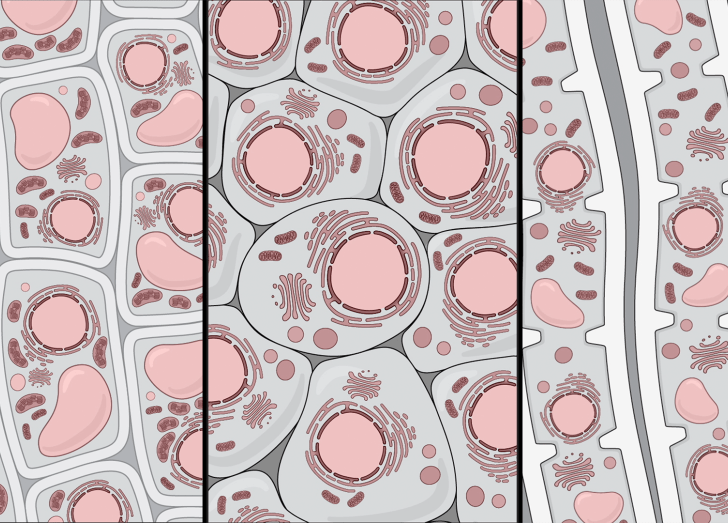
Learn why human health is dependent on chemistry, and what that means for clinical care.
- Online; Instructor-Paced
Lessons from the courses are released weekly and remain available until the courses end, so you can work at your own pace.
Available Start Dates
$1,025
Save and learn more with discounted multi‑course bundles or our all‑access HMX and HealthXcelerate Learning Pass.
The student price for an individual course is $800 and cannot be combined with course discounts.
Certificate
Earn a Certificate of Completion upon successfully completing all coursework.
10 Weeks, 4-6 Hours/Week
Most people can expect to spend around 40-60 hours total, but this depends on your baseline knowledge and how carefully you take notes.
- Online; Instructor-Paced
Lessons from the courses are released weekly and remain available until the courses end, so you can work at your own pace.
Available Start Dates
$1,025
Save and learn more with discounted multi‑course bundles or our all‑access HMX and HealthXcelerate Learning Pass.
The student price for an individual course is $800 and cannot be combined with course discounts.
Certificate
Earn a Certificate of Completion upon successfully completing all coursework.
10 Weeks, 4-6 Hours/Week
Most people can expect to spend around 40-60 hours total, but this depends on your baseline knowledge and how carefully you take notes.
On This Page
Overview
Understanding biochemistry is an excellent foundation for learning all of biology, but it can be difficult to make sense of the complexity of biochemical systems.
In this foundational course, you will learn about the principles governing the interactions of individual molecules, and how those same principles apply at the scale of cells and organisms. Along the way, you will see how biochemistry intersects with human disease and clinical care. Engaging, interactive lessons will help you gain an in-depth understanding of biochemistry and equip you for future work in health care and related sectors.
Learning Objectives
- Understand fundamental principles of energy and thermodynamics, and the importance of enzymes in biochemical pathways
- Learn about cellular specialization and how cell functions are explained by the chemical properties and structure of biological molecules
- See how foundational concepts apply in real-life scenarios and clinical settings

Who Should Participate
Pre-med students; Current medical students; Health care professionals working in R&D, product management and strategy, sales, and marketing
Overview
Understanding biochemistry is an excellent foundation for learning all of biology, but it can be difficult to make sense of the complexity of biochemical systems.
In this foundational course, you will learn about the principles governing the interactions of individual molecules, and how those same principles apply at the scale of cells and organisms. Along the way, you will see how biochemistry intersects with human disease and clinical care. Engaging, interactive lessons will help you gain an in-depth understanding of biochemistry and equip you for future work in health care and related sectors.
Learning Objectives
- Understand fundamental principles of energy and thermodynamics, and the importance of enzymes in biochemical pathways
- Learn about cellular specialization and how cell functions are explained by the chemical properties and structure of biological molecules
- See how foundational concepts apply in real-life scenarios and clinical settings
Who Should Participate
Pre-med students; Current medical students; Health care professionals working in R&D, product management and strategy, sales, and marketing
Questions?
Have questions about HMX courses, enrollment, or learning options? Contact our team by email—we’re happy to assist.
About the Course
HMX online courses bring complex material to life through engaging biomedical visualizations, clinical applications, and true-to-life scenarios paired with lectures from Harvard Medical School faculty and leading experts.
Who Should Participate
This foundational course is appropriate for pre-med and current medical students interested in building their foundational knowledge of medical science, as well as professionals in health care and related fields who need a fundamental understanding of biochemistry – including those working in R&D, product management, strategy, sales, marketing, and other roles.
Course Format
Most people can expect to spend around 40-60 hours total, but this depends on your baseline knowledge, how carefully you take notes, and how seriously you take the assessments. Lessons from the courses are released weekly and remain available until the courses end, so you can work at your own pace. The course wraps up with a final exam administered the final two days of the session.
Extend Your Learning and Save More
Whether you are building your medical science knowledge, preparing for advanced study, or expanding your understanding of the health care ecosystem, combining courses helps you connect concepts across disciplines while saving on enrollment.

You can bundle up to five HMX or HealthXcelerate courses. Bundle discounts apply to all courses selected. A bundle can consist of courses in the same upcoming enrollment period or the following enrollment period.
Two-course bundle: 15% discount
Three-course bundle: 20% discount
Four-course bundle: 25% discount
Five-course bundle: 30% discount
View all bundle-eligible programs

With the HMX and HealthXcelerate Learning Pass, a $4,950 investment unlocks one year of unlimited enrollment to Harvard Medical School's portfolio of HMX and HealthXcelerate online courses, empowering you to advance your knowledge of health care and medical science in the areas that matter most to your goals. Start Learning

HMX and HealthXcelerate courses are ideal for organizations looking to train teams or larger groups. Group pricing is available, making it a cost-effective investment in team development.
Group Enrollments
HMX courses are ideal for organizations looking to train teams or larger groups. Group pricing is available, making it a cost-effective investment in team development.
Faculty

Kevin S. Bonham
PhD
- Lecturer in Microbiology and Immunobiology, Harvard Medical School
- Assistant Professor of Medicine, Tufts University School of Medicine

Ole-Petter ("OP") Hamnvik
MB BCh BAO, MMSc
- Associate Professor of Medicine, Harvard Medical School
- Program Director, Endocrinology Fellowship, Brigham and Women’s Hospital
- Education Editor, NEJM Group
Marie E. McDonnell, MD, Lecturer on Medicine, Harvard Medical School / Endocrinologist, Brigham and Women’s Hospital
Eli Miloslavsky, MD, Assistant Professor of Medicine, Harvard Medical School / Rheumatologist, Massachusetts General Hospital
HMX Faculty Perspectives
Why do you think it’s important for health care professionals to learn biochemistry?
"To be able to provide effective medical care to patients, health care professionals need to first understand how the human body functions in health and in disease. To truly gain this understanding, you need to master what happens at the smallest functional units of the body – the cells and the molecules within them – and how these small units aggregate into a functional human body. In a way, biochemistry is the core of medicine; health care providers rely on an understanding of biochemistry in most of their routine tasks." -Ole-Petter (“OP”) Hamnvik, MB BCh BAO, MMSc
From Our Learners
Hear from HMX students as they share their experiences learning online with Harvard Medical School.

"[This course] would be very helpful for students who are struggling with the concepts in class, mainly because the strength of the HMX program is that it explains difficult concepts in more easily understandable language."
Request Information
Interested in learning more about this program? Sign up for details.