
Pathogen Genomics for Public Health
Harness the power of pathogen genomics in infectious disease response.
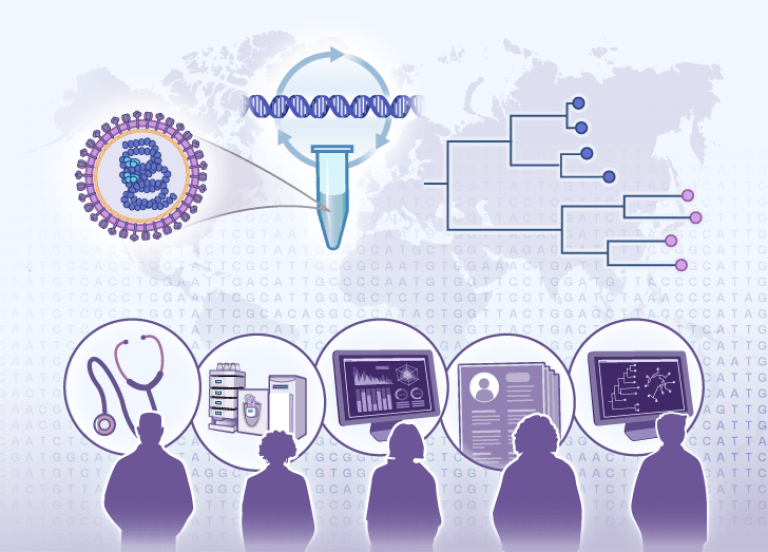
Pathogens are part of life, responsible for illnesses ranging from the common cold to large-scale outbreaks affecting millions. As infectious diseases continue to evolve, so too must our approaches to surveillance and response. Pathogen genomics offers groundbreaking tools to track how diseases emerge, shift, and spread. By studying the genetic code of disease-causing pathogens, we can identify both new and familiar threats, track their spread, and guide effective public health action.
Build the skills and confidence to turn genomic insights into action with the Pathogen Genomics for Public Health series.
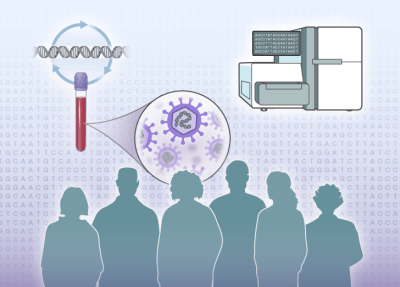
Foundations I: Conceptual Foundations of Pathogen Genomics
Discover how pathogen genomics informs public health decisions and practice.
Aimed at public health staff, infectious disease professionals, and curious learners alike, this course requires no prior scientific or genomic background. With a focus on conceptual understanding and core principles, this course equips learners with the essential knowledge to understand how pathogen genomics is shaping and advancing public health.
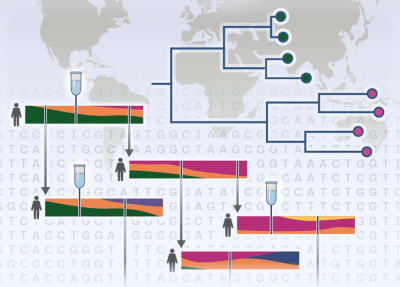
Foundations II: Technical Introduction to Pathogen Genomic Epidemiology: Mutations, Transmission, and Phylogenetics
Explore how genomic patterns help us understand infectious disease transmission.
This course explores the molecular science that underpins pathogen genomic sequencing. Focusing on scientific principles, this course equips learners with the knowledge needed to inform effective disease surveillance and response in real-world public health contexts.
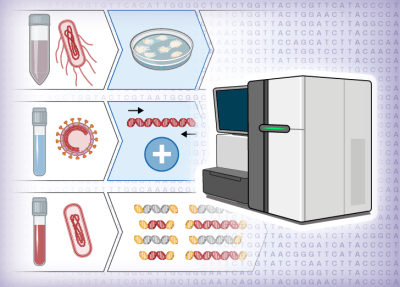
Sequencing Strategies for Pathogen Genomics
See how sequencing strategies shape how pathogen genomic data can be used in public health.
Aimed at public health and infectious disease staff who work with public health laboratories, this course provides an overview of common genomic sequencing strategies and library-construction approaches used for public health applications. The course emphasizes key considerations in the sequencing process, including library construction approaches, specimen type and pathogen biology, public health use cases, and practical considerations.
Pathogen Genomics for Epidemiology: Interpretation
Learn how to interpret pathogen genomic data and integrate genomic evidence into epidemiological investigations and public health action.
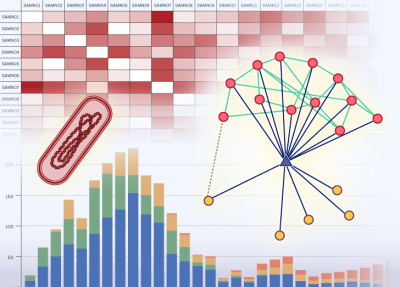
Designed for public health and infectious disease professionals, this self-paced course covers common genomic outputs used in pathogen characterization, surveillance, and outbreak investigations. Learners will practice interpreting genome maps, time-series plots, distance matrices, networks, phylogenetic trees, and the factors that influence genomic findings.
Coming Soon
Pathogen Genomics for Epidemiology: Planning an Investigation
Begin your learning journey
Build the skills to turn genomic data into public health action
Join a community of learners building the skills to turn pathogen genomic insights into effective public health action.
Start with Foundations I, an introduction for anyone in public health or with a general interest in understanding pathogen genomics. In this course, you’ll discover what pathogen genomics is and why it’s becoming an essential tool for tracking infectious diseases and responding to outbreaks.
Continue with Foundations II to deepen your understanding of key principles in molecular biology that underpin genomic epidemiology. You’ll explore how sequencing pathogen genomes can reveal important insights into pathogen transmission—laying the groundwork for more advanced topics in additional courses.
For epidemiologists working with genomic data, continue with the three-course track, Pathogen Genomics for Epidemiology, which includes:
- Sequencing Strategies
- Pathogen Genomics for Epidemiology: Planning an Investigation (coming soon)
- Pathogen Genomics for Epidemiology: Interpretation (coming soon)
Additional courses are planned for 2027 and beyond.
Acknowledgments
These courses were developed under the U.S. Pathogen Genomics Centers of Excellence (PGCoE), and supported by the Office of Advanced Molecular Detection, U.S. Centers for Disease Control and Prevention (CDC) through Cooperative Agreement Number CK22-2204. Contents are solely the responsibility of the authors and do not necessarily represent the official views of the Centers for Disease Control and Prevention. View Full Acknowledgments