
Building Capacity for Improving Patient Care: How Safety, Quality, Informatics, and Leadership Training Shaped One Pharmacist’s Practice
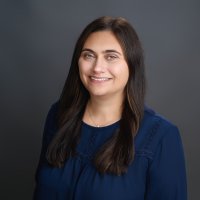
"I’ve never experienced something like that related to health care, even though it applies so much in getting projects implemented."
After earning a doctor of pharmacy degree from the University of Minnesota and completing an American Society of Health-System Pharmacists-accredited residency at M Health Fairview University of Minnesota Medical Center, Hatice Gagne, PharmD, BCPS, built a career dedicated to improving medication safety for vulnerable populations. Working primarily in the neonatal intensive care unit (NICU) and outpatient pediatric oncology, she developed a strong interest in working on quality improvement projects that focus on safety and sought more formal training to expand her expertise. When Gagne discovered the Safety, Quality, Informatics, and Leadership certificate program at Harvard Medical School, she felt that it aligned directly with her goals.
Building Leadership Skills to Drive Meaningful Change
As a clinical pharmacist deeply engaged in process improvement, Gagne wanted a more comprehensive understanding of the systems, frameworks, and tools needed to lead change effectively. “I wanted to gain more knowledge in quality and safety that would help with everyday work,” she explains. Informatics was also a key motivator for her, as she saw it as essential to understanding data, identifying system-level gaps, and driving meaningful improvements.
Through the program’s immersive coursework, collaborative assignments, and capstone experience, Gagne gained a deeper understanding and greater confidence when tackling quality improvement projects. She found that the robust curriculum not only provided a clear framework and actionable tools, but also enabled her to implement improvements in real time.
Using Capstone Work to Identify Risks and Improve Safety
A key component of the Safety, Quality, Informatics, and Leadership program is the culmination of a capstone project, in which participants apply core concepts to a real-world challenge within their organization. Gagne’s capstone, which centered on improving medication safety for patients in the NICU, was selected as “Best Capstone” for her cohort—reflecting the strength and impact of the work.
Her initiative examined the process of ordering custom IV fluids in Epic, beginning with internal data analysis and moving through structured evaluation methods taught in the program. “Patients in the NICU are more likely to experience medication-related errors compared to their counterparts in the hospital,” Gagne explains. “We did a root cause analysis and found that we just needed a more standardized ordering process.” Her project proposed a standardized order panel to help make the process safer.
Although she transitioned to a new role before implementation, Gagne remains confident in the value of the work, noting that “the biggest impact we had was raising awareness about it and looking at our own data.” The project is now with other pharmacists at her former institution, who are working to make improvements based on the project’s findings.
Learning Through Community, Practice, and Diverse Perspectives
While the academic rigor was integral to her growth, Gagne describes several aspects of the experience as particularly memorable. “The end-of-year in-person workshop is great. I made lifelong friends and met people working in health care all over the world…you don’t get that kind of experience easily. I really enjoyed that final workshop.”
She also recalls an interactive negotiation exercise, describing it as unlike anything she had encountered in her professional training. “I’ve never experienced something like that related to health care, even though it applies so much in getting projects implemented.” Gagne also appreciated being one of only a few pharmacists in the group, noting that it broadened her exposure to other ways of thinking and problem-solving.
“I really liked that the cohort included all kinds of health care providers, because people come at the problem and think about things differently.” She adds that being surrounded by clinicians and health care leaders from varied disciplines was valuable, because it’s important to see how other people approach challenges, especially when leading change across complex systems.
Looking back, Gagne reflects on the intensity and value of the experience: “The depth and breadth of material was impressive, and the opportunity to absorb that much knowledge was invaluable. I’ve made lasting connections and strengthened my understanding of safety, quality, informatics, and leadership.”
Written by: Pamela Searle