Advancing Cardiac Electrophysiology Through Global Clinical Scholars Research Training
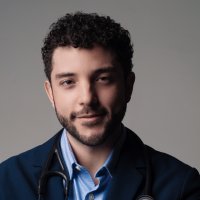
“The program didn’t just give me tools, it changed how I think about clinical problems and how I connect them to research that can truly impact patient care.”
As a cardiac electrophysiologist practicing in São Paulo, Brazil, Luan Vieira Rodrigues, MD, performs a high volume of catheter ablation procedures each month, treating patients with complex cardiac arrhythmias. Over time, he became increasingly involved not only in patient care but also in the clinical data that could help improve outcomes.
Working with his group’s database of ventricular tachycardia ablation cases, particularly among patients with Chagas cardiomyopathy, Rodrigues helped lead data collection, analysis, and manuscript development. The dataset spans more than a decade and represents the work of a large collaborative team.
“I was faced with a large database and quickly understood that translating that data into meaningful improvements in care required a deeper, more structured foundation in clinical research and clinical research methodology,” he explains.
Building research rigor in a rapidly evolving field
Cardiac electrophysiology is a highly technical subspecialty of cardiology focused on diagnosing and treating heart rhythm disorders through invasive procedures such as electrophysiological studies and catheter ablation. Rodrigues completed his electrophysiology fellowship at the University of São Paulo in 2023 and now works with his mentors’ electrophysiology group across several private hospitals in the city—a common model in Brazil, where teams are not typically affiliated with a single institution.
Today, he balances outpatient care, invasive procedures, coordination of arrhythmia services, and participation in research groups focused on cardiac arrhythmias. As technology in the field continues to advance, so do the opportunities and challenges of clinical investigation.
“There are many unanswered questions,” Rodrigues says. “I wanted to be able to meaningfully engage with innovation, not just apply it.”
This motivation led him to apply to the Global Clinical Scholars Research Training program at Harvard Medical School, seeking rigorous training in biostatistics, epidemiology, and study design to strengthen his clinical research skills.
Closing the gap between data and impact
As Rodrigues took on more complex research questions, he recognized a clear education gap: a need for stronger, more structured training in statistics and clinical research methodology.
“The program transformed my level of understanding,” he says. “I now feel comfortable independently performing a wide range of analyses on our clinical datasets—something I would not have imagined myself doing a year ago. I feel much more confident in critically interpreting results and communicating with other researchers.”
Rodrigues now applies these skills directly in his daily work. “We manage a large number of patients undergoing electrophysiological studies and catheter ablation,” he explains. “I actively participate in structuring these registries, analyzing the data, and contributing to the writing of scientific manuscripts.”
That work has already begun to translate into measurable impact. A recent manuscript based on his team’s long-term ventricular tachycardia ablation cohort—on which he served as one of the lead authors—was accepted for publication in The Lancet Regional Health – Americas, reporting the largest cohort of catheter ablation in patients with Chagas disease published to date.
Training clinical researchers, not just teaching research skills
Beyond technical skills, the program sparked a broader professional shift. “From the first workshop, it was clear that the goal was not simply to teach research topics, but to train true clinical researchers,” Rodrigues says.
The integration of ethics, epidemiology, biostatistics, and essential soft skills such as leadership and teamwork stood out, as did the global cohort. Learning alongside physicians and scientists from different health systems broadened his perspective on how clinical questions are shaped by local realities.
“After being part of a program like this, you are no longer the same professional,” he reflects. “It helped me develop a leadership-oriented mindset, grounded in the ability to systematically connect clinical questions with research methods.”
A capstone project with real-world implications
Rodrigues’s capstone project marked a clear transition from theory to practice. His work focused on cardiac radiotherapy as a potential adjunctive treatment for patients with ventricular arrhythmias who remain at high risk of recurrence after catheter ablation.
His proposal outlined a randomized clinical trial comparing catheter ablation alone with an approach that introduces cardiac radiotherapy earlier in the treatment course, in combination with catheter ablation, rather than reserving it solely for refractory cases.
Rodrigues notes that the feedback process throughout the capstone was extremely valuable. Structured in multiple stages over the course of the program, it allowed the project to mature in parallel with his own development. Ultimately, his work earned first place among his peers.
“Beyond the recognition itself, it validated the relevance of the clinical problem and the potential impact of the research question,” he says. “It also served as strong motivation to move forward and seriously consider implementing the project in clinical practice.”
Looking ahead
As he continues to advance his clinical and academic career, Rodrigues sees the Global Clinical Scholars Research Training program as a defining moment.
“The program didn’t just give me tools,” he says. “It changed how I think about clinical problems and how I connect them to research that can truly impact patient care.”