Rethinking Medical School Prerequisites in the Age of Artificial Intelligence
In this Harvard Macy Institute blog post, the impact of artificial intelligence on reimagining medical school prerequisites, shifting emphasis from rote memorization toward data literacy, ethical reasoning, and human-centered competencies, is discussed.
As the mother of a college student taking organic chemistry, my conversations with my son about this class were wide-ranging. We debated the value of late nights we had both spent, years apart, memorizing functional groups and grappling with concepts like lipophilicity and molecular stability. Some aspects of that class were clearly connected to clinical medicine, while others felt like running a gauntlet and a test of resilience and endurance.
As many United States medical schools move their curriculum from the traditional model with two years of classroom learning coupled with two years of clinical learning to a more integrated curriculum in which students engage in earlier clinical training, pre-medical requirements must also be reimagined, particularly in the age of artificial intelligence (AI). Physicians of the future will work in a data-rich environment in which their expertise will hinge not on mastery of the massive corpus of biomedical knowledge, but the ability to thoughtfully deploy that knowledge in research and patient care. If this is done right, they can potentially be freed from rote memorization and mundane administrative tasks such as writing notes, billing, and coding. These tasks have removed physicians from the bedside and diminished their wellbeing and joy of learning. Their roles as humans who can understand the sociocultural and historical contexts of patients, empathize with their struggles, and help them navigate a decision will be harder to replace. More time should be spent in curricula to train students in these more human abilities, such as empathy, leadership, and ethical decision-making. At the same time, all of the knowledge cannot and must not be relegated to technology, as physicians of the future will need to be able to interrogate the algorithms and understand the “why” behind clinical reasoning and decision making.
AI systems are now capable of completing tasks that were once exclusively human, such as interpreting medical images, predicting disease progression, and identifying optimal treatment paths based on massive datasets. This shift suggests that physicians of the future will need to interpret AI outputs and integrate them into patient care, recognize biases in algorithms, communicate complex information about AI-driven diagnoses and treatments to patients, and ethically evaluate the use of AI in health care. To prepare for this evolution, future medical students may need a more diverse set of skills than those emphasized by traditional science prerequisites. Unfortunately, there is no standardized list of required prerequisites for all medical schools in the United States, with a recent study finding that among 157 U.S. medical schools, no two institutions shared identical prerequisite expectations. However, most pre-medical education has emphasized foundational sciences like biology, general and organic chemistry, physics, calculus, and English. These prerequisites aim to establish a foundation in the sciences and cultivate analytical thinking. As AI increasingly handles data analysis, diagnostic reasoning, and even treatment recommendations, the relevance of some traditional prerequisites warrants re-evaluation and necessitates a shift toward integrating data science, computational thinking, and interdisciplinary skills into pre-medical training.
To align with the needs of AI-integrated health care, medical schools should consider whether matriculating students may benefit from coursework in AI-related areas. Data science and statistics knowledge will be needed to interpret data from AI algorithms, assess research findings, and make data-driven decisions. A basic computer science and programming course could be taken to understand how algorithms work so that they can critically evaluate AI tools and detect biases or errors. Ethical decision-making is more complex with AI in health care, including issues like data privacy, algorithmic bias, and patient autonomy, so a specific ethics of AI course could be very helpful. Behavioral psychology or communication in health care class would also be helpful. Health informatics classes could help students understand how health care data is stored, accessed, and analyzed. As AI tools become more adept at handling certain technical and analytical tasks, some traditional prerequisites may need to be reconsidered in terms of their depth or priority. While still foundational for understanding biochemistry, objectives in organic chemistry could be focused on those most clinically relevant. For example, many modern drugs are synthesized based on their chemical stability and reactivity, such as beta lactam antibiotics. Calculus is historically required to demonstrate quantitative reasoning skills. Replacing or supplementing calculus with applied statistics or data science has the potential to be more relevant for clinical decision-making in the AI era. Physics provides a scientific foundation, but is not directly applicable to most clinical practice.
Artificial intelligence is poised to dramatically reshape health care, making it imperative that medical education adapts in response. Future physicians will need a hybrid skill set that combines medical expertise with data literacy, technological competence, and ethical reasoning. This evolution calls for a critical reevaluation of medical school prerequisites. By integrating coursework in data science, computer science, ethics, and social sciences, colleges can better prepare students for medical school and the complex, AI-enhanced health care systems of tomorrow. At the same time, traditional courses like organic chemistry, calculus, and physics may need to be updated or de-emphasized to make room for more relevant content. Ultimately, while AI will handle many technical tasks, the physician’s role in delivering compassionate, patient-centered care remains irreplaceable. Preparing future doctors to thrive in this environment requires a thoughtful blend of science, technology, and humanity in medical education.
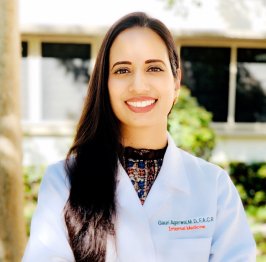
Gauri Agarwal, MD (Educators ’24) is the associate dean for curriculum and associate professor of medicine, medical education, informatics and health data science at the University of Miami Miller School of Medicine. HMI has made an impact on Gauri’s career by providing inspiration for her development of an AI curriculum for medical students. Gauri’s areas of professional interest include medical humanities, visual arts, and artificial intelligence. Gauri can be followed on LinkedIn or contacted via email.