Reflective Clinical Immersion Can Bring Medical Students Closer to the Patient Experience
In this Harvard Macy Institute blog post, how medical education can help students better understand patients’ perspectives through direct observation, narrative reflection, and time spent with patients and families is discussed.
Medical students spend thousands of hours around patients during training, yet relatively little time intentionally experiencing healthcare from the patient perspective. Students quickly learn that they are evaluated by residents and attendings, not by patients. They observe, shadow, and learn how physicians practice, but rarely see care through the patient’s eyes, regardless of which rotation they are on. Time spent with the clinical team is perceived as educationally valuable, while substantial time with patients can feel difficult to justify, even when those interactions are equally important.
We devote substantial preclinical time to teaching communication skills, empathy, social determinants of health, and systems issues. Yet this learning may fade into the background as students enter clinical training, a period associated with declining empathy and increasing detachment from patients. The hidden curriculum is how we teach humanism in medicine, as students rarely see these concepts intentionally integrated into clinical practice. Clinical education is highly experiential, but experience does not guarantee learning. Reflection is central to experiential learning, yet clinical rotations may provide students with few formal opportunities to step outside the clinician role to examine what they have witnessed and make meaning of those experiences.
If we believe the patient experience is central to medicine, why isn't it more central in medical education? Years ago, I began breaking down the barrier between patient and student by asking premedical students who were shadowing me to spend time with patients in my clinic. They were uncomfortable at first in such an active role, but I immediately saw how that unique opportunity increased their enthusiasm for medicine.
In 2008, I began to offer an experience to medical students rotating through our service on a two-week pediatric oncology elective at my institution. Rather than creating a shortened version of the traditional fourth-year acting internship, we designed an elective centered on the patient experience. I call this approach Reflective Clinical Immersion, an educational model that combines patient-centered observation, experiential learning, and structured reflection. For two weeks, most of the students’ time is spent with patients and families. They do not round with the team, do not present patients or write daily notes, but instead experience what the patient experiences in inpatient, outpatient, and transitional settings. They witness, along with the family, aspects of healthcare unavailable elsewhere in medical education, including admission and discharge processes, the waiting room, consultant discussions, fragmented communication, repeated histories, uncertainty, ambiguity, and the emotional burden of navigating complex systems. Stepping away from traditional student duties does not preclude learning - in fact, it enhances it. The questions generated by close patient immersion can motivate students to study the pathophysiology of disease and the clinical reasoning behind diagnostic and treatment decisions.
Students keep a reflective journal of their interactions, and they are encouraged to go beyond medical facts and focus on the impact of the illness and the health care system on the patient and family, and on the students themselves. The format and length of the journal is left to the student. Most organize by day, some by patient, or by problem. Some have been inspired to write poetry or include original art as evidence of their emotional attachment to these families. Nowhere else in their medical education training at my institution do students have the opportunity or permission to spend so much time with their patients and reflect on that experience. Narrative writing provides a structure for that reflection. The journal encourages students not merely to document illness, but to process how patients experience health care systems, uncertainty, communication, and vulnerability — and how those experiences affect the students themselves.
This unique elective has been transformative for students' professional development. Students learn the power of listening. Repeatedly, they write insightful observations about the effects of illness on families, system issues, and, importantly, how this elective changed their views of medicine and their future practice. Many write that they will "never forget" the experience.
This rotation is easy to administer. It is a two-week standard third- or fourth-year elective. A brief meeting on day one to explain the narrative assignment and assign the students to the patients are my only administrative tasks, but I also read each journal. The elective is pass-fail, so students know that their journal will not be graded by form or content. Turning in the journal, even in raw form, earns them a pass.
Over years of reading my students' journals, recurring narratives became increasingly apparent. Their observations prompted a qualitative thematic analysis of 120 narratives. This formal analysis ultimately resulted in three peer-reviewed studies exploring student empathy and humanism, student response to uncertainty, and student experiences with communication, family dynamics, systems awareness, and humanistic professional development.
The families involved love the experience. Trust can be established quickly, and with the opportunity to tell their story at their own pace, many families form long-term bonds with the students. The students often offer respite to parents as they spend extended time engaging with their child.
This experience is scalable to other institutions and clinical settings, medical or surgical. I envision a required elective in a field of the student’s choosing. Imagine an emergency medicine student following patients from triage through discharge or admission, observing and reflecting not only on disease, but waiting, uncertainty, communication, family stress, and system navigation. The same model could work in surgery, labor and delivery, rehabilitation, oncology, or primary care. No major curricular restructuring required, only intentional space for reflective clinical immersion. What if every clinical clerkship included even a brief opportunity for students to experience healthcare from the patient’s perspective, rather than the provider’s? Perhaps one of the most important lessons in medical education is not how physicians experience healthcare, but how patients do.
Did you know that the Harvard Macy Institute Community Blog has had more than 450 posts? Previous blog posts have explored topics including learning myths, cinematic moments for teaching, and evidence-based medicine.
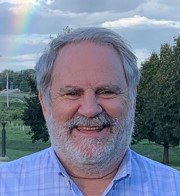
Andrew S. Freiberg, MD (Educators ‘23) is an Associate Professor of Pediatrics in Pediatric Hematology/Oncology at Penn State College of Medicine. HMI inspired him to transform local educational interventions into scalable frameworks. His professional interests include medical student education, narrative medicine, and global health. He can be contacted via email.