
Cinematic Moments That Transform Our Teaching
In this Harvard Macy Institute blog post, ways in which cinema can be intentionally used to deepen reflection, foster empathy, and support professional identity formation in health professions education are discussed.
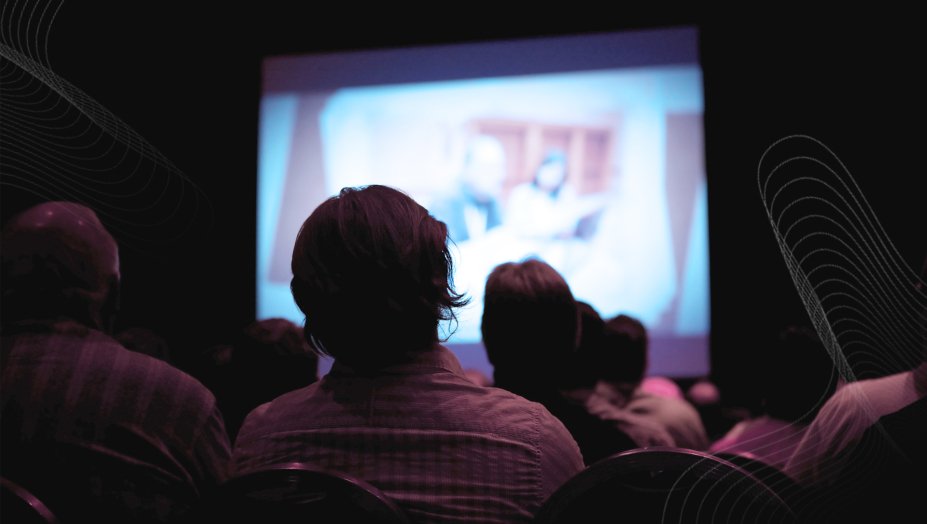
The room became unusually quiet after the scene ended. A group of learners who had been actively debating clinical protocols just minutes before were now sitting in reflective silence, some smiling, others visibly moved. One participant finally spoke, not about the technical content of the session, but about how the character’s struggle reminded her of her own first days in practice. What began as a simple decision to show a short film excerpt had unexpectedly shifted the emotional and cognitive atmosphere of the learning space. After the session, several learners continued the conversation informally, reflecting on similar experiences from their own professional journeys.
Moments like this raise an important question for educators and leaders. What is it about watching a movie that can move us to tears, laughter, or anger? Why do certain scenes remain with us long after the credits roll, subtly shaping the way we communicate, relate to others, or even make professional decisions? These emotional and behavioral shifts are not accidental. They are deeply connected to culture.
We create culture, we live within culture, and in many ways we become products of culture. Cinema is one of the cultural forces that influences both our individual identities and our collective ways of being, including how we understand professionalism, responsibility, and human connection. Throughout life, we encounter films that help shape our interpretations of reality and our expectations about practice.
Cinema expands our repertoire beyond the limits of our own time and spaces. It transports us into different historical moments, social contexts, and human experiences. Through narrative, image, sound, and performance, film engages dimensions of human understanding that scientific texts do not always reach in the same way. In doing so, cinema can support observation, critical reflection, and the exploration of complex emotional and social dynamics that are central to medical and health professions education.
For these reasons, movies are used both consciously and unconsciously as tools for teaching and learning. Educators may incorporate short scenes to illustrate difficult concepts or use entire films to create opportunities for reflective dialogue. Learners may be invited to watch a film before a session and then engage in structured discussion that connects narrative experiences with professional challenges. These approaches can be meaningful. Yet without a clear educational intention, showing a film risks becoming an activity that simply fills time rather than one that deepens learning.
In this sense, films can be a potentially powerful pedagogical resource for health professions education. Their emotional resonance invites engagement, while their narratives make it possible to reflect upon concrete professional situations in ways that feel immediate and meaningful. When used thoughtfully, cinema does not simply illustrate ideas. It can create shared experiences that support reflection, dialogue, and professional growth.
Contest also shapes how films are experienced. Watching a movie with colleagues may generate insights about teamwork, uncertainty, or decision-making. Viewing the same story in a personal setting may evoke different meanings related to identity, relationships, or values. Recognizing these contextual dimensions can help educators design learning environments that intentionally connect cultural experience with educational purpose.
An often overlooked strategy is inviting learners to create their own films. Even simple video projects require planning, collaboration, creativity, and communication. In constructing narratives, learners must connect concepts, apply knowledge, and consider audience perspectives. Such processes can move learning beyond passive consumption toward active meaning-making while also developing essential professional capabilities.
If cinema, like theatre, music, and visual arts, has long contributed to human formation, it may be worth reconsidering how this language is integrated into the preparation of future health professionals. Films can broaden perspectives, challenge assumptions, and connect learners to experiences beyond their immediate realities.
Perhaps the most meaningful learning moments are not always those we carefully script, but those that emerge when learners are invited to feel, imagine, and empathize. The quiet that followed the film scene was not an interruption of teaching. It was teaching expressed in another language. The question for educators may not be whether cinema belongs in our classrooms, but how we might intentionally engage with the cultural narratives that already shape how learners understand themselves, their work, and the people they serve.
Did you know that the Harvard Macy Institute Community Blog has had more than 400 posts? Previous blog posts have explored topics including the art of education, art as antidote, and can art reframe medicine?
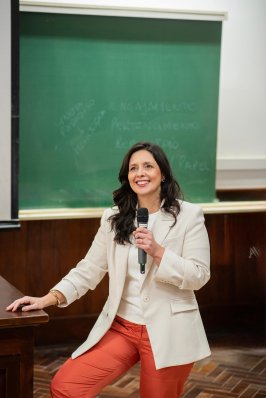
Clarice Rosa Olivo, PhD, (Educators ’25) is the Executive Director of the Center for Development in Medical Education at the Faculdade de Medicina da Universidade de São Paulo. HMI has made an impact on Clarice’s career by strengthening her capacity to design and lead high-quality and culturally informed educational initiatives in medical and health professions education. Clarice’s areas of professional interest include faculty development, arts-based approaches to learning, and health communication. Clarice can be followed on LinkedIn or contacted via email.