
Common Learning Myths in Medical and Health Professions Education
In this Harvard Macy Institute blog post, two common learning myths—learning styles and multitasking—are discussed.
Medical students are unique in many ways. As lifelong high achievers, they may have found what works for their self-directed learning and are apt to stick with it. Medical and health professions educators know all too well that this can sometimes be a problem for students who are suddenly confronted with a volume of incoming information that they are simply not equipped to handle.
While medical and health professions educators can certainly try to mitigate this concern using effective learning strategies, educator and student beliefs about learning can hinder progress. Learning is not always an intuitive process, which can result in pervasive false beliefs that feel right, but are based in anecdotes and subjective experience instead of quality evidence. This blog post highlights two common learning myths in medical and health professions education, articulates why these myths are intuitive but inhibit learning, and suggests alternative evidence-based learning strategies.
Myth #1: Learning Styles
One of the most common learning myths is that of learning styles. The learning styles hypothesis posits that each of us has a preferred modality for learning. The myth suggests that I might prefer auditory information, while you might prefer visual information, and that if we receive information in our preferred modality, we will learn more effectively. There is no evidence in support of this hypothesis.
While it is true that individual learners have preferences, controlled experiments have been unable to demonstrate that learning is best when the modality matches the preference. However, if you believe this theory, maybe even if you were taught about it or taught others, you are far from alone. In one study, over 90% of health professions educators reported belief in the learning styles hypothesis, likely because it feels right.
Unfortunately, belief in this theory does not help learning and can actually be extremely limiting. Knowing your own or someone else’s learning preference can lead to false expectations of what a student is capable of. As an educator, perhaps you might believe that a kinesthetic learner is best suited for the operating room, while a visual learner would be better suited for radiology. What you are really saying is that a person who likes working with their hands might like the operating room, and a person who enjoys learning through pictures might enjoy radiology. While that may be true, it does not mean that the visual learner would be less able to operate. This implication – that some people may be better at certain tasks due to modality – is the major danger associated with this hypothesis.
There are alternatives to this hypothesis. Most learners actually learn best when given multiple modalities, in alignment with instructional goals. That is, across learning objectives, students tend to learn better when given material in multiple ways that make sense for what is being taught. For example, a handy infographic can certainly help any learner understand processes written in text. For medical and health professions education, an even more critical consideration is to match modality to material. Attempting to understand how blood flows through the heart would be extremely difficult by simply reading about it. A diagram of this process provides clarity to all learners. Learning to suture, though, would be extremely difficult with just a diagram; all learners need to use their hands. For these reasons, it is less important to consider individual differences in learning preferences and instead focus on making sure that material is presented in a way that will be helpful for all learners.
Myth #2: Multitasking
In today’s demanding world, managing several different tasks simultaneously is considered a life skill, something necessary, and maybe worth putting on a job application. And indeed, this is prevalent in the world of medical and health professions education. We often try to complete two tasks at once, responding to emails while sitting in meetings, adding to the to-do list while listening to a patient, or documenting patient care in the electronic record while giving feedback to a student.
Unfortunately, the ability to do two things at once is not an ability at all. Instead, what we are doing in these moments is either tuning out the meeting entirely or rapidly switching our attention between the emails and the meeting. When we switch our attention back and forth like that, there is always a cost. We miss details, and tasks take longer than if we did one task at a time.
This effect is due to limitations in our working memory system, in particular, attention. Think of attention as a spotlight. We can only shine that attention on one thing at a time. When we move the spotlight from one side of the stage to the other, there is a small amount of time in which we are unable to pay attention to either task. This gap in attention is what makes multitasking so ineffective. Sitting down to answer emails prior to the meeting might take half as much time as trying to split your attention in the meeting. And, importantly, doing this while sitting in front of a patient means that you are not fully able to listen to that patient while you are engaged in another task. It is simply impossible to split your attention across two tasks simultaneously, particularly when they both require verbal information.
Often, when people talk about multitasking, they are referring to something more akin to project management than multitasking. There is a buildable skill in which individuals can organize and manage multiple competing demands with varied deadlines. But they will be better at doing so if they focus on one task at a time during the day, instead of trying to do two tasks at once – such as listening to a meeting and replying to emails.
What this means in medical and health professions education is that students truly cannot watch a television show while also answering curriculum-related questions. They cannot effectively listen to a panel discussion while also doing flashcards. Just as we miss out on the meeting while we try to answer emails, our students are missing out on our curriculum if they are sidelining their attention by engaging in competing tasks.
The temptation to multitask that we experience as educators and clinicians is equally felt by our students. It is up to us as educators to make students aware of this limitation on their working memory. Education leaders can do this by putting policies in place that reduce the temptation to multitask and to act as models of professional behavior, giving all of our attention where it is expected and deserved.
Conclusion
This is far from a comprehensive look at misconceptions about learning. However, by better understanding how learning works, we can better teach our students foundational knowledge, skills, and how to be better self-directed learners. And maybe, we can be better learners ourselves.
Did you know that the Harvard Macy Institute Community Blog has had more than 400 posts? Previous blog posts have explored topics including strategic silence to improve learning, learning objectives, and learner engagement.
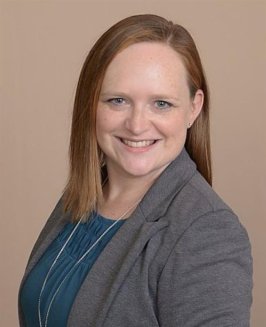
Cynthia Nebel, PhD, is an Associate Professor of Psychiatry and Behavioral Neuroscience and Director of Learning Services at Saint Louis University School of Medicine. HMI has made an impact on Cindy’s career by directly influencing the type of educator development she has received in medical and health professions education. Cindy’s areas of professional interest include the science of learning and early interventions for high-risk medical students. Cindy can be followed on LinkedIn or contacted via email.