
Reflection to Action with the RACE Framework
In this Harvard Macy Institute blog post, the RACE framework in practice is discussed.

At the 2025 Harvard Macy Institute Program for Educators in Health Professions, we introduced the RACE framework (Recognize, Analyze, Commit, Empower) during a workshop. The goal was to help medical and health professions educators navigate complex situations, reflect on their perspectives shaped by their experience and positionality, and move from awareness to action. Originally developed by human resources leader Shereen Daniels, the RACE framework offered us a structure for revealing and addressing systemic issues such as bias in clinical training, inequity in hiring, or silence in the face of injustice. By adapting the framework for medical and health professions education, we found that when learners have tools to “know better,” reflect on their roles, and take aligned action, leadership potential can grow. Knowledge only becomes transformation when paired with courageous choices through courageous leadership.
From Theory to Practice
Our workshop team had complementary strengths, blending academic rigor with real-world insight. We grounded the workshop in adult learning theory, particularly Bandura’s Social Learning Theory, which emphasizes observational learning, modeling, and self-efficacy. Adults learn well when they can see concepts in action, try them, and reflect on how those experiences align with their values. Simple lectures on bias and equity are rarely enough. When they can see concepts in action, try them, and reflect on how those experiences align with their values. Simple lectures on bias and equity are rarely enough.
We began by creating space for trust and reflection. We modeled brief background and perspective statements to openly share our identities, challenges, and limitations. We set participant agreements and anonymously shared barriers to advancing justice through the development of a live word cloud. This process not only helped us tailor the discussion in real time but also underscored a central focus of our session: courageous leadership begins with self-awareness, community, and commitment to action.
A Case Scenario on Choosing Courage
Our workshop team then presented a case scenario that placed participants in the role of administrators at a health professions institution confronting concerns about inconsistent equity practices in teaching and admissions. In the scenario, a group of faculty had written a letter to the university administration calling for greater accountability. The scenario ended with a decision point: would the participants, as administrators, publicly support the faculty’s letter?
The binary choice was not to oversimplify but to surface discomfort, spark reflection, and push participants to wrestle with their values and motivations.
Workshop participants recognized bias, analyzed root causes, committed to action, and explored ways to empower others. Through this process, the RACE framework shifted from a checklist to a lived experience. They reflected on their emotional states and how identity and professional responsibility shaped their decisions. Leaders in medicine, nursing, and other health professions often balance their values with institutional realities such as donor concerns, political pressures, or reputational risk. The framework served as both a mirror and a guide for the emotional and practical complexities of leadership.
Participants Reflections
Participant feedback deepened our own learning. One participant valued the dedicated time to process institutional tensions heightened by the sociopolitical climate. Another uncovered a sense of anger they described as “both surprising and clarifying.” There was appreciation of the tangible structure the RACE framework provided and the diversity of perspectives that expanded individual thinking.
We noticed a visible sense of relief when participants realized we were not presenting ourselves as experts with all the answers. We emphasized co-creation, inviting participants to guide the conversation and engage in ways that felt meaningful to them. It was shared that they appreciated being pushed beyond their usual ways of thinking, and we, in turn, learned from their honesty and vulnerability.
The Role of Emotions in Leadership
Emotions that surfaced among participants included discomfort, anger, hopelessness, and fear. These are feelings are often compartmentalized or dismissed in academic and clinical spaces. With a structured framework and brave space, participants reflected more deeply and shifted perspectives. Confronting emotions alongside others can reinforce the need to look inward while also building community. This emotional work is not separate from leadership; it is foundational. Courageous leadership in equity work is most impactful when it is co-constructed, relational, and reflective.
Takeaways for Educators and Leaders
If there is one takeaway from our work developing and delivering this workshop, it is that courageous leadership is not a solo pursuit. It is relational, iterative, and rooted in community. By recognizing inequity as a complex problem, analyzing its roots, committing to action, and empowering others, we can promote dialogue, advocate for justice, and become the leaders our communities need. Whether you are in a classroom, clinic, or boardroom, you can start tomorrow:
- Recognize a complex problem facilitating bias within your environment.
- Analyze root causes, use data and stories, and identify any harm connected to the issue.
- Commit to taking aligned, concrete action.
- Empower others by building systems that support growth and drive lasting change.
Moving Forward Together
Building courageous leadership is an ongoing journey. Frameworks like the RACE framework can provide structure, but real transformation happens through the collective reflection and actions of our communities. As educators, clinicians, and leaders, we can move beyond awareness into advocacy by continuously choosing courage together. One way to begin is by writing a short perspective statement to clarify how your own background and experiences shape your approach to equity and leadership. You might also set aside 15 minutes with your team to reflect on barriers and opportunities for courageous action or commit to applying the RACE framework to a key decision this month, in that way using it to guide analysis, commitment, and empowerment. By taking small, intentional steps such as these, we can turn reflection into advocacy and advocacy into lasting change.
Disclaimer: The authors provided the original ideas, structure, and draft content. An AI-assisted writing tool was used in a supportive role to refine language, improve flow, and enhance clarity.

Kenechukwu Ojukwu, MD, MPP, MS (Educators ‘2024), is an Assistant Clinical Professor of Pathology and Laboratory Medicine at UCLA. HMI has impacted Dr. Ojukwu’s career by strengthening her ability to design and facilitate impactful curricula and to collaborate across disciplines in disseminating new approaches to medical education for healthcare providers, trainees, patients, and community members. Her professional interests include surgical pathology curricula, diagnostic communication, and healthcare equity. Dr. Ojukwu can be contacted via email.
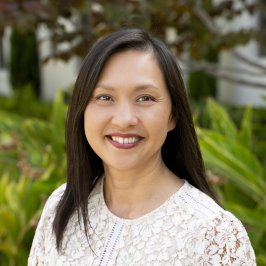
My Hanh (Theresa) Nguyen, PhD, PMHNP-BC, is an Associate Professor at the University of San Diego Hahn School of Nursing and Health Science. HMI has impacted Dr. Nguyen’s career by providing opportunities to strengthen her ability to integrate teaching methods with equity-focused research and clinical care. Her professional interests include women’s reproductive mental health, mental health equity, and mental health curricula. Dr. Nguyen can be contacted via email.

Cecilia Rugamas, MSPH, is a Research Coordinator and Project Policy Analyst II at the University of California Los Angeles. HMI has impacted Cecilia’s career by strengthening their ability to design and evaluate curricula that improve diagnostic communication and patient engagement, especially for underserved populations. Their professional interests include curriculum development, and patient-centered curricula. Cecilia can be contacted via email.