Molecular Diagnostics: Current Roles in Cancer Diagnosis
- Continuing Education
Advance your expertise with this three-day virtual course on molecular diagnostics. Through expert-led lectures and interactive case discussions, clinicians will gain the practical skills and confidence to integrate molecular testing into patient-centered cancer care.
- Live Online
This course is taught online in real time.
Additionally, all sessions will be recorded and made available to participants for online viewing for 90 days after the end of the course.
$450
For a full list of profession pricing see below.
View All
Continuing Education
Earn up to:
2026 Accreditation information is listed below, 2027 will be announced soon.
View All
Three Days
Please view the Schedule for a full description of the program.
On This Page
Overview
This three-day virtual course provides a comprehensive introduction to molecular diagnostics in oncology, designed for pathologists, oncologists, and other clinicians involved in cancer care. Through predominantly didactic lectures enriched with interactive discussions, case-based learning, and multidisciplinary panels, participants will gain a practical understanding of key molecular techniques, their clinical applications, and the economic and logistical considerations of testing. Emphasis will be placed on effective communication of molecular test results and interdisciplinary collaboration to optimize precision oncology. By bridging current knowledge gaps and addressing barriers to implementation, the course equips health care teams with the skills and confidence needed to integrate molecular diagnostics into patient-centered cancer care.
Learning Objectives
- Explain the fundamental principles and methodologies of molecular diagnostics relevant to cancer care.
- Interpret and apply molecular test results to guide diagnosis, prognosis, and therapeutic decision-making.
- Communicate molecular test findings effectively within interdisciplinary care teams and with patients.
- Evaluate the practical considerations of molecular testing, including test selection, cost, and access.
- Integrate recent advances in molecular oncology into clinical practice to improve patient-centered outcomes.
Developed and Offered By:


Continuing Education courses are developed by faculty from Harvard Medical School's teaching hospitals and accredited by Harvard Medical School. This course is offered by Massachusetts General Hospital.

Who Should Participate
Specialty Physicians, Laboratory Geneticists, and Others
Schedule
All agenda sessions are in Eastern Time.
Monday, April 13, 2026
Course Welcome and Overview
8:30-8:40 am
Integrated Molecular Oncology in 2026: Trends and Tools for gene fusion detection
8:40-9:10 am
End-to-end process to accelerating treatment initiation with next-day NGS
9:10-9:40 am
Translation of Molecular to Immunohistochemistry
9:40-10:10 am
Break
10:10-10:20 am
Informatics architecture
10:20-10:50 am
NGS Pipelines Demystified: Practical Bioinformatics
10:50-11:20 am
Tumor Mutation Burden, MSI, and HRD
11:20-11:50 am
Indel detection
11:50 am-12:20 pm
Lunch Break
12:20-1:20 pm
Viral sequence detection and other signatures
1:20-1:50 pm
Gene Fusion Detection and Interpretation by RNA-based NGS: a Practical, Cased-based Approach
1:50-2:20 pm
Additional informatics analyses: detection of clinically significant isoforms and sub-gene events through RNA and/or DNA-based NGS
2:20-2:50 pm
Oncogenicity interpretation of gene fusions detected by RNA-based NGS
2:50-3:20 pm
Break
3:20-3:30 pm
Applications of Long-Read Sequencing for Cancer Diagnostics
3:30-4:00 pm
Liquid Biopsy and ctDNA: Technical and Clinical Perspectives
4:00-4:30 pm
Panel Discussion: Tissue vs Liquid Biopsy
4:30-5:00 pm
Tuesday, April 14, 2026
Sarcoma and Fusion Testing
8:30-9:00 am
Molecular Diagnostics for GYN Tumors
9:00-9:30 am
Molecular Diagnostics for Pediatric Tumors
9:30-10:00 am
GU Cancers Molecular Markers
10:00-10:30 am
Break
10:30-10:40 am
Copy Number Variation via NGS and Microarray
10:40-11:20 am
Cytogenomics: technical focus
11:20-11:50 am
Cytogenomics: clinical focus
Phillip Michaels
11:50 am-12:20 pm
Gliomas and Methylation Profiling
12:20-12:50 pm
Lunch Break
12:50-1:50 pm
Germline Testing in Oncology
1:50-2:20 pm
Tumor-Normal Paired Sequencing: Clinical Impact
2:20-2:50 pm
Case Review: Pathology + Oncology Perspectives
2:50-3:20 pm
Break
3:20-3:30 pm
Melanoma Molecular Pathology
3:30-4:00 pm
Molecular Diagnostics for Breast Cancer
4:00-4:30 pm
Tumor Board Simulation: Real Case Review
4:30-5:00 pm
Wednesday, April 15, 2026
Myeloid Neoplasms and MRD Testing
8:30-9:00 am
Leukemia Molecular Diagnostics (B- and T-cell)
9:00-9:30 am
Molecular Diagnostics and Lymphoma
9:30-10:00 am
Break
10:00-10:10 am
Pharmacogenomics in Oncology Management
10:10-10:40 am
Lung Tumor Testing
10:40-11:10 am
GI Cancer: Case-Based Applications
11:10-11:40 am
Thyroid Cancer and Salivary Tumor Genomics
11:40 am-12:10 pm
Lunch Break
12:10-1:10 pm
AI in Molecular Oncology
1:10-1:40 pm
Interactive Workshop: Case Report Writing and Communication
1:40-2:10 pm
The Power of Patient Partnership in Cancer Advocacy
2:10-2:40 pm
Break
2:40-2:50 pm
Building a molecular profiling program
2:50-3:20 pm
Regulatory and Reimbursement Essentials
3:20-3:50 pm
Lab Leadership and Challenges
3:50-4:20 pm
Future Directions in Molecular Oncology
4:20-4:50 pm
Faculty
Harvard Medical School Continuing Education attracts the best and brightest faculty from all around the world. As a student in this course, you’ll have access to outstanding course directors and faculty.
Course Directors
Alanna Church
MD, MS | Course Director
- Director of Innovation in Pediatic Cancer Genomics
- Associate Director, Laboratory for Molecular Pediatric Pathology (LaMPP)
- Program Director, Harvard Molecular Genetic Pathology Fellowship
- Chair of Clinical Practice, Association for Molecular Pathology
- Associate Professor, Harvard Medical School
- Boston Children’s Hospital
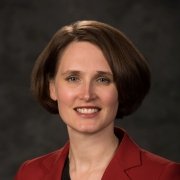
Lynette Sholl
MD | Course Director
- Professor of Pathology, Harvard Medical School
- Chief, Pulmonary Pathology Division
- Division Chief of Molecular Diagnostics, Mass General Brigham

Valentina Nardi
MD | Course Director
- Associate Professor of Pathology, Harvard Medical School
- Associate Director of Hematological Molecular Pathology, Mass General Brigham
Guruprasad Ananda, PhD
Director of the NGS Bioinformatics Group, Dana Farber Cancer Institute
Esther Baranov, MD
Pathology and Laboratory Medicine, Upenn
John Chambers, BS
Project Coordinator
Lauren Choate, PhD
Instructor in Pathology, Brigham and Women's Hospital
Brian Crompton, MD
Associate Professor of Pediatrics, Dana Farber Cancer Institute
Ibiayi Dagogo-Jack, MD
Associate Professor of Medicine, Massachusetts General Hospital
Dora Dias-Santagata, PhD
Associate Professor of Pathology, Massachusetts General Hospital
Deborah Dillon, MD
Assistant Professor of Pathology, Brigham and Women's Hospital
Adam Fisch, MD, PhD
Assistant Professor of Pathology, Massachusetts General Hospital
Grant Fischer, MD, PhD
Assistant Professor, UNC School of Medicine
Narjust Florez, MD
Professor of Medicine, Dana Farber Cancer Institute
Suzanne Forrest, MD
Assistant Professor of Pediatrics, Dana Farber Cancer Institute
Ann Graham
Executive Director and Founder, MIB Agents
Gabriel Griffin, MD
Assistant Professor of Pathology, Dana Farber Cancer Institute
Marian Harris, MD, PhD
Assistant Professor of Pathology, Boston Children’s Hospital
John A. Iafrate, MD, PhD
Austin L. Vickery, Jr. Professor of Pathology, Massachusetts General Hospital
Habibe Kurt, MD
Instructor in Pathology, Brigham and Women's Hospital
Long Le, MD, PhD
Assistant Professor of Pathology, Massachusetts General Hospital
Matthew Lebo, PhD
Associate Professor of Pathology, Brigham and Women's Hospital
Neal Lindeman, MD
Professor of Pathology and Laboratory Medicine, Weill Cornell
Laura MacConaill, PhD
Assistant Professor of Pathology, Brigham and Women's Hospital
Diana Mandelker, MD, PhD
Pathologist and Molecular Geneticist, MSKCC
Adrian Marino-Enriquez, MD, PhD
Assistant Professor of Pathology, Brigham and Women's Hospital
Arielle Medford, MD
Medical Oncology Attending, Massachusetts General Hospital
David Meredith, MD, PhD
Assistant Professor of Pathology, Brigham and Women's Hospital
Philip Michaels, MD
Assistant Professor of Pathology, Brigham and Women's Hospital
Ann Moyer, MD, PhD
Professor of Laboratory Medicine and Pathology, Mayo Clinic
Alexander Neil, MD, PhD
Instructor in Pathology, Brigham and Women's Hospital
Jonathan Nowak, MD, PhD
Associate Professor of Pathology, Brigham and Women's Hospital
Igor Odintsov, MD
Instructor in Pathology, Brigham and Women's Hospital
Zehra Ordulu, MD
Member of the Faculty of Pathology, Brigham and Women's Hospital
Lauren Ritterhouse, MD, PhD
Diagnostic Medicine, Lab Director, Foundation Medicine
Scott Rodig, MD, PhD
Professor of Pathology, Brigham and Women's Hospital
Scott Ryall, PhD
Instructor in Pathology, Brigham and Women's Hospital
Mark Sabbagh, MD, PhD
Clinical Fellow in Pathology, Massachusetts General Hospital
Laura Sack, PhD
Member of the Faculty of Pathology, Brigham and Women's Hospital
Stephanie Siegmund, MD, PhD
Instructor in Pathology, Brigham and Women's Hospital
Harrison Tsai, MD
Assistant Professor of Pathology, Boston Children’s Hospital
Seth Wander, MD
Charlotte Wang, MD, PhD
Instructor in Pathology, Massachusetts General Hospital
Melissa Zhao, MD
Instructor in Pathology, Brigham and Women's Hospital
Request Information
Interested in learning more about this program? Sign up for details.
Course Fees
Registration Details
You may register through our secure online environment and will receive an email confirmation upon receipt of your payment. Prices include CME credit, electronic syllabus, additionally, all sessions will be recorded and made available to participants for online viewing for 90 days after the end of the course. At the end of the registration process, a $10 non-refundable processing fee will be added to your registration.
| Role | Course Fee |
|---|---|
| Physician (MD/DO) | $450 |
| Resident/Fellow | $300 |
A discounted course fee is automatically set for learners living outside the high income group as determined by the World Bank country classification by income list.
Accreditation
The Harvard Medical School designates this Live Virtual for a maximum of 20.25 AMA PRA Category 1 Credit(s)™. Physicians should claim only the credit commensurate with the extent of their participation in the activity.
For the purpose of recertification, the American Academy of Nurse Practitioners Certification Board and American Nurses Credentialing Center accept 20.25 AMA PRA Category 1 Credit™ issued by organizations accredited by the ACCME (Accreditation Council for Continuing Medical Education). We would also suggest that learners check with their state licensing board to ensure they accept reciprocity with 20.25 AMA PRA Category 1 Credit™ for re-licensure.
The National Commission on Certification of Physician Assistants (NCCPA) states that 20.25 AMA PRA Category 1 Credits™ are acceptable for continuing medical education requirements for recertification. We would also suggest that learners check with their state licensing board to ensure they accept reciprocity with 20.25 AMA PRA Category 1 Credit™ for re-licensure.
- Successful completion of this CME activity, which includes participation in the evaluation component, enables the participant to earn up to 21.25 MOC in the American Board of Internal Medicine’s (ABIM) Maintenance of Certification (MOC) program. It is the CME activity provider’s responsibility to submit participant completion information to ACCME for the purpose of granting ABIM MOC points.
- Successful completion of this CME activity, which includes participation in the evaluation component, enables the participant to earn up to 21.25 MOC points and patient safety MOC credit in the American Board of Internal Medicine’s (ABIM) Maintenance of Certification (MOC) program. It is the CME activity provider’s responsibility to submit participant completion information to ACCME for the purpose of granting ABIM MOC credit.
The Royal College of Physicians and Surgeons of Canada recognizes conferences and workshops held outside of Canada that are developed by a university, academy, hospital, specialty society or college as accredited group learning activities.
The American Medical Association (AMA) has an agreement of mutual recognition of continuing medical education (CME) credit with the European Union of Medical Specialists (UEMS). Additional information regarding this agreement may be found on the Union of European Medical Specialists website.