41st Annual Critical Issues in Tumor Microenvironment: Angiogenesis, Metastasis, and Immunology
- Continuing Education
Explore the latest breakthroughs in tumor microenvironment research, and engage in dynamic online lectures and discussions designed to identify critical knowledge gaps, advance translational research, and accelerate improvements in cancer treatment.
- Live Online
This course is taught online in real time.
Additionally, all sessions will be recorded and made available to participants for online viewing for 30 days after the end of the course.
$490
For a full list of profession pricing see below.
View All
Continuing Education
Earn up to:
2026 Accreditation information is listed below, 2027 will be announced soon.
View All
Four Days
Please view the Schedule for a full description of the program.
On This Page
Overview
The “41st Annual Critical Issues in Tumor Microenvironment: Angiogenesis, Metastasis and Immunology” course, directed by Professor Rakesh K. Jain, will continue to offer the best in critical analysis of what is currently known about the tumor microenvironment, including lectures covering: angiogenesis, metastasis, immunology, metabolism, microbiome, chronobiology, carcinoma-associated fibroblasts, cancer-neuroscience, adoptive cell therapies including chimeric antigen receptor (CAR) T-cells, and integrating physical sciences and AI in oncology. The faculty is internationally recognized. They will present the latest findings from their laboratories and clinics. The goal of this course is to highlight key gaps in present knowledge of cancer and outline future directions for research at the bench and in the clinic.
The course will return to a four-day online format. Learning formats will include didactic lectures, trainee-led Q&A, and group discussions. The faculty will encourage an open discussion and will provide critical comments on challenges and future opportunities in research in cancer and in the establishment of novel therapeutic approaches and biomarkers to guide treatment. The aim of this course is to analyze and synthesize the most up-to-date findings. Our faculty will present valuable information in a systematic and comprehensive framework, along with a critical review of various measurement techniques. This course is dedicated to helping to improve clinical translation of this knowledge and competence, leading to improved cancer treatment.
Please note: Past participants of the Annual Critical Issues in Tumor Microenvironment course should contact our department at ceprograms@hms.harvard.edu for the discount code to receive a reduced fee. In addition, a group discount of 10% will be applied for groups of 5 and 20% discount for group of 10 or more.
Learning Objectives
- Identify pharmacological approaches to normalize the tumor microenvironment, including tumor-associated blood vessels, fibroblasts, and the extracellular matrix.
- Evaluate molecularly targeted agents approved or currently in clinical development in combination with immunotherapies for cancer treatment and incorporate them into practice.
- Identify emerging determinants of immunotherapy outcomes, including blood vessels, fibroblasts, extracellular matrix, neuronal-tumor interactions, circadian cycle, microbiome, and discuss potential approaches to harness them.
- Compare correlative studies of biomarkers and their response and resistance to immunotherapies in cancer patients.
- Evaluate state-of-the-art genetic and imaging techniques and their applications in pre-clinical and clinical studies.
- Assess relevant, state-of-the-art, or translational pre-clinical models of anti-cancer therapies for adult and pediatric malignancies.
- Recognize the steps and determinants of the metastatic process of cancer.
- Identify the applications of AI in cancer care and research.
Developed and Offered By:

Continuing Education courses are developed by faculty from Harvard Medical School's teaching hospitals and accredited by Harvard Medical School. This course is offered by Massachusetts General Hospital.

Who Should Participate
Primary Care Physicians, Specialty Physicians, Researchers, and Others
Schedule
All agenda sessions are in Eastern Time.
Monday, September 14, 2026
Opening Remarks
10:00-10:10 am
Tumor Microenvironment I: Angiogenesis and Vascular Function
10:10-11:20 am
Q&A
11:20-11:35 am
Break
11:35-11:50 am
Tumor Microenvironment II: Vascular Normalization and Immunotherapy
11:50 am-1:10 pm
Q&A
1:10-1:25 pm
Lunch Break
1:25-2:25 pm
Tumor Microenvironment III: Extracellular Matrix, Lymphatics and Metastasis
2:25-3:45 pm
Q&A
3:45-4:00 pm
Break
4:00-4:30 pm
Cancer Immunology and Immunotherapy Overview
4:30-5:35 pm
Q&A
5:35-5:50 pm
Tuesday, September 15, 2026
Skull Bone Marrow as a Site for Immuno- Surveillance of Healthy Brain and Brain Tumors
10:00-11:05 am
Q&A
11:05-11:20 am
Break
11:20-11:50 am
Neuron-Cancer Interactions in the TME *pre-recorded
11:50 am-12:55 pm
Q&A
12:55-1:10 pm
Break
1:10-2:10 pm
Determinants of How Tumors Use Metabolism to Support Growth
2:10-3:15 pm
Q&A
3:15-3:30 pm
Break
3:30-4:00 pm
Emerging Strategies to Improve CAR-T cell Therapy for Glibolastoma and other Solid Tumors
4:00-5:05 pm
Q&A
5:05-5:20 pm
Wednesday, September 16, 2026
AI in Basic and Clinical Oncology
10:00-11:05 am
Q&A
11:05-11:20 am
Break
11:20-11:50 am
Dissecting the Ecosystem of Gliomas by Single-Cell and Spatial Genomics
11:50 am-12:55 pm
Q&A
12:55-1:10 pm
Lunch Break
1:10-2:30 pm
Mechanisms of the Gut Microbiome from Biomarker to Immunotherapy Adjuvant
2:30-3:30 pm
Q&A
3:30-3:45 pm
Break
3:45-4:00 pm
RREBELLIOUS INTERFERENCE: Challenging old paradigms and discovering new strategies for targeting pediatric brain tumors
4:00-5:05 pm
Q&A
5:05-5:20 pm
Thursday, September 17, 2026
Fibroblast Heterogeneity in Solid Tumors: Implications for Pancreatic Cancer
10:00-11:05 am
Q&A
11:05-11:20 am
Break
11:20-11:50 am
Metastasis Ecosystems
11:50 am-12:55 pm
Q&A
12:55-1:10 pm
Break
1:10-2:10 pm
Identifying Immune Vulnerabilities in Solid Tumors *pre-recorded
2:10-3:15 pm
Q&A
3:15-3:30 pm
Break
3:30-4:00 pm
Circadian Clock and Metabolic Vulnerabilities of Cancer
4:00-5:05 pm
Q&A
5:05-5:20 pm
Summary and Closing Remarks
5:20-5:30 pm
Faculty
Harvard Medical School Continuing Education attracts the best and brightest faculty from all around the world. As a student in this course, you’ll have access to outstanding course directors and faculty.
Course Director
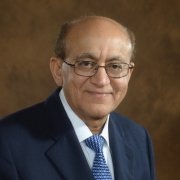
Rakesh K. Jain
PhD | Course Director
- A. Werk Cook Professor of Radiation Oncology, Radiation Oncology, Harvard Medical School
- Director, Steele Laboratory, Massachusetts General Hospital
Lisa M. Coussens, PhD
Hildegard Lamfrom Chair in Basic Science; Professor and Chair, Cell and Developmental Biology Associate Director for Basic Research, Knight Cancer Institute, Oregon Health & Science University, Portland, OR, USA
Jonathan Kipnis, PhD
BJC Investigator, Alan A. and Edith L. Wolff Distinguished Professor of Pathology and Immunology, Wash U Medicine, St. Louis MO, USA.
Joan Massagué, PhD
Chief Scientific Officer and Director of the Sloan Kettering Institute in Memorial Sloan Kettering, Weill Cornell Medicine, New York City, NY, USA
Michelle Monje, MD, PhD
Milan Gambhir Professor of Pediatric Neuro-Oncology and Professor, by courtesy, of Neurosurgery, of Pediatrics, of Pathology and of Psychiatry and Behavioral Sciences, Stanford Medicine, Stanford, CA, USA
Hideho Okada, MD, PhD
Professor, Neurological Surgery, University of California San Francisco School of Medicine, San Francisco CA, USA
Bertrand Routy, MD, PhD
Associate Clinical Professor of Hematology-Oncology, Department of Medicine, Université de Montréal, Montreal Canada
Arlene Sharpe, MD, PhD
Kolokotrones University Professor at Harvard University; Chair of the Department of Immunology at Harvard Medical School
Leader of the Cancer Immunology Program at Dana-Farber/Harvard Cancer Center
Vice Director of the Gene Lay Institute of Immunology and Inflammation at Brigham and Women’s Hospital, Massachusetts General Hospital, and Harvard Medical School, Boston MA, USA.
Mario L. Suva, MD, PhD
Associate Professor of Pathology, Massachusetts General Hospital and Harvard Medical School Associate Member at the Broad Institute of MIT and Harvard, Co-Director, Cancer Program, Harvard Stem Cell Institute, Boston, MA, USA.
David A. Tuveson, MD, PhD
Professor and Director, Cold Spring Harbor Laboratory, Cold Spring Harbor, NY, USA
Eliezer Van Allen, MD
Chief, Division of Population Sciences, Chandra Nohria Family Chair for AI in Cancer Research, Physician, Associate Professor in Medicine, Harvard Medical School.
Chi Van Dang, MD, PhD
Scientific director, Ludwig Institute for Cancer Research
Bloomberg Distinguished Professor of Cancer Medicine, The Johns Hopkins University School of Medicine, Baltimore, MD, USA
Matthew Vander Heiden, MD, PhD
Associate Professor of Biology, Massachusetts Institute of Technology
Associate Director, Koch Institute for Integrative Cancer Research, Cambridge, MA, USA
Robert Wechsler-Reya, PhD
H. Houston Merritt Professor of Neurological Sciences, Scientific Director of Brain Tumor Research, Herbert Irving Comprehensive Cancer Center, Columbia University Medical Center, New York City, NY, USA
Request Information
Interested in learning more about this program? Sign up for details.
Course Fees
Registration Details
You may register through our secure online environment and will receive an email confirmation upon receipt of your payment. Prices include CME credit, electronic syllabus, and most of the recordings are available for up to 30 days after the course ends. At the end of the registration process, a $10 non-refundable processing fee will be added to your registration.
| Role | Course Fee |
|---|---|
| Physician (MD/DO) | $490 |
| Nurse (RN/APRN) | $490 |
| PA | $490 |
| Psychologist | $490 |
| Resident/Fellow | $390 |
| Social Worker | $490 |
| Allied Health Professional / Other | $490 |
Please note: Past participants of the Annual Critical Issues in Tumor Microenvironment course should contact our department at ceprograms@hms.harvard.edu for the discount code to receive a reduced fee. In addition, a group discount of 10% will be applied for groups of 5 and 20% discount for group of 10 or more. Additionally, all sessions will be recorded and made available to participants for online viewing for 30 days after the end of the course.
Student and researcher fees are available but unlisted on the website. You can still register for these rates by clicking the registration link for full details and processing.
Accreditation

The Harvard Medical School designates this Live Virtual for a maximum of 21.00 AMA PRA Category 1 Credit(s)™. Physicians should claim only the credit commensurate with the extent of their participation in the activity.
For the purpose of recertification, the American Academy of Nurse Practitioners Certification Board and American Nurses Credentialing Center accept AMA PRA Category 1 Credit™ issued by organizations accredited by the ACCME (Accreditation Council for Continuing Medical Education). We would also suggest that learners check with their state licensing board to ensure they accept reciprocity with AMA PRA Category 1 Credit™ for re-licensure.
The National Commission on Certification of Physician Assistants (NCCPA) states that AMA PRA Category 1 Credits™ are acceptable for continuing medical education requirements for recertification. We would also suggest that learners check with their state licensing board to ensure they accept reciprocity with AMA PRA Category 1 Credit™ for re-licensure.
The Royal College of Physicians and Surgeons of Canada recognizes conferences and workshops held outside of Canada that are developed by a university, academy, hospital, specialty society or college as accredited group learning activities.
The American Medical Association (AMA) has an agreement of mutual recognition of continuing medical education (CME) credit with the European Union of Medical Specialists (UEMS). Additional information regarding this agreement may be found on the Union of European Medical Specialists website.