
The Rhodes Course for Clinical Exercise Physiology, Testing, and Interpretation for Congenital Heart Disease
- Continuing Education
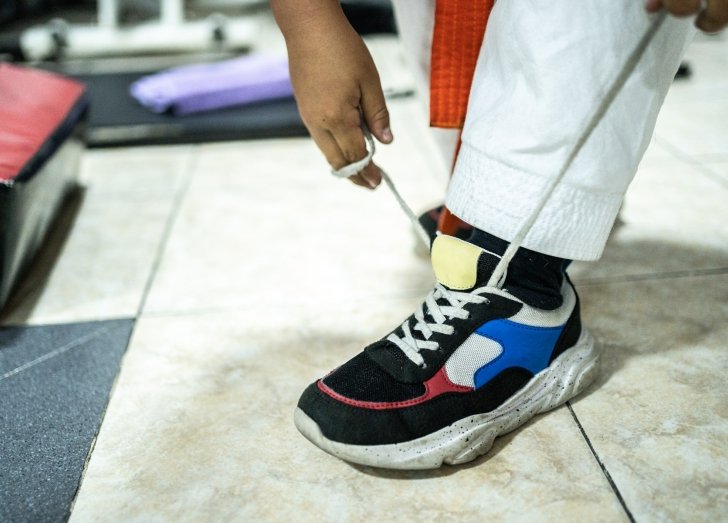
Gain practical skills and clinical insight in pediatric exercise testing through the first course dedicated to exercise physiology in children with congenital and acquired heart disease—designed for health care professionals and featuring online content, interactive discussions, hands-on learning, and case-based applications inspired by the work of Dr. Jonathan Rhodes. Dr. Rhodes was faculty at Boston Children's Hospital and a pioneer in the field of pediatric exercise cardiology. His memory lives on as a friend and mentor to many pediatric exercise cardiologists around the world and this educational course honors his legacy.
- Live Online or In Person
Participants may attend either virtually or in person for highly interactive, practical, and case-based learning.
Additionally, all sessions will be recorded and made available to participants for online viewing for 30 days after the end of the course.
Museum of Science Boston | 1 Science Pk, Boston, MA 02114
$775
(Standard Physician Fee)
Continuing Education
Earn up to:
2026 Accreditation information is listed below, 2027 will be announced soon.
View All
All evaluations and credit claims must be completed within 60 days of the course end date.
2 Days
Please view the Schedule for a full description of the program.
On This Page
Overview
This course is dedicated to pediatric exercise physiology and testing in patients with congenital heart disease (CHD) and pediatric acquired heart disease. It is intended for physicians, exercise physiologists, physical therapists, and advanced practice practitioners involved with or who want to learn about clinical exercise testing for CHD. Educational goals are to understand the science and practice of cardiopulmonary exercise testing in these patients and to be able to make clinically useful insights. This course will utilize virtual and in-person group lectures and discussions, and hands-on learning and demonstrations for in-person attendees. Clinical case examples will be used throughout to illustrate key concepts, including practical aspects of conducting an exercise test, proper protocol selection, motivation, data integrity, and approach to interpreting data outcome metrics. Clinical applications will also be discussed. The development of this course is in response to the overwhelming requests for practical instruction in exercise assessment for this population and is in honor of the late Dr. Jonathan Rhodes, who was a pioneer in the field. His textbook “Exercise Physiology for the Pediatric and Congenital Cardiologist” will serve as a key course reference.
Learning Objectives
- Identify the Fundamentals of Exercise Physiology Across the Lifespan: Describe the basic principles of exercise physiology with an emphasis on patients with congenital heart disease (CHD)
- Acquire Skills to Conduct and Interpret Cardiopulmonary Exercise Testing (CPET): Acquire the ability to set up and conduct CPET and interpret key CPET variables and effectively report findings in patients with CHD
- Analyze Physiological Responses in CHD Patients: Use clinical case examples to evaluate physiological impairments and how these affect a patient’s exercise capacity and health outcomes
- Apply CPET Data to Guide Clinical Decisions: Utilize CPET insights to inform decisions on management for patients with CHD
Developed and Offered By:

Continuing Education courses are developed by faculty from Harvard Medical School's teaching hospitals and accredited by Harvard Medical School. This course is offered by Boston Children's Hospital.

Who Should Participate
Pediatric Cardiologists, Exercise Physiologists, Advanced Practice Providers, Trainees, Allied Health Professionals, Other
Schedule
All agenda sessions are in Eastern Time.
Friday, September 25, 2026
Registration
9:30-10:00 am
Introduction
10:00-10:15 am
Approach to CPET and Congenital Heart Disease
10:15-11:00 am
Motivation: Science and Practice
11:00-11:30 am
Motivation Large Group Workshop
11:30 am-12:00 pm
Lunch
12:00-12:45 pm
Conducting an Exercise Test: Pearls of Wisdom
12:45-1:00 pm
Clinical Exercise Physiology Principles
1:00-1:30 pm
Exercise Physiology in Congenital Heart Disease
1:30-2:00 pm
CPET Data Variables: Definitions and Implications
2:00-3:00 pm
Break
3:00-3:15 pm
CPET Demo
3:15-4:00 pm
Wrap Up
4:00-4:15 pm
Break
4:15-4:30 pm
Social Event at Museum of Science - No CME Credits Awarded
4:30-6:00 pm
Saturday, September 26, 2026
Breakfast
8:00-8:15 am
Introduction
8:15-8:30 am
Identifying High Quality Data
8:30-8:45 am
CPET Data Variable Review
8:45-9:00 am
CPET Data Case Study Workshop
9:00-9:45 am
Algorithms and Prediction Equations
9:45-10:10 am
Break
10:10-10:20 am
Case Study Workshop: Simple CHD
10:20-11:30 am
Case Study Workshop: Exercise ECGs
11:30 am-12:00 pm
Lunch
12:00-1:00 pm
Case Study Workshop: Hemodynamic Variations in CHD
1:00-2:15 pm
Break
2:15-2:30 pm
Case Study Workshop: Complexity, Cyanosis, and Ischemia
2:30-3:30 pm
Wrap up and Summary
3:30-4:00 pm
Faculty
Harvard Medical School Continuing Education attracts the best and brightest faculty from all around the world. As a student in this course, you’ll have access to outstanding course directors and faculty.
Course Directors

Naomi Gauthier, MD
Course Director
- Medical Director, Exercise Cardiology
- Director, Cardiac Fitness
- Program Director, Advanced Fellowship in Exercise Cardiology
- Senior Associate Cardiologist, Department of Cardiology
- Assistant Professor of Pediatrics, Harvard Medical School
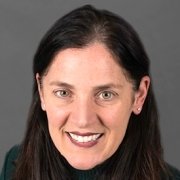
Tracy Curran, PhD
Course Director
- Cardiac Exercise Program Development Manager, Department of Cardiology
- Instructor, Exercise Physiology, Lasell University
- Instructor, Human Movement and Rehabilitation Sciences, Northeastern University
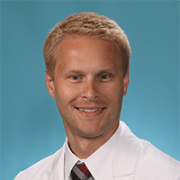
William Orr, MD
Course Director
- Associate Professor of Pediatrics
- Pediatric Exercise Physiology Lab Director
- Pediatric Cardiology Fellowship Program Director
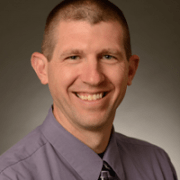
Adam Powell, MD, MS, FACC
Course Director
- Medical Director, Ambulatory Cardiology
- Medical Director, Cardiorespiratory Sports Clinic
- Medical Director, Pediatric Cardiorespiratory Testing and Rehabilitation Advanced Fellows Program
- Associate Professor of Pediatrics, University of Cincinnati
- Associate Program Director Pediatric Cardiology Fellowship

Aimee Layton, PhD, RCEP
Course Director
- Associate Professor of Applied Physiology (in Pediatrics) at CUMC
- New York Presbyterian's Morgan Stanley Children's Hospital Pediatrics, Division of Pediatric Cardiology
Jolie Britt, MD
Assistant Professor, Pediatric Cardiology
Associate Program Director, Pediatric Residency Program
Baylor College of Medicine, Texas Children's Hospital
Danielle Burstein, MD
Associate Professor of Pediatrics, University of Vermont Larner School of Medicine
Director, Pediatric Fitness Program, University of Vermont
Jesse Hansen, MD
Medical Director, Exercise Physiology
Assistant Professor, Pediatric Cardiology
C.S. Mott Children’s Hospital
University of Michigan
Jennifer H. Huang, MD
Doernbecher Children’s Hospital
Oregon Health and Science University
Shannon O’Malley, MS
Clinical Exercise Physiologist, Children’s Hospital of Philadelphia
Arash Sabati, MD
Medical Director, Exercise Lab, Phoenix Children’s Hospital
Clinical Assistant Professor, University of Arizona
Meg Vernon, MD
Medical Director, Exercise Lab
Associate Professor of Pediatrics, University of Washington
Francis Walsh, MS
Exercise Physiologist, Boston Children's Hospital
Kendra Ward, MD, MS
Pediatric Cardiologist, Electrophysiologist
Director, Cardiopulmonary Exercise Lab and Cardiac Exercise Program
Director, Preventive Cardiology
Associate Professor of Pediatrics
Northwestern University Feinberg School of Medicine
David A. White, PhD
Associate Professor
Exercise Physiologist
Children's Mercy Kansas City, Ward Family Heart Center
University of Missouri - Kansas City, School of Medicine
S. Moli Yin, MD
Cardiologist, Department of Cardiology, Boston Children's Hospital
Instructor of Pediatrics, Harvard Medical School
Daniel Ziebell, MD
Assistant Professor of Pediatrics
Director of Pediatric Cardiac Fitness Program
Co-Director of Exercise Lab
University of Utah
Location
Venue:
Museum of Science Boston
1 Science Pk
Boston, MA 02114
Hotel Information:
Please use the links below to explore available hotel options.
Kimpton Marlowe Hotel (0.25 miles)
The Royal Sonesta Boston (0.26 miles)
The Liberty, Marriot Luxury Collection (0.37 miles)
citizenM Boston North Station (0.43 miles)
Hampton Inn by Hilton Boston/Cambridge (0.55 miles)
Request Information
Interested in learning more about this program? Sign up for details.
Course Fees
Registration Details
You may register through our secure online environment and will receive an email confirmation upon receipt of your payment. Prices include CME credit, electronic syllabus and access to some recordings for 30 days after the course.
At the end of the registration process, a $10 non-refundable processing fee will be added to your registration.
| Role | Course Fee |
|---|---|
| Physician (MD/DO) | $775 |
| Nurse (RN/APRN) | $350 |
| Exercise Physiologist | $350 |
| PA | $400 |
| Psychologist | $200 |
| Resident / Fellow | $200 |
| Social Worker | $200 |
| Student | $150 |
| Allied Health Professional / Other | $150 |
Accreditation

The Harvard Medical School designates this live activity for a maximum of 11.25 AMA PRA Category 1 Credit(s)™. Physicians should claim only the credit commensurate with the extent of their participation in the activity.
For the purpose of recertification, the American Academy of Nurse Practitioners Certification Board and American Nurses Credentialing Center accept AMA PRA Category 1 Credit™ issued by organizations accredited by the ACCME (Accreditation Council for Continuing Medical Education). We would also suggest that learners check with their state licensing board to ensure they accept reciprocity with AMA PRA Category 1 Credit™ for re-licensure.
The National Commission on Certification of Physician Assistants (NCCPA) states that AMA PRA Category 1 Credits™ are acceptable for continuing medical education requirements for recertification. We would also suggest that learners check with their state licensing board to ensure they accept reciprocity with AMA PRA Category 1 Credit™ for re-licensure.
The Royal College of Physicians and Surgeons of Canada recognizes conferences and workshops held outside of Canada that are developed by a university, academy, hospital, specialty society or college as accredited group learning activities.
The American Medical Association (AMA) has an agreement of mutual recognition of continuing medical education (CME) credit with the European Union of Medical Specialists (UEMS). Additional information regarding this agreement may be found on the Union of European Medical Specialists website.