
A Pharmacist’s Path to a Career in Clinical Research
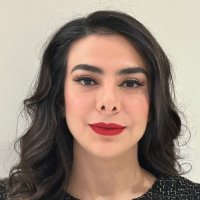
"I really liked the process of designing a question and understanding how to work with data, that pushed me to pursue more formal training in research."
For more than two decades, Maryam Charehjoo, PharmD, MCP, worked as a clinical pharmacist in Dubai, managing pharmacy operations and providing patient counseling in a fast-paced community setting. While completing her master’s degree in clinical pharmacy from Gulf Medical University, her interest in clinical research grew as she realized how much she enjoyed studying methodology, forming research questions, and interpreting data.
That experience, coupled with her focus on cardiovascular pharmacology, highlighted a training gap in research that she wanted to fill. It also revealed how evidence-based approaches could deepen her impact on patient care, particularly in developing clinical studies to determine drugs that can treat cardiovascular diseases.
“I really liked the process of designing a question and understanding how to work with data,” she said. “That pushed me to pursue more formal training in research.” This desire to deepen her understanding of evidence-based practice ultimately led her to enroll in Harvard Medical School’s Foundations of Clinical Research virtual certificate program.
Strengthening Core Research Skills
Within the program, Charehjoo found a robust curriculum that strengthened the core research skills she felt was missing. The modules in epidemiology and study design helped her understand how research questions are built and how to interpret results with more confidence.
She learned how to read scientific papers more critically, identify the structure behind a study, and evaluate whether the findings were supported by the data. These components clarified what she described as “the fundamentals” of beginning a research career and helped her see how each part of a study fits together.
“The methodology they taught us in epidemiology and study design, and the way they showed us how to interpret results and read a paper, really are the fundamentals,” she said. “You need to know how to ask a proper question and how to evaluate the literature before you can move forward.”
Gaining Confidence Through the Individual Project
The program’s individual project became one of the most meaningful parts of Charehjoo’s experience. Learners begin by developing a focused research question with faculty guidance, then move on to analyzing a public dataset and preparing an abstract and digital poster based on their findings.
Working through her own research question, selecting variables, and interpreting the results helped her connect the course material to the research practice she sought in her career. Charehjoo found the faculty guidance especially valuable. “They gave their opinions and recommendations, and I could build on that,” she says.
Presenting her digital poster also taught her that research requires more than statistical analysis. “It’s about communication as well,” she notes. “You have to be able to communicate your result in a way that others can understand clearly.” The structured feedback and hands-on approach made the process both challenging and motivating.
Moving Toward a Research-Focused Career
After completing the program, Charehjoo expanded her involvement in academic work and began presenting her findings at several conferences, including a virtual poster symposium with the American College of Clinical Pharmacy. She continued to build on this momentum by enrolling in Harvard Medical School’s Global Clinical Scholars Research Training certificate program and preparing to apply for a PhD clinical research program.
Although Charehjoo values her many years as a pharmacist, she now feels ready to move into roles that allow her to explore the clinical questions that arise in everyday practice. “I love being a pharmacist, but in the next chapter of my career, I want to design studies that answer the questions that come up in clinical work.”