Expanding Research Horizons: How One Physician-Scientist Found New Perspectives in Global Clinical Scholars Research Training
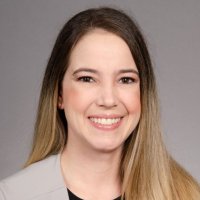
“I can now have more detailed conversations with my statistician colleagues and participate more meaningfully in study design and analysis. The program has made me a stronger methods writer and a more thoughtful reviewer.”
For Nikki Gentile, MD, PhD, the pursuit of clinical research has always been driven by purpose. A physician-scientist who balances patient care, teaching, and research, she views each project as an opportunity to move medicine forward. That motivation, paired with a desire to strengthen her grant-writing and study design skills, ultimately led her to enroll in Harvard Medical School’s Global Clinical Scholars Research Training certificate program.
At the time, Gentile was an assistant professor at the University of Washington with joint appointments in Family Medicine and Laboratory Medicine and Pathology. She also served as primary care medical director of the UW Post-COVID Rehabilitation and Recovery Clinic, co-leading efforts to understand and treat one of the most complex conditions emerging from the pandemic.
Even with multiple federally funded projects underway, Gentile was eager to re-engage with peers who shared her passion for advancing evidence-based care. “I was excited about the opportunity to return to a structured academic environment, enhance my grant-writing skills, and collaborate with peers from around the world,” she says.
Building a Research Foundation for the Future
When Gentile joined the program, she was leading a feasibility trial funded by the National Institutes of Health that examined acupuncture for pain management in patients with long COVID. This study became the foundation for her capstone project, which focused on developing a large, randomized, controlled trial comparing traditional Chinese medicine acupuncture to current treatment options for long COVID-related pain. Through this process, she began to refine her long-term research goals and clarify the next steps for advancing this work.
“Pain is one of the most common and debilitating symptoms of long COVID, yet it is often under-addressed,” Gentile explains. “Designing a rigorous clinical trial was a chance to move this work forward and develop evidence-based care options that improve quality of life.” The experience not only helped her think strategically about scaling her research but also informed a multicenter feasibility trial her team is now preparing to pursue.
Skills That Strengthen Every Study
Through the biostatistics and clinical trial modules, Gentile found tangible ways to strengthen her research practice. She credits the curriculum with helping her to engage more deeply in methodological discussions and approach data interpretation with greater confidence. “I can now have more detailed conversations with my statistician colleagues and participate more meaningfully in study design and analysis,” she notes. “It has made me a stronger methods writer and a more thoughtful reviewer.”
Equally valuable were the insights gained from faculty who shared their own experiences with research funding. “Listening to faculty talk openly about their challenges helped me maintain resilience after my first unsuccessful grant application,” she says. “It was a good reminder that even established researchers face setbacks.” Hearing those stories provided a sense of perspective that would stay with her beyond the program.
A Global Network of Peers
For Gentile, one of the most rewarding aspects of the experience was the collaboration and camaraderie that developed within her cohort. Participants represented a wide range of fields and regions, and the diversity of backgrounds enriched discussions and exposed her to new ways of thinking about research design and implementation.
“Our group really supported each other through difficult times,” she says. “We stayed connected, integrated new members, and even won an award for one of our group projects. I still keep in touch with several of them today.” She recalls the memorable final workshop and celebration at the Harvard Club of Boston, where program leaders took time to engage personally with participants. “That personal touch at the end made the experience feel special. It was a meaningful moment that tied everything together.”
Continuing Impact and Looking Ahead
Since completing the program, Gentile’s work has continued to gain momentum. She recently received the University of Washington Department of Family Medicine’s Research and Scholarship Excellence award and was selected for a national research honor to be announced later this year. While her research achievements were already underway prior to joining Harvard Medical School, she believes that the intensive training and robust curriculum helped to strengthen her confidence and approach.
“It’s hard to measure exactly how much the program has influenced my career trajectory,” she says. “But completing a Harvard program before turning 40 was something I was proud of, and I believe it has contributed to the recognition I have received.”
Looking back, Gentile reflects not only on the knowledge she gained but also on the sense of community and shared purpose that emerged during the final in-person sessions. From collaborative group work to networking opportunities with faculty, those touchpoints underscore the value of connecting with peers who are equally committed to advancing clinical research.
Today, she continues to build on that foundation as her research advances and her leadership responsibilities expand. Gentile views the Global Clinical Scholars Research Training program as one part of a broader journey defined by curiosity, persistence, and a dedication to improving care for patients with long COVID and beyond.
“As researchers, we are always learning,” she says. “This experience was another step in my growth, and I am grateful for what it added to my path.”
Written by: Meredith Faxon Murray