
Driving System-Level Change Through Surgical Leadership
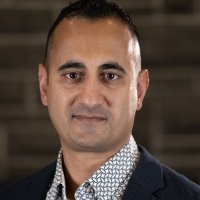
"Once you understand the full spectrum—not just the surgical side—people start listening more. My message becomes amplified and more impactful."
As a vascular surgeon practicing in Ontario, Canada, Varun Kapila, MD, FRCS(C), has spent more than a decade treating complex patients while steadily taking on leadership roles across local, provincial, and national health care systems. His responsibilities—from site chief of surgery and division head of vascular surgery to provincial oversight roles at Ontario Health and CritiCall Ontario—put him in the key role of influencing system-wide decision-making.
Interested in how Varun Kapila's journey has progressed? Read his updated interview.
Yet, despite his extensive experience, Kapila recognized a gap common among surgeons: “We are perfectly set up to lead complex health systems… but we have absolutely no formal leadership training.” Seeking to close that gap, he enrolled in Harvard Medical School’s Surgical Leadership Program, a decision he describes as transformative in his career and personal life.
Building Leadership Confidence
Kapila recognized that while surgeons are trained extensively in clinical decision-making, they receive little structured preparation in areas like hospital finance, system operations, and organizational politics. There were moments in executive and system-wide discussions when he felt the need for more formal leadership training.
“I wanted lose that feeling of being an imposter and thrive in a hospital C-suite,” he explains. The Surgical Leadership Program filled that gap. Through case-based learning, leadership simulations, and practical instruction on how health systems function, Kapila developed the tools and language needed to lead more effectively.
“I learned how to speak up, how to speak the language of hospital business and operations, and develop what I call leadership street cred,” he says. “Once you understand the full spectrum—not just the surgical side—people start listening more. My message becomes amplified and more impactful.”
For Kapila, these skills translated directly into his work at the provincial level, strengthening his ability to influence policy, drive system-wide initiatives, and lead confidently across Canada.
Turning a Capstone into Provincial Impact
Kapila’s capstone project focused on implementing Ontario’s first abdominal aortic aneurysm (AAA) screening program—an initiative no province or territory in Canada had yet operationalized despite strong evidence and international precedents.
“My capstone project focused on how to implement an AAA screening program in Ontario,” he explains. “Despite years of randomized evidence and guidelines, no province or territory in Canada had one.”
Through the Surgical Leadership Program, Kapila learned how to evaluate hospital and system finances, navigate the political and operational realities of health care, and apply the “premortem” method to anticipate challenges before they occurred. These tools helped him to design a strategic, scalable provincial plan and translate a longstanding idea into an actionable framework.
Last September, in partnership and with support from Ontario’s provincial government, the proposal culminated in the launch of Ontario’s AAA screening initiative, now serving more than 15-to-20 million residents. “The capstone project was pivotal in terms of the success of the program,” he reflects. “It directly linked into the work that I do every day… and I was happy to report that our province announced our first AAA screening program.”
Learning from Global Peers and World-Class Faculty
Kapila describes the international cohort as one of the most valuable aspects of the program, noting how the diverse perspectives broadened his understanding of global health systems. “I learned so much about health systems from around the world, which allowed me to do a lot of introspection about internal health care in Ontario.”
Team-based assignments further shaped his leadership approach. “Because of the lived experiences that others had to go through,” he says, “I learned how we could do things better closer to home.”
Faculty expertise added another powerful dimension to the experience. Kapila recalls instructors who have taught world leaders, including U.S. presidents and global innovators. “There’s power in that, because the return on investment is incredible. I’m not being taught by someone who read a textbook—I’m being taught by the person who wrote the textbook.”
He also highlights simulations like the Everest exercise and the Human Synergistics “survival situation” as essential components that deepened his understanding of high-functioning teams.
A Program That Impacts Life Beyond Surgery
For Kapila, the Surgical Leadership Program’s influence extended well beyond the operating room. “I think that I became a better parent,” he says, recalling a lesson that stayed with him: “Never work from your emotional basement. When you are in that emotional zone, that’s when you need to stop sending emails, stop talking… think about what got you there before you do something you don’t want to do.”
He applies this insight both in leadership and at home. The program, he notes, “fits the life of the busy surgeon” and offers education akin to “a mini-MBA,” combining case-based learning with practical skills relevant to every stage of surgical practice.
His advice to future participants is simple: “We are all leaders. If you can positively influence someone, you are a leader. You don’t need a specific title or position to benefit from the program.” Reflecting on the experience as a whole, he adds, “The impact was far reaching, even outside my surgical practice—something I won’t forget.”
Alumni Ambassador Insights
Updated as of February 2026
- What motivated you to enroll in the Surgical Leadership Program, and what were you hoping to gain from the experience?
As a surgeon, I spent years focusing on my craft - the choreographed micro movements that I thought would make a ‘great’ surgeon. Soon after starting practice, I realized that being a good technical surgeon was only a small part of being an impactful contributor to our health system. Like colleagues before me, what I perfected in the art of surgery, I lacked in the art of leadership. My ability to make meaningful change to our health system was limited as a result.
Surgeons are perfectly equipped to lead complex health systems, but we need additional formal leadership training to fill this gap in our education.
- How has the program influenced your professional growth or opened new opportunities in your career?
I previously had a false sense of leadership. I used to think it was a position of power or a title that made you a leader. This couldn’t be further from the truth. Harvard Medical School’s Surgical Leadership program showed me the foundation of leadership, how we can apply it, and what truly makes an enterprise successful. The core teachings provided an easily applicable framework to sit into any C-suite meeting and comfortably drive our organizations forward. No longer are we ‘just surgeons’, but now integral system leaders ready to make meaningful impact. The Surgical Leadership program was integral for me to evolve into the leader that I am today.
- What advice would you share with professionals considering the Surgical Leadership Program?
If you want to drive your organization forward, make meaningful change, or grow as a dependable and reliable steward of your health system, then this program is a critical key to that success. The best investment I have ever made in my leadership career was the initial application to this program. I have never looked back since.
Written by: Pamela Searle