
The Leadership Engine as a Map for Clinical Leadership Development
In this Harvard Macy Institute blog post, an integrated approach to developing clinical leadership and teamwork skills across all levels of healthcare teams is discussed.

Consider a nurse at our institution. When she works with an attending, she is not sure values her opinion; she deliberately invests in her relationship with the resident so that if she has a concern, she has an ally who will hear it. She knows how to mobilize others and manage her relationships. She knows that her perspective is worth sharing. We all need a culture where she never has to rely on a workaround, and where our patients have the resources they need. Until that is universal, every team member needs a toolkit that lets them lead from where they stand.
As new physicians, we witnessed how different clinicians approach team management in patient care. We soon realized that a clinician’s leadership style usually grew out of clinical experience and natural instinct, not out of what they were taught in medical school. Established leadership training in medical and health professions education targets well-defined moments: system change, patient crisis, and administrative roles, with few programs focusing on comprehensive approaches to leadership. But this training rarely addresses the daily challenges we have personally experienced: a bed shortage, an unfamiliar clinical team, a patient whose condition offers no clear next move. We believe leadership and teaming are muscles that can be developed to improve patient care, in a way that does not simply rely on instinct or on mimicking supervisors or mentors. So, we set out to develop a model to guide this skill development and bring different aspects of leadership together.
Our guiding principles for developing this model are based on our leadership philosophy. First, everyone is trying their best, and a leader's job is to help them succeed. Second, anyone can act as a leader by taking initiative toward a shared goal. You can be anywhere on the team: the medical student, the scrub tech, the brand-new nurse, and if you can help move the group toward the goal, then you are leading with a lowercase ‘l’. The business literature is clear that leadership skills can be named, modeled, and taught. Moreover, we want people to lead from their entry-level seats where their fresh perspective holds recognized value. With coaching, medical professionals can continue to build upon their foundational teaming skills and emerge with evidence-based proficiency in leadership. Through a literature review, a listening tour across our system, and reflection on our own clinical lives and knowledge of leadership, we synthesized a model. We propose the “Leadership Engine.”
Why an Engine, and not a list?
The point of the model is not novelty for its own sake. It is integration. We kept finding that the frameworks we use, such as situational, distributive, and resonant leadership, are helpful but incomplete. We were heavily influenced by adaptive leadership, but felt the need to highlight the relationships of the components more. The engine demonstrates how Kotter's stages of change interact with emotional intelligence. It also allows us to teach strategically towards a broad skill set. A learner or a program can work on one part at a time and have a map of what to develop.
Our visual representation owes a debt to the Master Adaptive Learner (MAL) model, which our institution uses heavily in faculty development. We were struck to learn that Martin Pusic and Bill Cutrer arrived at MAL much the way we arrived at this, by connecting many evidence-based concepts into one.
The Leadership Engine
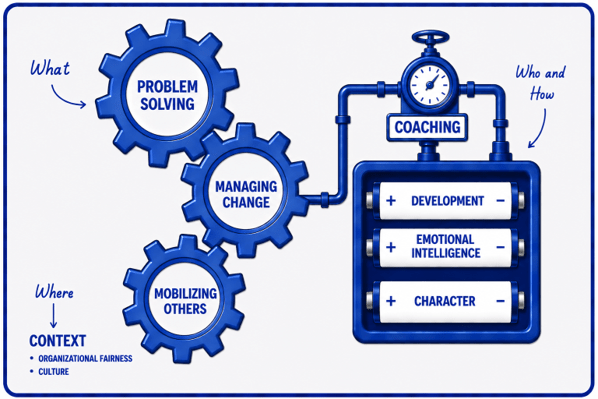
Figure 1: Developed by the authors using GPT5.5, July 2026
The “gears” are the ‘what’ of leadership, the visible action. Problem-solving, managing change, and mobilizing others are tools to structure action. But tools in ill-equipped hands are not effective. We need more.
The “battery pack” is the ‘who and how’, the hidden driver of the gears: ongoing development in understanding where you are, setting goals, receiving feedback, emotional intelligence in recognition, regulation, and realization of emotions, and character as living in alignment with your values, especially under pressure. This battery pack is often dismissed as "soft skills," when in fact it is the engine's actual power. The evidence for the crucial role of these in forming effective leadership is vast.
The “context” is the ‘where.’ The environment directly impacts how the engine runs, and for us, context includes both culture and organizational fairness. Are processes set up for distributing information and resources appropriately? Are we accountable? Are the various parts of the organization given the same access to these processes? We need leaders to understand how these structural components can lead to failure or success. When resources, communication, and just culture are in place, then leadership can thrive. When they are not, even a well-developed leader can stall out.
The “regulator” between the battery pack and the gears is coaching. The connection between who you are and what you do is not always automatic. Coaching helps convert internal development into effective action and can keep leaders calibrated.
Picture a moment many clinicians may recognize. It is 3 a.m., it is your fourth ER consult of the night, and there is still no bed for your patient awaiting transfer to your floor. Your emotional intelligence in that moment is completely depleted, and pretending otherwise is its own failure. But character can carry you when emotional intelligence runs low. Knowing your values and holding on to them under pressure can help you show up for the team anyway.
An Invitation
But what does adaptive expertise in teamwork actually look like? From our fatigued colleague managing a bed shortage to the nurse working the channels of communication, there are teachable scripts that eliminate guesswork and intuition and can get things moving faster and easier- for example, asking communication preferences rather than figuring them out by observation. We want to find more of those scripts. With an integrated model, we can improve leadership development for clinicians across all levels. We share this as a proposal, not a finished product. If this resonates with how you approach leadership development, or if you see a missing component, we would love to hear from you.
Acknowledgement: This model was developed in collaboration with our colleagues Ian McCoog, EdD (Educators ’26) and Andrea DiMattia, EdD (Educators ’26).
Did you know that the Harvard Macy Institute Community Blog has had more than 450 posts? Previous blog posts have explored topics including design in clinical teaching, evidence-based medicine, and learning myths.

Rose Barham, MD, MS (Educators ‘26) is an Assistant Professor of Medicine and Pediatrics and Assistant Chair of Undergraduate Medical Education for Internal Medicine at Geisinger College of Health Sciences. HMI has made an impact on Rose’s career by giving her the opportunity to bring the work of many faculty together under one model of leadership. Rose’s areas of professional interest include improving patient and clinician experience, professional development, and leadership. Rose can be contacted via email or followed on LinkedIn.

Brytanie Marshall, MD (Educators '26), is an Associate Professor of Obstetrics and Gynecology and Vice Chair of Education for Obstetrics and Gynecology at Geisinger College of Health Sciences. HMI has made an impact on Brytanie’s career by reinvigorating the vision that unity as leaders is greater than leading as an individual. Brytanie’s areas of professional interest include professional development, faculty development, and mentorship. Brytanie can be contacted via email.