
Great Curriculum Transformation Requires More Than Good Design
In this Harvard Macy Institute blog post, learn how implementation science, faculty development, and dedicated expertise can help turn promising curriculum reforms into lasting changes in educational practice.

I recently participated in an ambitious curriculum redesign effort at my institution. Faculty invested hundreds of hours in planning sessions, stakeholder meetings, and working groups. A vision for change began to emerge. Promising ideas gained traction. Questions remained, but there was growing momentum around the possibility of a different future.
Yet just as implementation was about to begin, institutional attention shifted to other pressing priorities. Meetings paused. Timelines slipped. The conversations that once generated energy shifted focus to maintenance rather than transformation. Nothing had gone wrong. The curriculum design remained sound. The faculty remained committed. The curriculum redesign simply encountered a reality familiar to many academic institutions. Competing priorities do not merely delay change. They can alter the conditions necessary for implementation. As momentum faded, I began to wonder whether educational leaders spend too much time discussing the merits of a proposed change and too little time discussing how that change will actually be implemented once it begins.
The Missing Discipline
Medical and health professions educators are often skilled leaders. We identify problems, generate solutions, design curricula, and launch new programs. We are much less likely to ask a different question. How do we move from articulating a proposed change to a durable change in practice? Implementation science can offer a useful framework for addressing this challenge. Originally developed to understand how evidence-based interventions can be successfully integrated into healthcare settings, implementation science focuses on the processes that influence adoption, sustainability, and spread.
Many educational leaders can describe a promising initiative that generated enthusiasm, secured approval, and ultimately struggled during implementation. The reasons are rarely mysterious. Faculty may lack time, training, or confidence. Existing processes may not support the new approach. Technical infrastructure may be incomplete. Competing priorities may divert attention. Stakeholders may agree with the goals while resisting the disruption required to achieve them.
These challenges are often treated as unfortunate obstacles that arise after the "real work" of designing a change is complete. Implementation science suggests the opposite. Understanding these barriers is the real work. Too often, educational changes are treated as projects. Implementation science encourages us to view them as organizational change processes.
Faculty Development Is an Implementation Strategy
One lesson has become increasingly clear. Faculty development is not something that happens after implementation. Faculty development is essential to implementation. Many curriculum reforms assume that once a new initiative has been approved, faculty will naturally understand how to incorporate it into their teaching. In reality, even highly motivated educators may struggle to translate broad institutional goals into daily educational practice.
Consider competency-based education, interprofessional learning, artificial intelligence integration, or curriculum mapping. Each requires faculty to adopt new skills, new mental models, and sometimes even new professional identities. Without intentional faculty development, implementation may depend heavily on a small group of early adopters. The change may persist in isolated settings, but it is less likely to become a shared, consistent practice across the curriculum.
Successful implementation requires faculty to understand not only what is changing, but why it is changing and how it aligns with their professional values and responsibilities. Faculty development therefore becomes less about training and more about creating shared understanding, building confidence, and supporting adoption over time.
The Importance of Dedicated Expertise
As institutions increasingly invest in instructional designers, educational technologists, and assessment specialists, another role deserves consideration: the implementation scientist. Increasingly, large health care systems are investing in implementation scientists, improvement scientists, and change-management specialists whose primary focus is helping organizations translate innovations into routine practice. These professionals can identify barriers to adoption, engage stakeholders, monitor implementation progress, evaluate sustainability, and help organizations navigate the complex realities of organizational change. Medical schools have begun to recognize the relevance of implementation science for health professions education, but the role is not yet as routinely institutionalized in educational operations as instructional design, educational technology, or assessment expertise.
Instead, implementation responsibilities are often distributed among faculty leaders who already carry substantial teaching, research, and administrative responsibilities. Even when these leaders are highly capable, implementation can frequently become one responsibility among many. The result is predictable. The proposed change receives attention during development and launch, but less attention during the years when sustainable adoption is actually determined.
An implementation specialist brings a different perspective. Their focus is not the quality of the proposed improvement itself. Their focus is the quality of its integration into institutional practice. These questions may often determine success more than the quality of the change itself. They may ask questions such as:
- Who has adopted this initiative and who has not?
- What barriers are faculty experiencing?
- Which stakeholders remain unconvinced?
- How will this initiative survive leadership transitions?
- What evidence suggests long-term sustainability?
Moving Beyond Change Culture
Many academic institutions celebrate the design and articulation of change. Fewer celebrate the disciplined work required to carry that change into practice. Yet the educational experiences that most influence learners are often not the newest developments. They are the practices that were successfully implemented, sustained over time, and absorbed into institutional culture. Educational institutions rarely suffer from a shortage of ideas for curriculum reform. The more pressing challenge is translating those ideas into durable changes in practice.
This requires a shift in mindset. We should think less like inventors and more like systems leaders. We should recognize faculty development as a central implementation strategy rather than a supporting activity. And we should consider whether implementation expertise deserves a place alongside the many other specialists who support modern health professions education.
The next breakthrough curriculum development may already exist. The important question is whether we know how to make it stick. Consider what educational innovation at your institution has demonstrated success, but has not yet achieved widespread adoption, and what would change if implementation received as much attention as innovation.
Did you know that the Harvard Macy Institute Community Blog has had more than 450 posts? Previous blog posts have explored topics including learning myths, powerful questions, and learner-centered education.
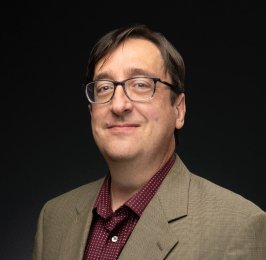
Vincent VanBuren, PhD, FAHA (Educators ’21; Leaders ’26) is an Instructional Associate Professor and the Associate Department Head of Medical Education at the Texas A&M University Naresh K. Vashisht College of Medicine. HMI has made an impact on Vincent's career by providing practical frameworks and a community of educators that have strengthened his approach to educational leadership, innovation, and organizational change. Vincent's areas of professional interest include evidence-based medical education, artificial intelligence, and program evaluation. Vincent can be followed on LinkedIn or contacted via email.