
Leading Change in Primary Health Care Through Strategic Leadership
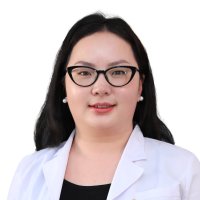
“The program reshaped how I view leadership, not simply as a formal title but as a set of behaviors, attitudes, and responsibilities.”
Improving health care delivery in Mongolia has always been deeply personal for Khongorzul Altangerel, MD, MPH. As a physician and public health professional working within the Health Department of Orkhon Province, she has spent years supporting primary health care centers and addressing system-level challenges. Seeking to move beyond operational management toward sustainable change, Altangerel enrolled in Harvard Medical School’s Leadership in Medicine: Asia Pacific certificate program, an experience she describes as both transformative and empowering.
Moving from Clinical Practice to Shaping Systemwide Solutions
Although trained in clinical medicine, Altangerel’s experience working in public hospitals exposed her to the broader realities of health care systems—heavy workloads, limited resources, and challenging working environments for clinicians. Rather than remaining within those constraints, she was motivated to take on a more active role in shaping solutions.
“I did not want to complain, criticize policymakers, or wait for change. I wanted to be part of creating it,” she explains.
The Leadership in Medicine program provided the structure she was seeking. It not only helped her transition from hands-on clinical work to a more strategic, system-level perspective but also equipped her with the tools to lead quality improvement efforts more successfully.
Building Strategic Thinking and Leadership Confidence
Entering the program while working full-time, Altangerel approached the experience with clear intention, committing to fully engage with the material and apply what she learned directly to her work. Through case-based learning and real-world scenarios, she strengthened her ability to think strategically and approach complex problems in a more structured way.
“The program reshaped how I view leadership, not simply as a formal title but as a set of behaviors, attitudes, and responsibilities,” she reflects.
By learning how to navigate uncertainty, balance intuition with analytical thinking, and prioritize effectively, she developed greater confidence in contributing to system-level decisions and organizational improvement.
Putting Learning into Action
For her capstone project, Altangerel focused on enhancing the quality of antenatal care in primary health care centers to help reduce neonatal mortality in Orkhon Province. Drawing directly from her experience and the program’s Faculty Development track, she designed a practical solution to address gaps in knowledge among general practitioners.
“In my current role, I recognized that improving quality of care requires not only evaluation and accountability, but also continuous capacity building,” she explains.
Her project, now in the pilot phase, centers on developing flexible, online training in collaboration with experienced specialists, with plans to refine and scale based on measurable results.
A Transformative Experience
Beyond professional growth, the program had a deep personal impact on Altangerel. It strengthened her self-awareness and empowered her to become a more thoughtful and intentional leader. She also highlights the importance of engaging fully in the learning experience and building connections with peers.
“My advice would be to approach the program with commitment and intentionality,” she says. “Make sure to dedicate sufficient time for studying and reflection, and actively participate in discussions and group work.”
Today, Altangerel feels better prepared to help lead organizational change that improves the quality of care and supports health care professionals in more meaningful and sustainable ways.
Written by: Pamela Searle