
Navigating Health Professions Educator Development Programs
In this Harvard Macy Institute blog post, reflection questions to guide decisions about pursuing health professions educator development programs are discussed.

I am frequently asked by trainees and junior faculty whether, how, and when to pursue additional training in health professions education. It is a bit of a full circle moment for me, as I had the same questions earlier in my career. With the ever-evolving and increasing number of workshops, pathways, certificates, fellowships, and degree programs available for health professions educators, how does one choose what is the right fit and when to pursue it? For those of us who have walked this path, how do we guide those who come after us? Over my career, some of the most impactful experiences have been programs that intentionally blend theory, practice, and a community of peers—such as the course I completed through the Harvard Macy Institute. Drawing on my personal experience completing a Master in Education in the Health Professions (MEHP) degree, a Harvard Macy Institute (HMI) course, and other professional development programs, this post offers guidance to those who are considering advanced training opportunities in health professions education.
First, it is important to recognize that participating in and completing educator development programs can make a substantial difference in educational knowledge, teaching skill, professional identity formation, and career advancement and satisfaction. Educators who have completed postgraduate training, such as certificates or graduate degrees, have reported improved educational practices, greater engagement in scholarly activities, enhanced abilities to facilitate curriculum reform, and increased expertise in assessment and feedback practices. Professional identity formation as an educator is also associated with postgraduate qualifications. Multiple program evaluations in the literature attempt to quantify the impact of individual degree programs. For example, graduates from a master’s-level degree program in medical education attributed competence in education and engagement in scholarship to their training. While these single-cohort evaluations have limitations, a comparison of individuals who participated in a series of faculty development workshops with matched controls noted that participants perceived greater success and growth, placed higher value on academic scholarship, and reported increased local and national networking compared with the control population. However, there is great variation among educator development programs in their design, scope, methodology, and outcomes.
Clearly, educator development programs can produce substantial benefits. However, the return on investment is often unclear at the outset, and the variety of options can be overwhelming. How does one decide whether to pursue additional training and if so, which path to take? How can mentors help guide these decisions? Rather than directly comparing the pros, cons, and tradeoffs of different programmatic approaches, it may be more helpful for those seeking to further develop their careers as educators to consider the following reflection questions when considering a particular program.
Why do you want to participate in this program? What are you hoping to achieve? Is it the chance to learn specialized content? The opportunity to grow over time while investing in your own education? Or to build relationships and networks that may augment future professional opportunities? Different programs have varied scope and foci, and one approach may be a better fit than another for a given educator. Knowing your why can help determine whether engaging in an educator development program is appropriate, when to do so, and which type will be most helpful based on its size, scope, time commitment, and cost.
What are the tradeoffs of pursuing this educational program now? Anything worth doing often takes time, effort, and resources. A thoughtful investment can pay dividends in over a career as an educator. As a busy professional who also has significant personal obligations, do you have the time, flexibility, and financial resources to invest in completing the program at this time? How might participation open new doors or expand your impact? What, if anything, will you need to set aside for a season, and are you comfortable with that balance in your professional and personal life?
What are reasonable alternatives? There are many options to foster knowledge and skills for educators. Are you seeking to ground your career in medical and health professions education by developing new knowledge and contributing to scholarship? In that case, the investment in a degree program may be well worth the time, effort, and resources. Are you looking to develop specific skills related to your current job but do not have flexibility at work or at home? A short-term commitment—such as a series of workshops or a focused program—might be better for now. Those early in their careers may be fearful of missing specific development opportunities, but each time I participated in an educational program later than I had originally hoped, the experience and perspective that I had accumulated in the interim made the learning that much more meaningful! In addition, participating in one type of program does not prevent an educator from benefiting from another later in their career. Different programs have brought unique strengths and varied opportunities along my personal and professional development journey.
Medical and health professions educator development programs can provide rich opportunities related to knowledge, skills, identity formation, networking, and more. However, the value of any individual education program is ultimately dependent on the participant. As lifelong and independent learners, current and future health professions educators determine how much they learn, how they apply it, and how to transform their impact moving forward!
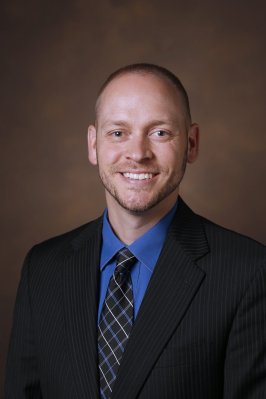
Cody A. Chastain, MD, MEHP, FACP, FIDSA (Innovations’ 2025) is an Associate Professor of Medicine in the Division of Infectious Diseases and the Department of Medicine at Vanderbilt University Medical Center. He is the Associate Dean for Undergraduate Medical Education at Vanderbilt School of Medicine. Cody’s professional interests include assessment, program evaluation, continuous quality improvement, and mentorship. Cody can be contacted via email.