
Making Patient-Centricity a Priority in Coursework
As health care shifts toward value-based models, truly patient-centric care depends on training every type of learner to keep the patient’s voice and real-world needs at the center of their work.
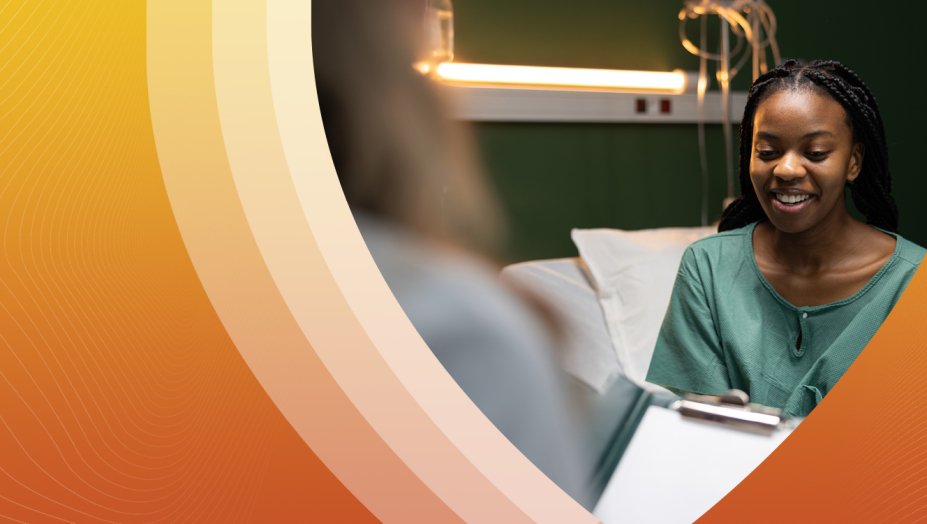
As health care has been shifting towards value-based care — aiming for medical professionals to provide cost-effective, high-quality care and ensure that the patient receives customized advice — patient-centricity has become more important than ever. But this specific focus on the patient’s unique medical profile and the patient-provider relationship takes time, effort, and, most critically, training.
Thus, developing coursework that will carry patient-centricity into all aspects of the health care system requires a carefully honed balance of specificity, authenticity, and practicality — while never losing sight of the patient.
Tailoring Patient-Centricity to the Health Care Learner
There are as many dimensions of this subject as there are learners, according to Joanne Muller, senior director, product development, at Harvard Medical School (HMS) Professional, Corporate, and Continuing Education. Her team designs and produces educational experiences for corporate learners as well as the lay public, students, and clinical and research professionals. Patient-centricity drives her work.
“Patient care is at the forefront of our minds from the day we begin planning a learning experience,” she says. Her team starts by identifying their audience, which can range from business professionals to nurses and clinicians to researchers and scientists.
This strategy involves developing learner “personas,” accounting for background knowledge, professional role, and motivations. “We formulate a curriculum encompassing what they need to understand and how they will apply this knowledge to ultimately advance patient care,” Muller says. “Personas also guide subsequent decisions about the framing, tone, level, and approach to delivery of the content.”
In other words, the message will depend on the learner. A clinician may learn to ask more open-ended questions to get to know their patients, a researcher may begin to account for patient variance when designing a study, and a pharmaceutical scientist may start to clearly define user experience in drug development.
Broadening and Deepening Patient-Centricity in Coursework
Narrative medicine and patient storytelling are increasingly recognized as powerful educational tools, says Muller. “Stories facilitate empathy, prompt learners to consider context, and increase memory and recall.” Learners need to consider the ultimate recipients of their care or innovations. Whether they’re in a clinic every day or working in isolation in a lab, it’s essential to bring forth the potential impact of their work.
Muller emphasizes this connection from the outset of coursework. “We frequently begin a lesson with a story that provides real-world context for the concepts in a course. This helps the learner bridge the gap from knowledge to implementation,” she says. This approach often extends throughout the learning experience, including the use of patient narratives. “We prioritize stories from real patients, shared in their own words,” Muller notes.
Patient stories can range from devastating to uplifting, depending on the context, but they’re all designed to share relevant experiences with professionals. “Patients and their families can be incredibly generous and care as much about educating members of the health care community as we do,” she says.
Carrying Patient Stories into the Workplace
All of this is designed with impact in mind. "We use patient-centricity to bring relevance and urgency to the content we teach. We hope our learners take that same approach back to the work they do daily," says Muller. This has immense potential across every field.
Medical device researchers, for example, can develop new tools with a greater understanding of patient diversity, expanding efficacy and reach. Information technology experts, particularly in the field of artificial intelligence, have the capacity to improve clinical tools — from streamlining electronic health records to helping develop personalized care plans. And in pharma, understanding the “patient voice” can impact drug design all the way through clinical trial recruitment and medical adherence optimization.
Ultimately, Muller stresses that patient-centricity is most effective when it addresses simple but critical questions. “Throughout development, I help the team by ensuring that we keep several questions top of mind: What does this information mean for patients? Why does it matter in the real world? Why should the learner care?”
When they’re able to communicate effectively, she adds, the results can be transformational. “If my team and I can develop courses that clarify critical information, inspire new ideas, or help our learners identify opportunities to improve the health care system, then, in our own way, we’ve helped improve the lives of future patients and their families.”