
Biomarkers and the Future of Medicine: Why Every Health Professional Needs to Understand Them
From diagnosis and risk prediction to treatment selection and drug development, biomarkers quietly power the precision and progress of modern medicine.
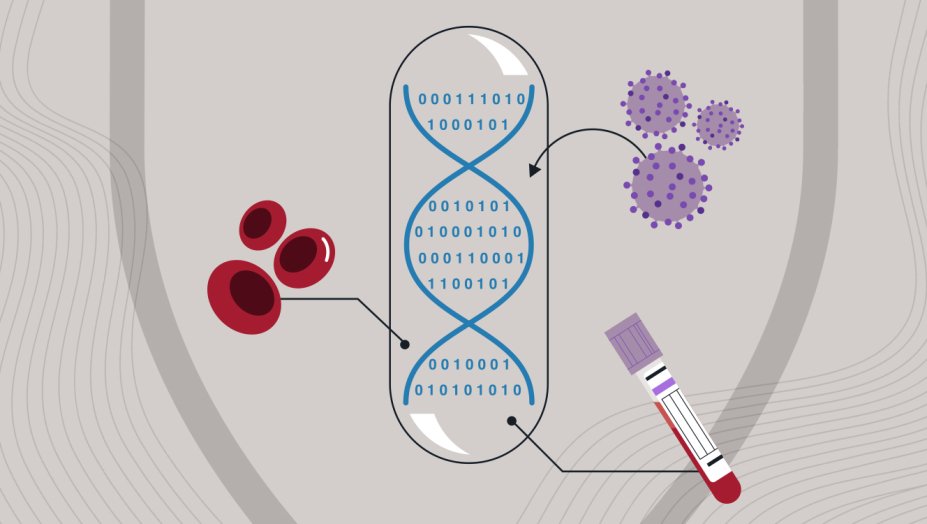
Groundbreaking therapies, precision health, and diagnostic accuracy often draw attention, but if you look closer, you will find a common thread quietly driving all of them: biomarkers.
As Liza Wick, PhD, the pharmacology curriculum lead for HMX, explains, “Biomarkers are what allows researchers to bring novel and more precise therapies to life.”
Biomarkers are necessary for everything from diagnosis and disease monitoring to understanding the mechanism of action of a drug and predicting which patients will respond to a treatment. They are what clinicians and scientists rely on for clinical care and for drug discovery. That reality means that anyone working in or around health care, life sciences, or pharmaceuticals needs a solid grasp of what biomarkers are, how they are classified, and how they move from concept to practical use.
At a basic level, biomarkers can be organized into seven key categories, each with a distinct role in care and research.
- Diagnostic biomarker: A biomarker that is used to detect or confirm the presence of a particular disease or to distinguish between different types or stages of a disease.
- Prognostic biomarker: A biomarker that is used to estimate the likelihood of future events (such as recurrence or death) associated with a disease, irrespective of any treatments or interventions that the patient may receive.
- Predictive biomarker: A biomarker that is used to identify individuals who are more likely to respond favorably or unfavorably to a particular treatment or intervention.
- Monitoring biomarker: A biomarker that is measured repeatedly at specific time points to assess disease progression or the response to a medical treatment or intervention over time.
- Pharmacodynamic (or response) biomarker: A biomarker that is used to measure the biological response to a treatment independently of the efficacy of the treatment or the patient’s clinical outcomes.
- Safety biomarker: A biomarker that is measured before and after a patient receives a therapy or intervention to determine the likelihood, presence, or extent of toxicity.
- Susceptibility (or risk) biomarker: A biomarker that indicates an increased or reduced risk of a specific disease in an individual who does not currently have the disease.
Together, these seven categories form a conceptual map for how biomarkers function in medicine and drug development. They clarify whether a biomarker is meant to identify disease, predict future disease progression, guide treatment choice, track response, measure biological effect, monitor safety, or assess risk in those who are not yet ill.
As the landscape of targeted medicine evolves, professionals across health care and the life sciences must understand the nuances of the biomarker discovery and development pipeline. Biomarkers play a crucial role in both research and clinical care, yet many diseases still lack the specific markers that would most improve patient management. In contrast to the drug development pipeline, the pathway for biomarker development is often inconsistently understood across the scientific community and rarely structured into clearly defined stages.
To address this need, Wick and the team at Harvard Medical School developed two HMX Short Courses. Biomarkers: Discovery, Validation, and Clinical Implementation offers a comprehensive look at how these markers are discovered, validated, and integrated into clinical settings. Clinicians, researchers, and professionals across the pharmaceutical, biotechnology, diagnostics, and digital health sectors can explore the biomarker discovery and development pipeline “from identifying unmet needs and engaging the right stakeholders to understanding analytical validation, clinical validation, and clinical utility,” Wick adds.
For those focused more on therapeutics, Biomarkers in Drug Development: Classification and Applications covers how the FDA classifies biomarkers, the pathways that exist to regulate them, and the evidence that is required for them to qualify as confirmed biomarkers.
Wick emphasizes that in lay speech, terminology used to describe biomarkers and biomarker development is often mixed up. Because biomarker development is tightly regulated, it is imperative to understand the correct terminology to be able to communicate with regulatory agencies.
Today, biomarkers improve diagnostic accuracy, ensuring diseases can be identified and staged reliably. They guide personalized treatment by predicting how patients will respond to specific interventions, and they streamline drug development by supplying the critical data needed to assess new therapies.
Ultimately, a strong understanding of biomarkers serves as more than just a technical skill set; it is the catalyst for advancing targeted medicine and transforming patient care.