
Becoming an Editor of Our Stories and the Stories of Others
MedEdPearls June 2026: Wise Compassion and the Clinical Narrative

When was the last time a patient frustrated you, a colleague disappointed you, or a student struggled in ways you could not explain? What story did you tell yourself — and did you ever stop to question it? The narratives we construct about ourselves and others quietly shape our views, mold our relationships, and manage our perspectives. At a time when burnout and empathy erosion are reshaping medical training, the most important skill we can model for learners may not be purely clinical; it may be learning to become better editors of our stories — and of the stories of others.
During a plenary talk at the American Association of Colleges of Osteopathic Medicine annual conference in April 2026, Lori Gottlieb shared insights from her many roles as a psychotherapist, author, TED talk speaker, podcast co-host, and advice columnist regarding our tendency to be “unreliable narrators” with less accuracy in examining the stories shaping our lives and the lives of those around us. Her insights map, with striking precision, across several areas that remain stubbornly difficult to edify: self-awareness and reflective capacity, communication skill development, and emotional intelligence.
We Are All Unreliable Narrators
Gottlieb’s foundational premise is that every story we tell is shaped by what we emphasize, minimize, or leave out—not from dishonesty, but from the limits of our current perspective. Every story reflects a moral perspective, even when it claims to reject moral positions altogether. In medicine, this can apply equally to patients describing symptoms, physicians narrating a diagnosis, and learners making sense of a difficult encounter. Gottlieb identifies two recurring ideas in the stories people tell: freedom and change. People who feel trapped often have more choices than they realize—but taking responsibility for their role in the story means accepting the possibility of change, which feels threatening. And when people say they want change, they often mean they want someone else to change. Gottlieb challenges the assumption that circumstances drive our stories, arguing instead that how we narrate our experiences actively shapes the course of our lives. For medical and health professions educators, this is an argument for reflective practice: our professional narratives are not neutral observations of reality—they are active forces shaping our teaching, clinical identities, and our patient relationships.
Becoming an Editor
In both the plenary talk and her TED Talk, Gottlieb describes change in role to something more fundamentally editorial. The questions she raised mirror those of a skilled editor: Is the protagonist moving forward or going in circles? What material is extraneous? Are the supporting characters helping or distracting? Do the plot points reveal a theme? Gottlieb reminded the audience that you can change your perspective with the right tools. Central among those tools is the distinction between uncritical compassion—going along with someone’s narrative without challenging it—and wise compassion, which Gottlieb describes as offering “compassionate truth bombs”: helping people see what they have left out. Uncritical compassion reinforces the story that is keeping someone stuck. In clinical teaching, this distinction is critical. Supervisors who only affirm a learner’s self-narrative, without offering honest and caring challenge, are practicing uncritical compassion. Effective feedback—like effective editing—requires the courage to name what the narrator cannot see. Gottlieb reminds us that to be good editors we need to offer wise compassion—not just to others, but also to ourselves.
Perspective-Taking: The Hardest—and Most Transformative—Edit
The most powerful editorial move Gottlieb describes is rewriting your story from another character’s point of view. While this is the hardest step in the editing process, it is also where change begins. For medical learners, this is the essence of patient-centered communication: every clinical encounter has another version—the patient’s. Learning to write that version, with honesty and curiosity, is at the heart of narrative competence—the ability to acknowledge, absorb, interpret, and act on the stories and plights of others.
How Can Medical Educators Put This Into Practice?
Gottlieb’s editing framework translates directly into strategies across both pre-clinical and clinical learning environments:
- Pre-clinical narrative writing: Integrate Gottlieb’s editing questions—“What story am I telling? What am I leaving out?”—as structured Year 1–2 reflection prompts in case-based learning, building self-awareness before students enter clinical environments.
- Pre-clinical book clubs: Pair selected chapters of Maybe You Should Talk to Someone with the TED Talk in professionalism or physician identity courses, using Gottlieb’s patient narratives as mirrors for emerging professional identity formation.
- Standardized patient encounters with narrative debriefs: Following objective structured clinical examinations (OSCEs), use Gottlieb’s editor framework: ask students not just “what did you say?” but “was the protagonist moving forward or going in circles?”—connecting simulation to honest self-assessment.
- Narrative rounds in clerkships: During clinical rotations, invite students and residents to share a brief patient encounter that surprised or moved them. Facilitate reflection using Gottlieb’s perspective-taking prompt: “What would this story look like written from the patient’s point of view?”
- Faculty development workshops on self-narrative: Use the “What is the narrator not willing to see?” prompt to help clinical educators examine their own teaching narratives, feedback patterns, and unexamined assumptions—modeling wise compassion rather than idiot compassion for learners at all levels.
- Longitudinal narrative portfolios: Require students to maintain reflective portfolios from Year 1 through clinical rotations, revisiting earlier entries to ask: “How has my story changed?”—using Gottlieb’s editing framework as a scaffold for building narrative competence over time.
Gottlieb reminds us that life depends on our ability to choose which stories deserve our attention and which ones need edits—and that there is nothing more important to the quality of our lives than the stories we tell ourselves about them. In medicine, the stakes of that edit are high: for our patients, our learners, and ourselves. The most powerful thing we can do as medical educators may be to pick up those editing tools—and model what it looks like to rewrite toward something more honest, more curious, and more whole.
What strategies have you used to edit the stories from others or for yourself?
MedEdPearls are developed monthly by the Health Professions Educator Developers on Educational Affairs. Previously, MedEdPearls explored topics including prepare to be spontaneous, navigating assumptions in feedback conversations, and transparent thinking as teaching.
About the MedEd Pearls Author
The MedEdPearls are a collaborative, peer-reviewed, monthly brief intended to provide practical tips and strategies for medical and health professions educators to enhance teaching and learning.
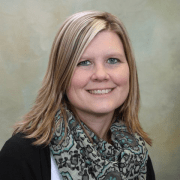
Machelle Linsenmeyer
EdD, NAOME
- Assistant Vice President for Institutional Effectiveness and Academic Resources, West Virginia School of Osteopathic Medicine
- Jean Bailey, PhD – Virginia Commonwealth University School of Medicine
- Carrie Bowler, EdD, MS, MLSCM (ASCP) – Mayo Clinic School of Continuous Professional Development
- Kristina Dzara, PhD, MMSc (Educators ’16; Assessment ’16; HCE 2.0 ’17) – Saint Louis University School of Medicine
- Shanu Gupta, MD, SFHM – University of South Florida Morsani College of Medicine and Tampa General Hospital
- Jennifer Hillyer, PhD – Northeast Ohio Medical University
- Aimee M. Hollander, PhD - Medical University of South Carolina
- Larry Hurtubise, PhD, MA (HCE 2.0 '16) – The Ohio State University
- Anna Lama, EdD, MA – West Virginia University School of Medicine
- Machelle Linsenmeyer, EdD, NAOME (Assessment ’07) – West Virginia School of Osteopathic Medicine
- Skye McKennon, PharmD, BCPS, ACSM-GEI – Washington State University Elson S. Floyd College of Medicine
- Rachel Moquin, EdD, MA – Washington University School of Medicine
- Stacey Pylman, PhD – Michigan State University College of Human Medicine
- Leah Sheridan, PhD – Northeast Ohio Medical University
- Mark Terrell, EdD – Lake Erie College of Osteopathic Medicine
- Stacey Wahl, PhD – Virginia Commonwealth University School of Medicine