The Levin Course on Comprehensive Lung Cancer Treatment and Surgical Innovation
- Continuing Education
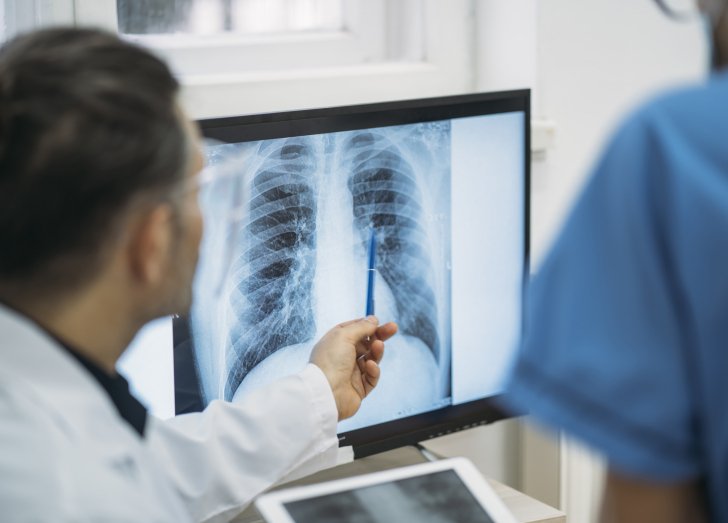
Experience an inspiring, community-driven symposium that unites leading medical professionals to advance lung cancer care through cutting-edge insights and evolving treatment strategies. Deepen your expertise as you explore guideline-aligned management, emerging therapies, and the expanding role of immunotherapy in improving patient outcomes.
- Live Online or In Person
Participants may attend either virtually or in person.
Institute for Human and Machine Cognition: 40 S Alcaniz Street Pensacola, FL 32502
$200
For a full list of profession pricing see below.
View All
Continuing Education
Earn up to:
2026 Accreditation information is listed below, 2027 will be announced soon.
View All
Two Days
Please view the Schedule for a full description of the program.
On This Page
Overview
The Levin Course on Lung Cancer Treatment and Surgical Innovation brings together leading experts in thoracic surgery, medical oncology, radiation oncology, radiology, pulmonology, and pathology for two days of focused discussion on the evolving management of lung cancer.
Held at Brigham and Women’s Hospital in Boston, this highly interactive course will explore contemporary approaches to the diagnosis, staging, and treatment of non-small cell lung cancer, with particular attention to the increasingly complex decisions surrounding early-stage and resectable disease.
Through expert presentations, case-based discussions, multidisciplinary tumor boards, and point-counterpoint debates, participants will examine areas where treatment strategies continue to evolve and where clinical practice may vary. Topics will include lung nodule evaluation and tissue diagnosis, mediastinal staging, surgical versus nonsurgical treatment of early-stage disease, pathology and molecular testing, systemic and targeted therapies, and multidisciplinary care pathways.
The program will also address challenging and borderline surgical scenarios, including oligometastatic disease, multistation N2 disease, and the integration of surgery with chemotherapy, immunotherapy, radiation, and targeted therapies.
A dedicated surgical session will focus on complex technical challenges, including EBUS, management of lymphadenopathy following neoadjuvant therapy, the limits of robotic surgery following systemic treatment, vascular and bronchial involvement, and management of surgical complications.
Learning Objectives
- Review the guidelines established by the Fleischner Society and American College of Chest Physicians regarding the evaluation and management of pulmonary nodules.
- Identify the spectrum of radiologic appearance of pulmonary nodules and the range of differential diagnoses that may guide the choice of imaging.
- Discuss the spectrum of radiologic appearance of pulmonary nodules and the range of differential diagnoses that may guide the choice of imaging.
- Analyze the current role of strategies for lung cancer diagnosis and staging.
- Evaluate the advantages and limitations of limited resection for early-stage lung Analyze the technical challenges and results of extended pulmonary resection.
- Assess the current role of stereotactic body radiotherapy (SBRT) in the management of early stage non–small cell lung cancer.
- Demonstrate the use of state-of-the-art tools to diagnose and stage lung cancer.
- Demonstrate the use of new treatment technologies.
- Review new research related to pulmonary nodules and lung cancer.
Developed and Offered By:

Continuing Education courses are developed by faculty from Harvard Medical School's teaching hospitals and accredited by Harvard Medical School. This course is offered by Brigham and Women's Hospital.

Who Should Participate
Physician Assistants, Nurse Practitioners, Nurses, Primary Care Physicians, and Specialty Physicians
Schedule
All agenda sessions are in Central Time.
Thursday, March 26, 2026
Welcome and Opening Remarks
8:20-8:30 am
Lung Cancer Screening
8:30-8:45 am
The Ground Glass Opacity
8:45-9:00 am
The Part-Solid Lung Nodule
9:00-9:15 am
The Solid Lung Nodule
9:15-9:30 am
Imaging Case Presentations
9:30-9:45 am
Break
9:45-10:00 am
Early-Stage Disease I
10:00-10:15 am
Early-Stage Disease II
10:15-10:30 am
Early-Stage Disease III
10:30-10:45 am
Alternative Treatment Options
10:45-11:00 am
Break
11:00-11:15 am
Integrating Immunotherapy Into NSCLC Management
11:15-11:30 am
Locally Advanced Disease in the Surgical Patient I
11:30-11:45 am
Locally Advanced Disease in the Surgical Patient II
11:45 am-12:00 pm
Role of Adjuvant Therapy in Resected Lung Cancer
12:00-12:15 pm
Panel Session
12:15-12:30 pm
Break for Lunch
12:30-1:30 pm
Disease Management in the Non-Surgical Patient
1:30-1:45 pm
Oligometastic Disease
1:45-2:00 pm
Management of Pleural Effusion
2:00-2:15 pm
Pericardial Effusion
2:15-2:30 pm
Airway Disease
2:30-2:45 pm
Case Presentations
2:45-3:00 pm
Break
3:00-3:15 pm
Mesothelioma I
3:15-3:30 pm
Mesothelioma II
3:30-3:45 pm
Case Presentations
3:45-4:00 pm
Day 1 Closing Remarks
4:00-4:05 pm
Friday, March 27, 2026
Welcome and Opening Remarks
8:25-8:30 am
Isolated Lymphadenopathy
8:30-8:45 am
Surgical Lung Infections
8:45-9:00 am
Empyema
9:00-9:15 am
Esophageal Perforation
9:15-9:30 am
Thoracic Trauma
9:30-9:45 am
Interactive Panel Session
9:45-10:00 am
Break
10:00-10:15 am
Spontaneous Pneumothorax
10:15-10:30 am
Interstitial Lung Disease
10:30-10:45 am
Paraesophageal/ Hiatal Hernia Repair
10:45-11:00 am
Chest Wall
11:00-11:15 am
Mediastinal Masses
11:15-11:30 am
Hemoptysis
11:30-11:45 am
Interactive Panel Discussion
11:45 am-12:00 pm
Day 2 Closing Remarks
12:00-12:05 pm
Faculty
Harvard Medical School Continuing Education attracts the best and brightest faculty from all around the world. As a student in this course, you’ll have access to outstanding course directors and faculty.
Course Director
Matthew Pommerening
MD, MS | Course Director
Raphael Bueno, MD
Kaley Collier, BS
Carol Daunais-Kurpis, BA
Justin Gainor, MD
Mark Hammer, MD
Michael Jaklitsch, MD
Meaghan Kudla, BSN
Matthew Rochefort, MD
Jon Wee, MD
Fatima Wilder, MD
Request Information
Interested in learning more about this program? Sign up for details.
Course Fees
Registration Details
You may register through our secure online environment and will receive an email confirmation upon receipt of your payment. Virtual tuition includes electronic syllabus.
At the end of the registration process, a $10 non-refundable processing fee will be added to your registration.
| Role | Course Fee |
|---|---|
| Physician (MD/DO) | $200 |
| Nurse (RN/APRN) | $200 |
| PA | $200 |
| Psychologist | $200 |
| Resident/Fellow | $150 |
| Social Worker | $200 |
| Allied Health Professional / Other | $150 |
Accreditation

The Harvard Medical School designates this live activity for a maximum of 9.00 AMA PRA Category 1 Credit(s)™. Physicians should claim only the credit commensurate with the extent of their participation in the activity.
Harvard Medical School designates this live activity for a maximum of 9.00 ANCC contact hours.
The National Commission on Certification of Physician Assistants (NCCPA) states that 7.75 AMA PRA Category 1 Credits™ are acceptable for continuing medical education requirements for recertification. We would also suggest that learners check with their state licensing board to ensure they accept reciprocity with 7.75 AMA PRA Category 1 Credit™ for re-licensure.
The American Medical Association (AMA) has an agreement of mutual recognition of continuing medical education (CME) credit with the European Union of Medical Specialists (UEMS). Additional information regarding this agreement may be found on the European Union of Medical Specialties website.
The Royal College of Physicians and Surgeons of Canada recognizes conferences and workshops held outside of Canada that are developed by a university, academy, hospital, specialty society or college as accredited group learning activities.