Turning Research Curiosity Into Patient Impact
“Not only have I made significant improvements when it comes to research designs, but this program also redefined the way I approach clinical practice. Now I can ask the right questions and be able to look at potential areas of quality improvement.”
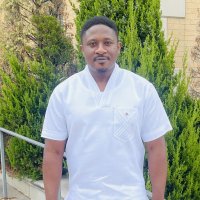
As an oncology pharmacist with nearly eight years of experience, Signang Alberic Ndonku has always had a deep-rooted curiosity about science and innovation. Currently, Ndonku serves as the Director of Research and Innovations at Cameroon Baptist Convention Health Services. Based at Mbingo Baptist Hospital in Cameroon, he leads efforts to develop new research initiatives, conduct clinical trials for patients, carry out epidemiological studies, and advance innovation and quality improvement across the health system. Throughout his work, Ndonku has participated in multiple clinical trials with his organization, primarily focusing on pediatric cancers and nutritional support for patients. During the execution of these trials, he recognized a shortfall in his knowledge and training.
To advance his clinical research expertise, Ndonku identified three key learning objectives and skills that he wanted to build upon: designing a research proposal, critiquing the research methodology, and gaining the confidence to select the appropriate measures of association and statistical tests to answer a specific research question.
When Ndonku discovered Harvard Medical School’s Global Clinical Scholars Research Training certificate program, he immediately recognized it as an opportunity to meet his learning goals and further pursue his passion for research and innovation. The rigorous curriculum would provide the necessary technical and soft skills to expand the impact of his work on the patients and communities he serves.
“Before the program, I had no formal training in study design,” he explains. “Without sufficient training in research methodology, our work did not have as strong an impact. I realized there was a gap in our approach to designing clinical trials, collecting data, and interpreting results.”
Applying Research Methods to Real-World Data
For Ndonku, the seamless integration of theory and practical work within the program was especially impactful. Not only did he learn advanced clinical research concepts, but he also had the opportunity to apply these lessons through hands-on data analysis exercises. He and his cohort worked directly with real datasets, including those from the Framingham Heart Study, to run statistical analyses.
“Using Stata to analyze real datasets connected the statistical methods to real research questions,” he says. “It helped me see how data analysis supports evidence generation and decision-making in research.”
The foundational coursework in epidemiology, study design, and his elective on secondary data analysis were also major highlights for Ndonku. During the lectures and workshops, he explored measures of association, multivariate logistic regression, and non-parametric tests, which provided a clearer understanding of how to analyze data and interpret results effectively. Ndonku completed the program feeling more confident in his ability to choose the appropriate statistical tests based on the method and hypothesis of a study.
Using Research to Improve Cancer Treatment
For his capstone project, Ndonku focused on the use of rituximab as a targeted treatment for Burkitt lymphoma, a rare and aggressive cancer that typically affects children and young adults, in the context of an endemic country such as Cameroon. The goal was to test whether a single dose could produce comparable treatment outcomes to the multiple-dosing schedule, which would in turn reduce costs and lower the treatment burden for patients. The primary outcomes measured included rates of complete remission at the end of the treatment as well as the incidence of related side effects.
“We wanted to look at cost-effectiveness and whether this approach could work in a setting like ours. It could save millions of U.S. dollars if we could give a single dose instead of treating multiple times,” he explains.
Notably, Ndonku’s capstone was selected as one of the top 10 proposals within his cohort, and he is currently submitting grant applications in the United Kingdom to fully implement the trial.
Finding Community Within a Global Cohort
According to Ndonku, the peer learning environment was one of the program’s greatest strengths. He reflects fondly on working closely in teams and completing regular assignments with clear deadlines, which helped foster strong connections with fellow participants.
“We formed a close-knit group that inspired ongoing collaboration among us. We are still able to share our individual challenges and help each other brainstorm solutions beyond the scope of the program,” he notes.
Working with peers from a wide range of countries and professions further enriched his experience. “The diversity of the cohort made the discussions richer and helped broaden my perspective,” he says.
Ndonku also engaged regularly with the program faculty, who encouraged active participation and collaboration, making each session and workshop feel highly interactive. They were extremely supportive throughout the yearlong program, and their mentorship helped Ndonku think more creatively about his research, pushing him to refine his ideas and strengthen his analytical skills—competencies he continues to apply in his work today.
Implementing a New Approach to Clinical Practice
Since completing the program, Ndonku has applied his new clinical research training within his organization, where he has contributed to drafting manuscripts and coordinating new clinical research studies supported by robust statistical analysis. Additionally, he has authored more than 10 publications across journals such as BMC Cancer and BMC Women’s Health.
Currently, Ndonku is pursuing a PhD in medical sciences at the University of Antwerp, focusing on the oncogenetics of prostate cancer. He travels between Belgium and Cameroon and remains active in his clinical trial assignments.
“I could not have done my job today if I had not attended the Global Clinical Scholars Research Training program,” he says. “It exposed me to skills and critical knowledge that have completely transformed my career.”
Written by: Lian Galley