Converting Experience into Impact: A More Intentional Approach to Medical Education
“The program made me think about education in a structured fashion, in a way that I hadn’t been thinking about before. It became less about delivering knowledge and more about meeting the needs of the students and understanding how they learn.”
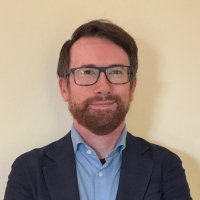
While working as a consultant geriatrician and stroke physician at the Mercy University Hospital in Cork, Ireland, Rónán O’Caoimh, MB, MSc, MPH, PhD, had been involved in medical education for nearly two decades. When he took on a new role leading postgraduate medical education and training, however, he recognized the need for more formal training in how to design, implement, and evaluate educational programs.
Having previously completed Harvard Medical School’s Safety, Quality, Informatics, and Leadership certificate program, O’Caoimh gained skills and perspectives he could apply in his work. Building on that experience, he chose to further develop his teaching capabilities through the Training to Teach in Medicine certificate program.
Moving from Teaching to Educational Design
Like many physicians, O’Caoimh had developed his teaching skills largely through experience. Throughout his career, he taught medical students and trainees at the bedside, mentored junior colleagues, and created educational opportunities within his specialty.
But as his responsibilities expanded, he began encountering situations that required a different set of skills. While organizing a national essay competition for medical students, O’Caoimh found himself evaluating submissions and providing structured feedback, a skill set that differed from his experience teaching clinical knowledge and examination skills.
Training to Teach in Medicine provided a framework for approaching education more intentionally. Instead of beginning with what he wanted to teach, O’Caoimh began to consider what learners needed, how an educational experience should be designed, and how it could be evaluated and refined over time.
“The program made me think about education in a structured fashion, in a way that I hadn’t been thinking about before,” he says. “It became less about delivering knowledge and more about meeting the needs of the students and understanding how they learn.”
Putting New Skills into Practice Through Simulation
Almost immediately, O’Caoimh had the chance to apply those concepts in practice. While participating in the program, he was also helping develop a new simulation-based education lab at his hospital. As the facility moved from planning to implementation, he saw an opportunity to connect his capstone project directly to his work.
For his capstone, O’Caoimh developed a simulation-based educational program focused on frailty and the care of older adults. The project became part of a broader effort to restructure the undergraduate medical education experience within his department and incorporate simulation into the curriculum.
The program has since been implemented as part of the department’s routine education, enabling medical students to learn important principles of geriatric medicine through scenario-based experiences.
“Doing the capstone focused my mind on how I could change my practice and deliver a program that is sustainable, adaptable, and dynamic over time,” he says. “I’ve actually been able to change my practice and help the department change how we deliver education.”
The experience also reinforced that effective medical education requires more than good teaching; it requires thoughtful curriculum design, educational leadership, and organizational support to create lasting change.
Learning Alongside an International Community
O’Caoimh joined the program from Ireland and connected with physicians and health care professionals from around the world who were working across different specialties, educational environments, and health care systems.
Collaborating on group assignments allowed participants to compare challenges, share ideas, and see how the principles of medical education could be applied in different settings. For O’Caoimh, those exchanges became one of the highlights of the experience.
“It was so helpful to see an international cohort all learning and applying the principles in slightly different ways, in different specialties, and in different health care systems,” he recalls.
The experience also reinforced that, despite differences among health care and educational systems around the world, many of the fundamental principles of effective teaching translate across borders.
“Learning from others within the class complemented what we were learning from the faculty,” he says.
Turning an Educational Challenge into Meaningful Change
For clinicians considering Training to Teach in Medicine, O’Caoimh recommends entering the program with a specific educational challenge or opportunity in mind. Doing so, he says, makes it possible to immediately connect the concepts explored in the program with day-to-day practice.
“You’re very much an active learner,” he notes. “Having a challenge in mind will help you realize the true potential of participating in the program.”
He also emphasizes that participants do not need formal training in education before enrolling. What matters more is an interest in becoming a better educator and a willingness to think differently about how learning experiences are designed, implemented, and evaluated.
For O’Caoimh, that shift in perspective has had a lasting impact. What began as a search for more formal training has helped him reshape his own approach to education—and put those skills to work developing educational experiences for the next generation of physicians.
“Training to Teach in Medicine was one of the best things I’ve done in my career to date,” he says. “It helped me develop a much more focused and thoughtful approach to education.”
Written by: Pamela Searle