
Diabetes and Obesity: Caring for the Whole Patient
- Continuing Education
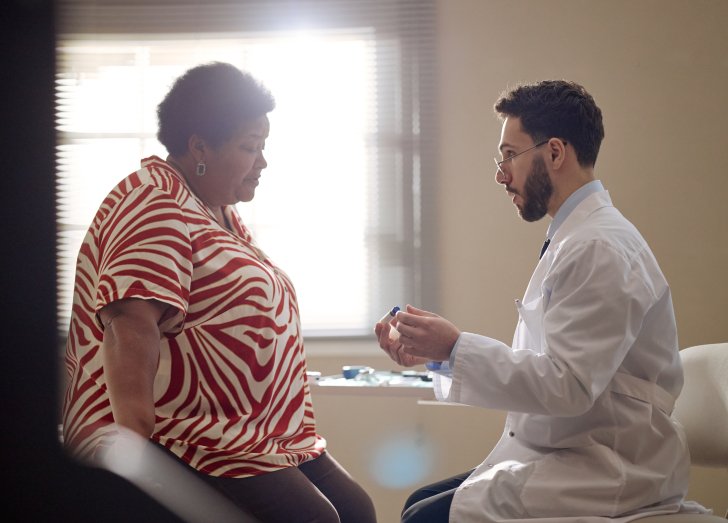
Integrate evidence-based strategies to address obesity and diabetes together through a holistic, patient-centered approach that supports both individual and community health. Explore patient assessment, behavioral modification, and current and emerging medications and procedures to develop personalized treatment strategies for metabolic disease.
- Live Online
This course is taught online in real time.
Additionally, all sessions will be recorded and made available to participants for online viewing for 180 days after the end of the course.
$695 Save with early registration
For a full list of profession pricing see below.
View All
Fee increases to $795 after
Continuing Education
Earn up to:
22.75 AMA PRA Category 1 Credits™.
View All
All evaluations and credit claims must be completed within 60 days of the course end date.
3 Days
Please view the Schedule for a full description of the program.
On This Page
Overview
This unique conference is a response to the global burden of diseases driven by obesity and diabetes and acknowledges that clinicians and systems cannot manage one or the other when they are present in the same patient, but rather must address both together. Our unique curriculum is designed to activate members of the care team to manage both conditions holistically with an eye toward the health of both our patients and our communities. Included in this three-day deep dive, we address evidence-based patient assessment, methods to support behavioral modification in different care settings, and in-depth discussion on use of current and emerging medications and procedures to guide clinicians to tailor therapeutic strategies to individuals struggling with metabolic disease.
Learning Objectives
- Review and interpret up-to-date literature relevant to clinical practice.
- Apply current/recommended guidelines in clinical practice.
- Perform up-to-date techniques to diagnose complex clinical problems.
- Identify/integrate current therapeutic options for obesity and diabetes.
- Deliver equitable care with respect to race, ethnicity, gender, disability status, sexual preference, and gender orientation.
Developed and Offered By:

Continuing Education courses are developed by faculty from Harvard Medical School's teaching hospitals and accredited by Harvard Medical School. This course is offered by Brigham and Women's Hospital.

Who Should Participate
Nurses, Nurse Practitioners, Specialty Physicians, Primary Care Physicians, Physician Assistants, Diabetologists, Nephrologists, Endocrinologists, Cardiologists, Bariatric Surgeons, Pediatricians, Internists, Dieticians, Nutritionists, Social Workers, and Others
Schedule
All agenda sessions are in Eastern Time.
Wednesday, February 24, 2027
Welcome, Introduction and Overview of Course
8:00-8:10 am
Keynote: Keynote: The Nature of Body Weight: What the Clinician Must Know
8:10-8:50 am
Cardiovascular disease in Obesity and T2D: Update on Risk Stratification and Targets
8:50-9:15 am
Kidney Disease in Obesity & Diabetes: What Not to Miss
9:15-9:40 am
Cancer and Metabolic Disease
9:40-10:05 am
Expert Panel: Diabetes, the Obesity and Major Comorbidities: How to bring Knowledge to the Bedside
10:05-10:25 am
Break
10:25-10:40 am
Prescribing Nutrition for People Living with Obesity & Diabetes
10:40-11:05 am
Prescribing Exercise for People Living with Obesity and Prediabetes/Diabetes
11:05-11:30 am
Does Timing Matter? Meal Timing for Metabolic Control
11:30-11:55 am
Expert Panel: Behavioral Lifestyle Interventions
11:55 am-12:15 pm
Break
12:15-1:15 pm
Why, When & How to Prescribe Obesity Medications
1:15-1:40 pm
GLP-1 RA based medications and SGLT2i for Metabolic control and Risk Reducation
1:40-2:05 pm
Gut Hormone Therapies: Current Status and Pipeline
2:05-2:30 pm
Expert Panel: Pharmacologic Therapy
2:30-2:50 pm
Break
2:50-3:05 pm
Counseling Patients on GLP‑1 Side Effects
3:05-3:30 pm
GLP-1 and the Pancreas: the Real Deal
3:30-3:55 pm
GLP-1 and the Thyroid: Should we be Concerned?
3:55-4:20 pm
Side Effects of Non-GLP-1 based Obesity Medication
4:20-4:45 pm
Expert Panel: Side Effects
4:45-5:05 pm
Real‑World Case Integration: Setting Priorities in Obesity Management
5:05-5:35 pm
Overview of Day 1
5:35-5:40 pm
Thursday, February 25, 2027
Welcome, Overview of the Day
8:00-8:10 am
Keynote: The Continuum of Obesity & Type 2 Diabetes: Revisiting Treatment Goals
8:10-8:50 am
Cardiovascular Imaging for Risk Assessment in Obesity & Diabetes
8:50-9:15 am
Sleep, Obesity & Diabetes: Update on Assessment and Treatment
9:15-9:40 am
MASLD - Update on screening and treatment
9:40-10:05 am
Comprehensive Multi‑Morbidity Panel
10:05-10:25 am
Break
10:25-10:40 am
A Global Perspective: What Clinicians Need to Know about Barriers to Obesity Prevention and Treatment
10:40-11:05 am
The Role of Racial Disparities in Outcomes: How to Address in the Clinic
11:05-11:30 am
Depression in Obesity & Diabetes: Initial Assessment and Treatment Strategies
11:30-11:55 am
Medication Reconciliation in Obesity: Impact of Commonly Prescribed Medications on Weight
11:55 am-12:20 pm
Expert Panel: Caring for the Whole Patient & Expanded Perspectives
12:20-12:40 pm
Break
12:40-1:40 pm
Recognizing Atypical Diabetes
1:40-2:05 pm
Does my Patient have Lipodystrophy: Recognition & Initial Management in Routine Practice
2:05-2:30 pm
Hypercortisolism in People with Poorly Controlled Metabolic Disease: What do we Know and What Should we do in Practice?
2:30-2:55 pm
Expert Panel: Recognizing Unique Patterns to Inform Care
2:55-3:15 pm
Break
3:15-3:30 pm
The Big Reveal: Identifying High‑Value Glycemic Patterns
3:30-3:55 pm
Beyond CGM: Wearable Devices to Achieve Clinical Targets; What Works?
3:55-4:20 pm
Combining Insulin Pump Therapy and Noninsulin Treatments to Optimize Outcomes in People with Type 2 Diabetes
4:20-4:45 pm
Expert Panel: Panel: Technology‑Enhanced Care Panel
4:45-5:05 pm
Caring for the Patient with "Double Diabetes" - T2D and T1D in the Setting of Obesity. Case Presentation 20 minutes, Questions 10 minutes
5:05-5:35 pm
Overview of Day 2
5:35-5:40 pm
Friday, February 26, 2027
Welcome, Overview of the Day
8:00-8:10 am
Keynote: Getting with the Obesity Guidelines: Consensus and Controversy
8:10-8:50 am
Selecting Therapy for People with Diabetes and Obesity: Practical Framework
8:50-9:15 am
Adherence to therapy in chronic disease
9:15-9:40 am
Complex Insulin Therapy in Obesity: Case‑Based Implementation
9:40-10:15 am
Expert Panel: Prescribing for Success
10:15-10:35 am
Break
10:35-10:50 am
Using CGM for Diabetes Prevention and Patient Engagement
10:50-11:15 am
Never Losing Hope: Leveraging the Hospital for Reengagement in Self-management of Diabetes
11:15-11:40 am
Empowering your Patient through Motivational Interviewing
11:40 am-12:35 pm
Break
12:35-1:35 pm
What Patients and Providers can Expect after Metabolic/Bariatric Surgery
1:35-2:00 pm
Patient Selection and the Perioperative Process for metabolic surgery
2:00-2:25 pm
When to Consider Endoscopic Metabolic Procedures for your Patient
2:25-3:00 pm
Expert Panel: Procedural Approaches in Obesity Management
3:00-3:20 pm
Break
3:20-3:35 pm
Postoperative Nutritional Management
3:35-4:00 pm
Glycemic Challenges After Metabolic Surgery
4:00-4:20 pm
Addressing Post‑Bariatric Weight Regain: Case‑Based Strategies
4:20-4:45 pm
Expert Panel: Long‑Term Management After Bariatric Surgery Panel
4:45-5:05 pm
Playing the Long game: Case Presentation of Obesity and Type 2 Diabetes
5:05-5:35 pm
Overview of Day 3and "Pearls from the Course"
5:35-5:40 pm
Faculty
Harvard Medical School Continuing Education attracts the best and brightest faculty from all around the world. As a student in this course, you’ll have access to outstanding course directors and faculty.
Course Directors
Caroline Apovian
MD | Course Director
Vanita Aroda
MD | Course Director
Marie McDonnell
MD | Course Director
Grazia Aleppo, MD
Louis Aronne, FACP, MD
Rhanderson Cardoso, MD
Christopher Celano, MD
Lee-Shing Chang, MD
Paul Copeland, MD
Cagney Cristancho, MD
Sara Cromer, MD, MS
Michelle Deraney
Nuha ElSayed, MD
Lindsay Fourman, MD
Anna Goldman, MD
Samar Hafida, MBBS
Nawfal Istfan, MD, PhD
John Jakicic, PhD
Julie Lauffenburger, PharmD, PhD
Josephine Li, MD
Jeffrey Meyerhardt, MD, MPH
Nancy Oliveira, MS, RD
Mary Elizabeth Patti, MD
Nadine Palermo, DO
Lei Pei, MD
Jorge Plutzky, MD
Jorge Rodriguez, MD
Sylvia Rosas, MD, MS
Zeb Saeed, MBBS
Frank A. J. L. Scheer, MS, PhD
Raj Shah, MD
Scott Shikora, MD
Devin Steenkamp, MD
Joji Suzuki, MD
Alexander Turchin, MD
Kathleen Viveiros, MD
Armen Yerevanian, MD
Complete Your Registration
Started a registration? Log in to enroll today.
Request Information
Interested in learning more about this program? Sign up for details.
Course Fees
Registration Details
You may register through our secure online environment and will receive an email confirmation upon receipt of your payment. Prices include CME credit, electronic syllabus. Additionally, all sessions will be recorded and made available to participants for online viewing for 60 days after the end of the course. At the end of the registration process, a $10 non-refundable processing fee will be added to your registration.
| Role | Course Fee | Early Registration Course Fee |
|---|---|---|
| Physician (MD/DO) | $795 | $695 |
| Nurse (RN/APRN) | $695 | $595 |
| PA | $695 | $595 |
| Psychologist | $695 | $595 |
| Resident / Fellow | $595 | $495 |
| Social Worker | $595 | $495 |
| Allied Health Professional / Other | $695 | $595 |
Accreditation

The Harvard Medical School designates this live activity for a maximum of 25.75 AMA PRA Category 1 Credit(s)™. Physicians should claim only the credit commensurate with the extent of their participation in the activity.
For the purpose of recertification, the American Academy of Nurse Practitioners Certification Board and American Nurses Credentialing Center accept AMA PRA Category 1 Credit™ issued by organizations accredited by the ACCME (Accreditation Council for Continuing Medical Education). We would also suggest that learners check with their state licensing board to ensure they accept reciprocity with AMA PRA Category 1 Credit™ for re-licensure.
The National Commission on Certification of Physician Assistants (NCCPA) states that AMA PRA Category 1 Credits™ are acceptable for continuing medical education requirements for recertification. We would also suggest that learners check with their state licensing board to ensure they accept reciprocity with AMA PRA Category 1 Credit™ for re-licensure.
This activity meets the criteria of the Massachusetts Board of Registration in Medicine for 2.25 credits of Risk Management Study
Please check your individual state licensing board requirements before claiming these credits.
The Royal College of Physicians and Surgeons of Canada recognizes conferences and workshops held outside of Canada that are developed by a university, academy, hospital, specialty society or college as accredited group learning activities.
The American Medical Association (AMA) has an agreement of mutual recognition of continuing medical education (CME) credit with the European Union of Medical Specialists (UEMS). Additional information regarding this agreement may be found on the Union of European Medical Specialists website.