
Current Concepts in Hematopathology
- Continuing Education
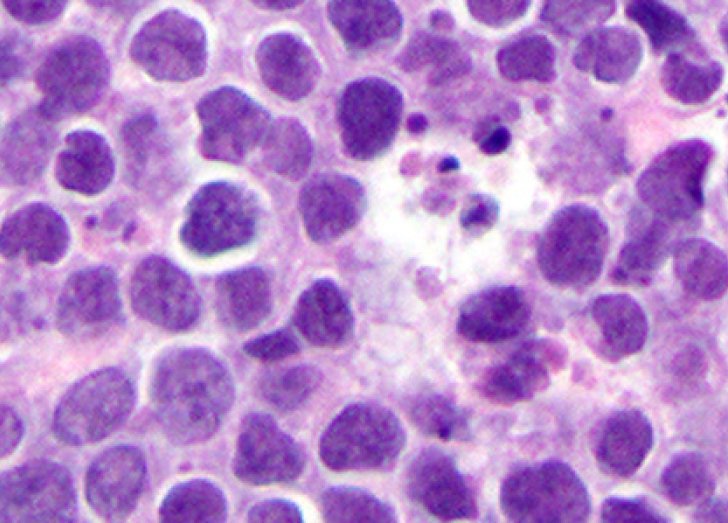
Review key diagnostic challenges and emerging advances in clinical hematopathology, including myeloid and lymphoid diseases, classification updates, flow cytometry, molecular diagnostics, and the impact of novel therapeutics. Explore challenging cases through expert-led lectures, 12 case-based presentations, and interactive roundtable discussions.
- Live Online
This course is taught online in real time.
Additionally, all sessions will be recorded and made available to participants for online viewing for 60 days after the end of the course.
For a full list of profession pricing see below.
View All
Continuing Education
Earn up to:
18.25 AMA PRA Category 1 Credits™
View All
All evaluations and credit claims must be completed within 60 days of the course end date.
3 Days
Please view the Schedule for a full description of the program.
On This Page
Overview
This course will provide pathologists with a review of diagnostic issues encountered in clinical hematopathology practice, with a focus on challenging cases, emerging entities, and technological advances.
The course will address:
- Diagnosis of myeloid and lymphoid diseases, including incorporation of immunophenotypic and genetic data
- Work-up of non-neoplastic lymph node and bone marrow
- Forthcoming updates to the classification system
- Modern approaches to flow cytometry and molecular diagnostics.
We will also address important subject matter not covered in the prior course (May 2022), including the impact of novel therapeutics on histologic interpretation and digital applications specific to hematopathology. Material will be presented as lectures by experts in hematopathology, as well as 12 case-based presentations and round tables with clinical and quality experts.
Learning Objectives
- Correctly use morphologic criteria and cost-effectively use ancillary studies to diagnose and classify a broad range of lymph node and bone marrow pathologies.
- Apply evidence-based criteria to the diagnosis of myeloid and lymphoid neoplasms.
- Diagnose challenging cases that do not readily conform to well-established entities.
- Evaluate and distinguish hematolymphoid malignancies from non-neoplastic mimics of malignancy.
Developed and Offered By:

Continuing Education courses are developed by faculty from Harvard Medical School's teaching hospitals and accredited by Harvard Medical School. This course is offered by Brigham and Women's Hospital.

Schedule
All agenda sessions are in Eastern Time.
Monday, May 12, 2025
Course Introduction
8:00-8:15 am
Nodal Small B-Cell Lymphomas
8:15-9:00 am
Plasma Cell Neoplasms and Lymphoplasmacytic Lymphoma
9:00-9:45 am
Question & Answer
9:45-10:00 am
Break
10:00-10:15 am
Immunodeficiency and Viral-Associated Lymphoproliferations
10:15-11:00 am
Updates in Cutaneous Lymphomas
11:00-11:45 am
Question & Answer
11:45 am-12:00 pm
Optional Workshop 1
12:00-12:30 pm
Cutaneous Lymphomas and Mimics: Clues to Diagnosis
12:00-12:30 pm
Break
12:30-12:45 pm
Optional Workshop 2
12:45-1:15 pm
Cutaneous Lymphomas and Mimics: Clues to Diagnosis
12:45-1:15 pm
Break
1:15-1:30 pm
Follicular Lymphoma and Related Entities
1:30-2:15 pm
Diffuse Large B-Cell Lymphoma Subtypes
2:15-3:00 pm
Question & Answer
3:00-3:15 pm
Break
3:15-3:30 pm
High-Grade B-Cell Lymphoma and Burkitt Lymphoma
3:30-4:15 pm
Reactive Lymphadenopathies and Castleman Disease
4:15-5:00 pm
Question & Answer
5:00-5:15 pm
Optional Workshop 3
5:15-5:45 pm
Extranodal Lymphomas
5:15-5:45 pm
Break
5:45-6:00 pm
Optional Workshop 4
6:00-6:30 pm
Extranodal Lymphomas
6:00-6:30 pm
Tuesday, May 13, 2025
Approach to Peripheral Smear Review
8:15-9:00 am
Myelodysplastic Syndrome and Its Differential Diagnosis
9:00-9:45 am
Question & Answer
9:45-10:00 am
Break
10:00-10:15 am
Acute Myeloid Leukemia and Acute Leukemias of Ambiguous Lineage
10:15-11:00 am
Acute Lymphoblastic Leukemia
11:00-11:45 am
Question & Answer
11:45 am-12:00 pm
Optional Workshop 1
12:00-12:30 pm
Surgical Pathology Mimics of Hematopoietic Neoplasms
12:00-12:30 pm
Break
12:30-12:45 pm
Optional Workshop 2
12:45-1:15 pm
Surgical Pathology Mimics of Hematopoietic Neoplasms
12:45-1:15 pm
Break
1:15-1:30 pm
Eosinophilias and Mast Cell Disorders
1:30-2:15 pm
Myelodysplastic/Myeloproliferative Neoplasms
2:15-3:00 pm
Question & Answer
3:00-3:15 pm
Break
3:15-3:30 pm
Interpreting Minimal Residual Disease Panels in Flow Cytometry
3:30-4:15 pm
Practical Interpretation of Molecular Testing in Myeloid Neoplasms
4:15-5:00 pm
Question & Answer
5:00-5:15 pm
Optional Workshop 3
5:15-5:45 pm
Chronic Myeloid Neoplasms
5:15-5:45 pm
Break
5:45-6:00 pm
Optional Workshop 4
6:00-6:30 pm
Chronic Myeloid Neoplasms
6:00-6:30 pm
Wednesday, May 14, 2025
Challenges in the Diagnosis of Hodgkin Lymphomas
8:15-9:00 am
Primary Mediastinal Large B-Cell and Grey-Zone Lymphomas
9:00-9:45 am
Question & Answer
9:45-10:00 am
Break
10:00-10:15 am
Indolent T-Cell Disorders
10:15-11:00 am
Nodal T-Cell Lymphomas
11:00-11:45 am
Question & Answer
11:45 am-12:00 pm
Optional Workshop 1
12:00-12:30 pm
Acute Leukemias
12:00-12:30 pm
Break
12:30-12:45 pm
Optional Workshop 2
12:45-1:15 pm
Acute Leukemias
12:45-1:15 pm
Break
1:15-1:30 pm
Histiocytic and Dendritic Cell Neoplasms
1:30-2:00 pm
IgG4-Related Disease and Lymphadenopathy
2:00-2:30 pm
Blastic Plasmacytoid Dendritic Cell Neoplasm
2:30-3:00 pm
Question & Answer
3:00-3:15 pm
Break
3:15-3:30 pm
Myeloid Neoplasms with Germline Predisposition
3:30-4:00 pm
Spleen Pathology
4:00-4:30 pm
Question & Answer
4:30-5:00 pm
Faculty
Harvard Medical School Continuing Education attracts the best and brightest faculty from all around the world. As a student in this course, you’ll have access to outstanding course directors and faculty.
Course Directors
Elizabeth A. Morgan
MD | Course Director
- Associate Professor of Pathology, Harvard Medical School
Alexandra E. Kovach
MD | Course Director
- Associate Professor of Pathology, Harvard Medical School
Robert P. Hasserjian
MD | Course Director
- Professor of Pathology, Harvard Medical School
Andrew Allbee, MD, PhD
Instructor in Pathology, Harvard Medical School
Jon C. Aster, MD, PhD
Ramzi S. Cotran Professor of Pathology, Harvard Medical School
Jacob R. Bledsoe, MD
Assistant Professor of Pathology, Harvard Medical School
Katelyn Dannheim, MD
Assistant Professor of Pathology, Harvard Medical School
Megan J. Fitzpatrick, MD
Instructor in Pathology, Harvard Medical School
Mark D. Fleming, MD, DPhil
S. Burt Wolbach Professor of Pathology, Harvard Medical School
Pathologist-In-Chief, Boston Children's Hospital
Gabriel K. Griffin, MD
Assistant Professor of Pathology, Harvard Medical School
Bartosz Grzywacz, MD
Member of the Faculty of Pathology, Harvard Medical School
Raavi Gupta, MBBS
Member of the Faculty of Pathology, Harvard Medical School
Marian H. Harris, MD, PhD
Assistant Professor of Pathology, Harvard Medical School
Yael K. Heher, MD, MPH
Associate Professor of Pathology, Harvard Medical School
Christopher B. Hergott, MD, PhD
Instructor in Pathology, Harvard Medical School
Kirill Karlin, MD
Instructor in Pathology, Harvard Medical School
Habibe Kurt, MD
Instructor in Pathology, Harvard Medical School
Ann S. LaCasce, MD
Associate Professor of Medicine, Harvard Medical School
Abner Louissaint Jr., MD, PhD
Associate Professor of Medicine, Harvard Medical School
Marlise R. Luskin, MD
Associate Professor of Medicine, Harvard Medical School
Phillip D. Michaels, MD
Associate Professor of Medicine, Harvard Medical School
Valentina Nardi, MD
Associate Professor of Pathology, Harvard Medical School
Sarah Ondrejka, DO
Associate Professor, Cleveland Clinic Lerner College of Medicine / Case Western Reserve University
Stefania Pittaluga, MD, PhD
Senior Research Physician, Laboratory of Pathology, National Cancer Institute
Scott J. Rodig, MD, PhD
Professor of Pathology, Harvard Medical School
Sam Sadigh, MD
Assistant Professor of Pathology, Harvard Medical School
Andras Schaffer, MD, PhD
Member of the Faculty of Pathology, Harvard Medical School
Jansen N. Seheult, MB, BCh, BAO, MD
Assistant Professor of Laboratory Medicine and Pathology, Mayo Clinic
Vignesh Shanmugam, MD
Instructor in Pathology, Harvard Medical School
Akiko Shimamura, MD, PhD
Professor of Pediatrics, Harvard Medical School
Aliyah R. Sohani, MD
Professor of Pathology, Harvard Medical School
Miekan Stonhill, MD
Instructor in Pathology, Harvard Medical School
Harrison K. Tsai, MD, PhD
Assistant Professor of Pathology, Harvard Medical School
Brianna Waller, MD
Instructor in Pathology, Harvard Medical School
Sarah J. Wu, MD, PhD
Instructor in Pathology, Harvard Medical School
Complete Your Registration
Started a registration? Log in to enroll today.
Request Information
Interested in learning more about this program? Sign up for details.
Course Fees
Registration Details
You may register through our secure online environment and will receive an email confirmation upon receipt of your payment. Prices include CME credit, electronic syllabus, and most recordings will be available 60 days after the course ends. At the end of the registration process, a $10 non-refundable processing fee will be added to your registration.
Accreditation

The Harvard Medical School designates this other/blended activity for a maximum of 18.25 AMA PRA Category 1 Credit(s)™. Physicians should claim only the credit commensurate with the extent of their participation in the activity.
For the purpose of recertification, the American Academy of Nurse Practitioners Certification Board and American Nurses Credentialing Center accept AMA PRA Category 1 Credit™ issued by organizations accredited by the ACCME (Accreditation Council for Continuing Medical Education). We would also suggest that learners check with their state licensing board to ensure they accept reciprocity with AMA PRA Category 1 Credit™ for re-licensure.
The National Commission on Certification of Physician Assistants (NCCPA) states that AMA PRA Category 1 Credits™ are acceptable for continuing medical education requirements for recertification. We would also suggest that learners check with their state licensing board to ensure they accept reciprocity with AMA PRA Category 1 Credit™ for re-licensure.
The American Medical Association (AMA) has an agreement of mutual recognition of continuing medical education (CME) credit with the European Union of Medical Specialists (UEMS). Additional information regarding this agreement may be found on the European Union of Medical Specialties website.
The Royal College of Physicians and Surgeons of Canada recognizes conferences and workshops held outside of Canada that are developed by a university, academy, hospital, specialty society or college as accredited group learning activities.