Teaching the Teachers: Building Clinician-Educators in Slovenia
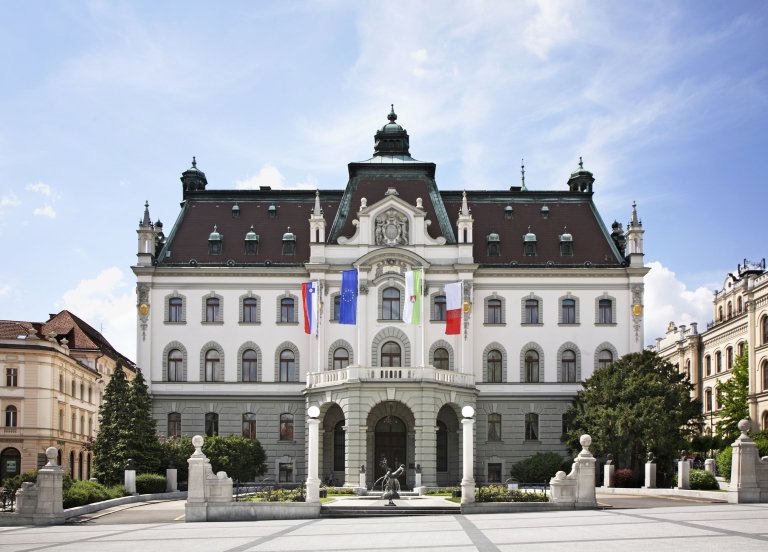
Client: Faculty of Medicine at the University of Ljubljana
When we finish university, we are doctors, and we are practitioners. But you must know how to teach."
Jana Brguljan Hitij, Vice Dean for Medicine at Faculty of Medicine, University of Ljubljana (UL MF) and Director of Medical Affairs in the Hypertension Department, University Medical Centre Ljubljana (UKC Ljubljana)
University Medical Centre Ljubljana (UKC Ljubljana) is a public health care institution providing secondary and tertiary medical care, as well as clinical training, in Slovenia’s capital. Opened in 1975 and renamed in 2006 to reflect its role as a teaching hospital, it has more than 2,100 beds and more than 8,300 employees. It serves as the main clinical training base for the Faculty of Medicine at the University of Ljubljana (UL MF). Slovenia, a country of about two million people, has introduced measures in recent years to address health workforce shortages.
Physicians at UKC Ljubljana are expected to teach as well as practice, passing their expertise on to colleagues, residents, and medical students. Clinical training, however, rarely prepares doctors to teach. “You can know what to do,” says Jana Brguljan Hitij, a cardiologist who serves as vice dean for Medicine at UL MF and director of Medical Affairs in the Hypertension Department at UKC Ljubljana, “but it’s important to know how to transfer your knowledge to your colleagues or to the students.” To build those skills, the institution has sponsored physicians in Harvard Medical School’s Training to Teach in Medicine program for five years. The seven-month, live online Harvard Medical School certificate program combines recorded lectures, live webinars, team assignments, and two required virtual workshops. Participants study adult learning theory, small-group and case-based teaching, teaching on wards and in clinics, assessment and feedback, and medical education in the age of AI. Each completes an individual capstone project focused on an innovation for their own teaching setting.
Each year, the Faculty of Medicine at the University of Ljubljana decides whether to continue sponsoring participants, and that decision rests on feedback from the physicians who complete the program. “I think the impact is very strong,” Brguljan Hitij says. “We would not go on with this program if we didn’t think it’s good. We always ask our doctors who participated what they think about it, and they think it’s very good.” Participants have described the program as “brilliant.” The impact also extends beyond the physicians who enroll. After completing the program, past participants meet with colleagues and are asked to pass on what they learned. Through internal workshops, they model new teaching approaches and encourage other clinicians to teach the same way, spreading the program’s methods across departments each year.
Looking ahead, Brguljan Hitij sees new demands on clinician-educators, including the need to bring artificial intelligence into both teaching and patient care. “It’s important to include it in the teaching on one hand, and also in the healing,” she says. With a growing group of program past participants already sharing their skills, Faculty of Medicine at the University of Ljubljana continues to invest in physicians who can prepare Slovenia's next generation of doctors.