
Teaching the Teachers: Building Clinician-Educators in Slovenia
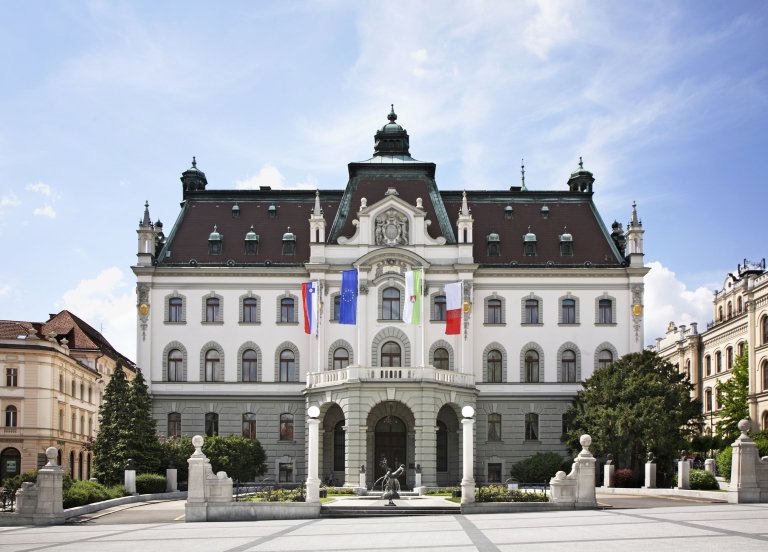
Client: Ljubljana University Medical Centre
When we finish university, we are doctors, and we are practitioners. But you must know how to teach.
Jana Brguljan Hitij, Vice Dean for Medicine, Medical Director
Ljubljana University Medical Centre (UKC Ljubljana) is a public academic medical system in Slovenia’s capital. Opened in 1975 and renamed in 2006 to reflect its role as a teaching hospital, it has more than 2,100 beds and more than 8,300 employees. It serves as the main clinical training base for the University of Ljubljana Faculty of Medicine and Faculty of Health Sciences. Slovenia, a country of about two million people, has introduced measures in recent years to address health workforce shortages.
Physicians at UKC Ljubljana are expected to teach as well as practice, passing their expertise on to colleagues, residents, and medical students. Clinical training, however, rarely prepares doctors to teach. “You can know what to do,” says Jana Brguljan Hitij, a cardiologist who serves as Vice Dean for Medicine and Medical Director, “but it’s important to know how to give your knowledge to your colleagues or to the students.” To build those skills, the institution has sponsored physicians in Harvard Medical School’s Training to Teach in Medicine program for five years. The seven-month, live online Harvard Medical School certificate program combines recorded lectures, live webinars, team assignments, and two required virtual workshops. Participants study adult learning theory, small-group and case-based teaching, teaching on wards and in clinics, assessment and feedback, and medical education in the age of AI. Each completes an individual capstone project focused on an innovation for their own teaching setting.
Each year, the institution decides whether to continue sponsoring participants, and that decision rests on feedback from the physicians who complete the program. “I think the impact is very strong,” Brguljan Hitij says. “We would not go on with this program if we didn’t think it’s good. We always ask our doctors who participated what they think about it, and they think it’s very good.” Participants have described the program as “brilliant.” The impact also extends beyond the physicians who enroll. After completing the program, past participants meet with colleagues and are asked to pass on what they learned. Through internal workshops, they model new teaching approaches and encourage other clinicians to teach the same way, spreading the program’s methods across departments each year.
Looking ahead, Brguljan Hitij sees new demands on clinician-educators, including the need to bring artificial intelligence into both teaching and patient care. “It’s important to include it in the teaching on one hand, and also in the healing,” she says. With a growing group of program alumni already sharing their skills, UKC Ljubljana continues to invest in physicians who can prepare Slovenia's next generation of doctors.