
Leading Beyond the Operating Room: Preparing for the Next Stage of Surgical Leadership
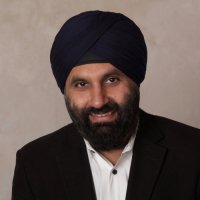
"I’ve always believed that service lines should focus on safety, quality, efficiency, and growth. All four of those are featured in this Harvard Medical School program."
Tej M. Singh, MD, MBA, FSVS, is senior medical director of the Cardiovascular Service Line and medical director of Vascular Surgery for Intermountain Health’s Peaks Region. He has spent his career balancing clinical excellence with an expanding portfolio of leadership responsibilities. Although he holds a physician executive MBA and has completed several leadership programs, Singh was looking for a program designed specifically for surgeons. That search led him to Harvard Medical School’s Surgical Leadership Program. Since completing the program in 2025, he has advanced into increasingly senior leadership roles. Today, Singh is responsible for leading multidisciplinary teams and shaping cardiovascular care across a large regional health system.
Learning Leadership from Fellow Surgeons
Although Singh had participated in several physician leadership programs, he enrolled in the Surgical Leadership Program to learn alongside fellow surgeons from around the world.
“I wanted the perspective of fellow surgeons,” he says. “Even in physician-focused MBA programs, there are very few surgeons. I wanted to understand how surgeons think about leadership and learn from colleagues who face many of the same challenges.”
Comprised of an international cohort representing a wide range of surgical specialties and career stages, the program offered Singh an environment unlike any other leadership program he had experienced. Beyond discussions on organizational leadership, innovation, and emerging technologies such as artificial intelligence, he forged lasting relationships with a group of peers who continue to support one another through career transitions.
“We still stay connected today,” he says. “We share our professional stories, ask for advice, and learn from each other. Those relationships have been invaluable.”
Putting Leadership into Practice
The timing of the program proved especially meaningful for Singh. Shortly after completing the Surgical Leadership Program, he took on expanded leadership responsibilities while helping guide organizational strategy across multiple specialties.
“My role is no longer just about being a surgeon,” he explains. “I must also be a comprehensive leader.”
Singh highlights how the program prepared him for those responsibilities by strengthening his approach to organizational leadership, decision-making, innovation, and leading through change. He also credits the capstone project with encouraging him to think creatively about the future of health care. His project explored how artificial intelligence could support physicians by improving documentation and time-based billing—an idea that has become increasingly relevant as AI continues to transform clinical practice.
Reflecting on his leadership philosophy, Singh adds, “I’ve always believed that service lines should focus on safety, quality, efficiency, and growth. All four of those are featured in this Harvard Medical School program.”
Building the Next Generation of Surgical Leaders
For surgeons considering the program, Singh notes that its greatest strength lies in meeting participants wherever they are in their leadership journey.
“I think this program can give early leaders the initial tools to think differently,” he says. “If you’re a mid-career leader, it can refine your tools—and if you’re ready to launch into senior leadership, it can solidify your career.”
Whether participants are preparing for their first formal leadership role or guiding health systems through periods of transformation, Singh stresses that the Surgical Leadership Program will equip surgeons with the perspective, practical skills, and global network to lead with greater confidence and impact.
Written by: Pamela Searle