How the Surgical Leadership Program Sparked a Lasting Partnership
“The program gave me the confidence and perspective to contribute to these conversations; I feel prepared to engage with senior leaders and help shape meaningful organizational change.”
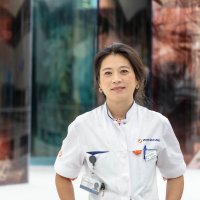
For Shan Shan Qiu, MD, a plastic surgeon and an associate professor at Maastricht University Medical Center in the Netherlands, leadership development was about preparing for the future. While her surgical training provided exceptional technical expertise, she recognized that leading teams, driving organizational change, and advancing academic medicine required an entirely different set of skills. Seeking new perspectives beyond her own institution, she enrolled in Harvard Medical School’s Surgical Leadership Program, where she found not only practical leadership education, but also an international community of surgeons who continue to enhance her career.
Building a Global Network That Led to Real-World Impact
The 11-month Surgical Leadership Program combines online learning with three immersive, multi-day, in-person workshops that bring together surgeons from around the world to learn, collaborate, and forge lasting professional relationships. Designed specifically for surgeons, this certificate program allows participants to apply new leadership concepts while exchanging insights with global peers who face similar evolving health care challenges.
For Qiu, those in-person workshops proved to be one of the program’s most valuable experiences. During the first workshop, she met another surgeon who lived in the same city but worked at a different hospital. Their shared interest in improving patient care quickly evolved into a professional relationship that extended well beyond the classroom.
Months later, when a regional grant opportunity arose, the two combined their expertise, his in enhanced recovery after surgery (ERAS) protocols and hers in breast reconstruction surgery, to develop a collaborative research proposal. Out of 47 submissions, their project was one of just seven selected for funding. It will support a three-year collaboration between their hospitals to develop an implementable ERAS protocol for breast reconstruction patients.
“The networking has been one of the biggest benefits of the program,” Qiu says. “These relationships don’t end when the program finishes—they continue to create opportunities.”
Expanding Her Leadership Perspective
Beyond extending her professional network, the program has transformed how Qiu approaches leadership within her own organization. Through coursework in leadership, organizational strategy, finance, negotiation, and change management, she developed a broader understanding of what it takes to lead within complex health care systems. One of the highlights of the program, she says, was learning from faculty across Harvard Medical School, Harvard Business School, and other Harvard schools. This diversity of perspectives challenged her to rethink leadership.
Today, Qui serves on a hospital-wide committee working to strengthen leadership culture and psychological safety across departments. She credits the program with giving her the confidence to contribute alongside senior leaders, ask difficult questions, and bring new perspectives as her hospital works to create a more collaborative culture.
“The program gave me the confidence and perspective to contribute to these conversations,” she says. “I feel prepared to engage with senior leaders and help shape meaningful organizational change.”
Preparing Surgeons for the Future
Reflecting on her experience, Qiu believes that the Surgical Leadership Program is valuable for surgeons at every stage of their careers. Experienced physicians can immediately apply new leadership strategies within their organizations, while those early in their careers can build the skills and confidence needed for future leadership opportunities. She notes that communication, finance, strategy, and organizational leadership are just as essential as technical excellence for physicians seeking to shape the future of health care.
“As surgeons, we spend years developing our technical skills, but leadership and other soft skills are just as important,” she says.
For Qiu, the Surgical Leadership Program delivered far more than leadership training. It expanded her professional network, opened the door to meaningful research collaboration, and gave her the confidence to influence change within her own institution. The relationships that she built continue to create new opportunities, demonstrating that the program’s value extends well beyond graduation.
Written By: Pamela Searle