Advancing Clinical Research Skills Through a Global Lens
“The program gave me far more than just research skills. It changed the way I ask scientific questions, collaborate across cultures, communicate evidence, and think about leadership.”
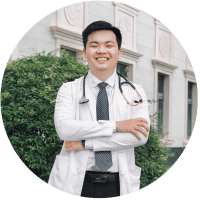
Loc Vu, MD, FACC, FAHA, has dedicated his career to advancing cardiovascular science and medical education. He is a cardiologist and clinical lecturer at Tan Tao University School of Medicine in Vietnam, where his current research focus is on the investigative genesis of coronary artery disease.
Vu’s work spans coronary physiology, flow dynamics, and artificial intelligence in cardiovascular imaging. In addition, he serves as an abstract reviewer for the American College of Cardiology Quality Summit and is a senior collaborator on the Global Burden of Disease study at the University of Washington Institute for Health Metrics and Evaluation.
In 2023, Vu was conducting research on coronary slow flow in patients with broken heart syndrome when he submitted an abstract to the American Heart Association and received an award for the highest abstract score from Vietnam at the AHA 2023 Scientific Sessions (Paul Dudley White International Scholar Award). However, when he began working to further advance his research, Vu encountered significant obstacles.
“When I tried to advance my research, I experienced many challenges in selecting the research design and building the overall strategy,” he explains.
After this experience, Vu began pursuing additional clinical research training opportunities. He discovered the Global Clinical Scholars Research Training certificate program at Harvard Medical School through his supervisor, who is an alumnus of the 2023 cohort.
Elevating Clinical Research Fundamentals
The program provided Vu with a valuable big-picture perspective on how the clinical research process works in the United States, which differs greatly from clinical research in Vietnam. He acquired key research skills, such as how to structure a proposal, create a research plan, ask significant questions, and formulate a hypothesis.
One of Vu’s top takeaways was the focus on methodology in clinical research. He learned that clinical research requires not only having a novel idea or addressing an important research question, but also applying critical thinking at each step of the research process.
Since completing the program, Vu is better able to identify the key elements of a successful clinical research study, including recognizing a crucial research gap, designing a robust statistical analysis plan, securing the necessary resources to complete a study, and writing a persuasive proposal.
“I learned that if we want to do good research, we must focus on method, method, method. It’s not only about the research design, the research question, or the inclusion or exclusion criteria. Everything needs to be integrated smoothly,” he says.
Vu thoroughly enjoyed the workshops and coursework and especially appreciated the continuous guidance and support from the faculty. Being based in Vietnam, he found the teaching team to be extremely accommodating of the time zone difference, which helped him stay engaged and excited throughout the program.
Using New Skills to Investigate Cardiovascular Outcomes
For his capstone project, Vu explored the growing burden of obesity among the rapidly aging population of Vietnam. He was particularly interested in the “obesity paradox” in cardiovascular disease, where patients who are overweight or mildly obese may experience better outcomes than patients with a normal or low body mass index. Vu’s goal was to explore whether this relationship between obesity and cardiovascular disease outcomes also exists among elderly patients with acute ST-segment elevation myocardial infarction.
“Before, I mainly focused on whether a study had a clear research question and hypothesis,” he explains. “The program taught me to look more critically at study design, sample size estimation, statistical power, and the overall rigor of the methodology.”
The experience of developing a formal research proposal based on an original research question was invaluable for Vu, who continues to apply what he learned when developing, reviewing, and submitting research proposals in his work today.
Making Lifelong Connections with a Global Cohort
Vu reflects fondly on his cohort, highlighting the kindness and openness of his peers. He enjoyed working with individuals from diverse health care backgrounds and notes that their expertise enriched the classroom experience. Vu quickly formed strong connections and friendships with his classmates and continues to stay in touch with many of them.
“My classmates were so friendly and welcoming. We were all from different countries and industries, but were still able to openly share and study together. We still keep the conversation going, and I now have friends in England, Guatemala, Argentina, and Thailand.”
Building Leadership Skills Beyond Research
Aside from clinical research training, Vu gained crucial leadership and communication skills that he continues to use in his daily work. He credits, in particular, the program workshop session on public speaking, featuring Terry Gipson, MFA, a public speaking consultant and faculty member in the Harvard College Writing Program.
“The communication training gave me the confidence to pursue roles where translating science into meaningful conversations became just as important as conducting the science itself,” he says.
The Global Clinical Scholars Research Training program not only trained Vu to be a better clinical researcher, but also helped him to become a confident leader within his industry. Since completing the program in October 2025, Vu has continued his work in the cardiology space and has taken on several new leadership and service roles.
He serves on the Communications Committee for the American Heart Association’s Council on Clinical Cardiology; is a reviewer for the American Heart Association’s Cardiomyopathies Peer Review Committee; is a Social Media Ambassador for the Cardiovascular Research Foundation in Seoul, Korea; and is a participant in the 2026 cohort of the International Atherosclerosis Society - Inflammation Academy program.
“The program gave me far more than just research skills,” says Vu. “It changed the way I ask scientific questions, collaborate across cultures, communicate evidence, and think about leadership.”